
WASHINGTON –
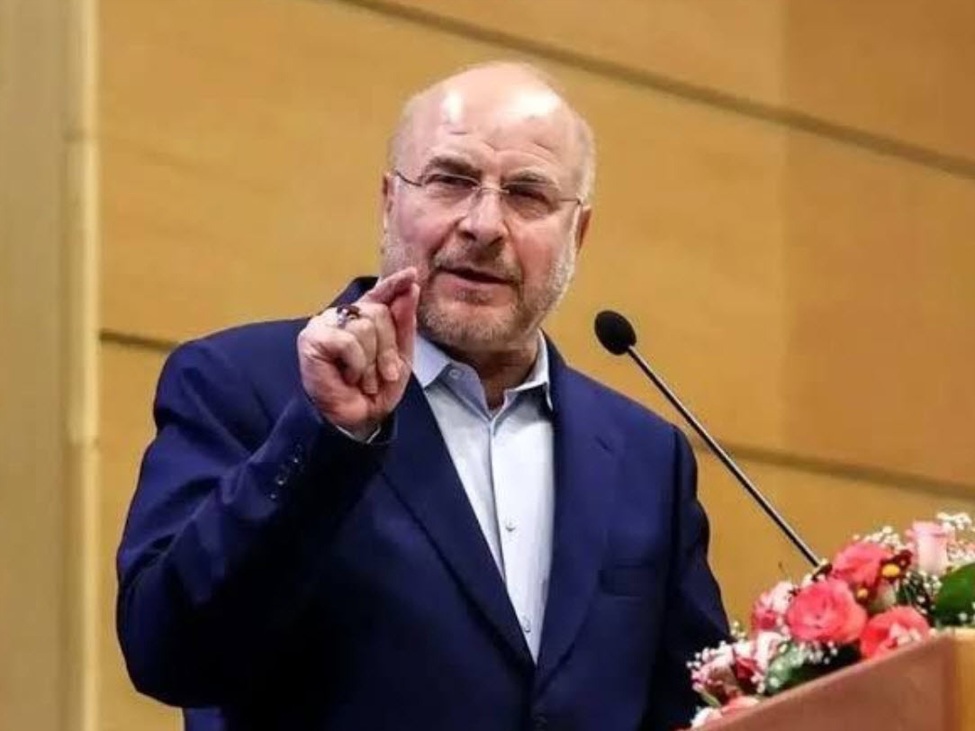
Iran’s Parliament Speaker Mohammad Bagher Ghalibaf is being cited by multiple interlocutors as the senior figure engaged in feelers with the White House about ending the war, even as Tehran’s foreign ministry publicly denies any talks with the United States. The conflicting assertions come as President Donald Trump says Iran’s internal communications are disrupted, deepening uncertainty over who is speaking for Iran and through which channels. (apnews.com)
While the outlines of any dialogue remain opaque, the stakes are global and institutional. Wartime signaling between Washington and Tehran has historically run through indirect, deniable conduits; when those lines blur, miscalculation risks rise not only for energy markets and shipping lanes but also for US security decision-making and allied governments straddling the Persian Gulf. Switzerland confirmed this month that its “protecting power” channel between the United States and Iran remains active, underscoring how formal diplomacy has been replaced-again-by backchannels at a moment of peak volatility. (al-monitor.com)
Conflicting signals over wartime diplomacy
On Monday, Trump said the United States is talking with a “respected” Iranian leader and claimed Iran “wants to make a deal,” adding that White House envoy Steve Witkoff and Jared Kushner held talks on Sunday with an Iranian figure. Iran’s government quickly countered that no such talks are underway. The crossfire reprises a pattern seen in recent weeks: messaging from Washington that contact is occurring, matched by Tehran’s insistence that it is not. (apnews.com)
Axios reported last week that a direct communications channel between Witkoff and Iranian Foreign Minister Abbas Araghchi had been reactivated, the first known direct messages since the war began, though it was unclear how substantive the exchanges were. Publicly, Araghchi has said Iran is open to dialogue in principle-but only under conditions Tehran deems acceptable. (axios.com)
“Iran has no problem with negotiations, but negotiations cannot take place under the shadow of threats.”
Araghchi told reporters in Istanbul on January 30. (aljazeera.com)
That position tracks with an Associated Press account from the same day, in which Araghchi said Iran is “ready” for dialogue but that there are “no plans” yet for talks with Washington-language that leaves space for backchannel messaging while rejecting formal negotiations as long as US military pressure persists. (apnews.com)
Any formal negotiations would, in practice, be constrained by each side’s domestic legal and institutional guardrails. In Washington, for example, the 1973 War Powers Resolution sets the framework for how the executive branch reports on and conducts hostilities, shaping what a potential ceasefire or de-escalation understanding would need to look like to withstand congressional scrutiny.
Who might speak for Iran?
Ghalibaf, a former IRGC commander and conservative power broker, is not the usual face of Iranian diplomacy, which is run by the Foreign Ministry under the guidance of the Supreme National Security Council and, ultimately, the supreme leader. Yet Iran’s political system has often relied on unconventional envoys during crises, and senior parliamentary leaders have at times acted as conduits. The current speaker’s prominence-after decades in military, security, and executive posts-gives him unusual latitude to test messages on behalf of the establishment without formally committing the state.
Notably, Ghalibaf has publicly rejected talks “under threat or war,” a stance that may reflect internal debate over whether-and how-to test a channel to Washington while fighting continues. (wanaen.com) For Western policymakers trying to interpret those signals, the question is less who is speaking on television than which institution in Tehran-Parliament, the Revolutionary Guard, the supreme leader’s office-is prepared to underwrite any compromise.
A communications blackout that clouds verification
Trump has asserted that Iran’s military and civil communications have been degraded; independent reporting has documented sweeping state-imposed internet shutdowns across major Iranian cities since mid-March, a tactic Tehran has repeatedly used during unrest. In practical terms, those outages complicate the verification of claims about both negotiations and battlefield activity. (washingtonpost.com) They also impede the work of international organizations, shipping firms, and foreign embassies that depend on digital channels to assess risk, plan evacuations, and monitor compliance with any future de-escalation steps.
Markets search for a glide path
Investors have toggled between fear and relief as signaling from Washington and Tehran whipsaws. Asian equities rose on March 11 “as markets await signals on when the war with Iran may end,” while US stocks staged a relief rally on March 10 after Trump suggested the active phase “could end very soon.” Oil, meanwhile, has swung sharply on each hint of escalation or restraint. The market’s bias for a short conflict now hinges on whether the political messaging transposes into even a limited ceasefire or de-escalatory steps. (wsls.com)
For energy regulators and central banks, the information gap around backchannel contacts is not academic: it feeds into contingency planning for supply disruptions, reserve releases, and sanctions enforcement. With insurance premia rising for vessels transiting the Gulf, finance ministries from Europe to Asia are effectively pricing the credibility of the competing US and Iranian narratives about where the conflict is headed.
Backchannels and the playbook of crisis diplomacy
Because the United States and Iran lack formal relations, crisis diplomacy typically runs through intermediaries. Switzerland has represented US interests in Tehran since 1980 and acts as a quiet courier for official messages; Oman has long been a favored facilitator for discreet US-Iran contacts, including the secret Muscat channel that helped produce the 2015 nuclear deal. With the current war disrupting conventional statecraft, those “good offices” again form the most plausible architecture for any off-ramp. (al-monitor.com)
Behind the headlines, those arrangements sit atop a dense web of treaties, protocols, and sanctions regimes that leave little room for improvisation. Any progress in the shadows would eventually have to be reconciled with formal obligations-from nuclear safeguards to maritime security-and with domestic political red lines on both sides.
Threats that keep the temperature high
Tehran’s military messaging has offered little daylight for de-escalation. On Sunday, Iranian authorities threatened to “completely” close the Strait of Hormuz if the United States follows through on attacking Iran’s power grid-an order-of-magnitude warning for global energy flows and maritime insurers. (apnews.com) Even the suggestion of closure challenges the assumptions underpinning shipping routes and naval deployments, forcing regional states and outside powers to prepare for a scenario in which the world’s key oil chokepoint becomes a battlefield.
As of March 23, 2026, Iran’s Foreign Ministry says there have been no talks with the United States; the White House says communications with a senior Iranian figure are occurring, and Trump has extended by several days a threatened strike on Iranian power plants amid his claims of progress. (apnews.com) Between those two irreconcilable public stories lies a narrow space where any real diplomacy must occur-off the record, under legal and political constraints, and under the shadow of a war that neither side yet appears willing to fully own in public.
