
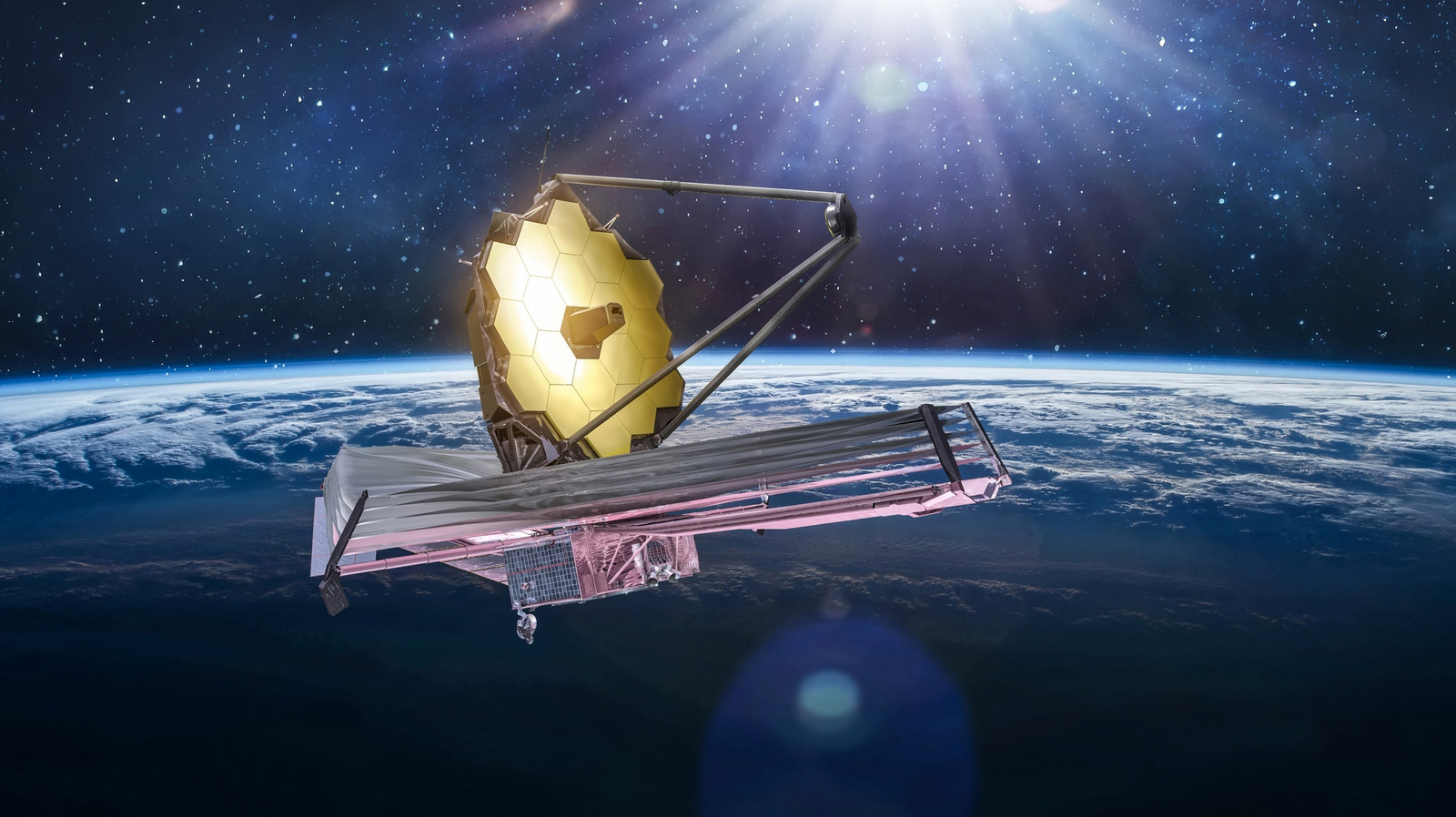
The James Webb Space Telescope (JWST) represents a peak in orbital infrastructure and international space governance, designed to capture the earliest light of the universe while operating under stringent energy constraints. Jointly developed by NASA, the European Space Agency, and the Canadian Space Agency, and operating under the scientific and programmatic policies set out in the official NASA science policy framework, Webb translates public investment and intergovernmental agreements into a lean, long-lived observatory. Despite its complexity and the massive scale of its mission, the telescope maintains a surprisingly modest energy profile, operating on roughly one to two kilowatts of electrical power-an amount comparable to a common household microwave.
Engineering the Power Paradox
The disparity between the energy required to launch the JWST and the energy required to operate it is stark. To escape Earth’s gravity, the observatory relied on the Ariane 5 heavy-lift rocket, a system utilizing a cryogenic core stage and solid rocket boosters. The sheer force required for liftoff is immense, with each booster generating roughly 1,100 metric tons of thrust.
Once the telescope reached its destination at the second Lagrange point (L2), its energy needs shifted from propulsion to sustainment. In this phase, governance and engineering priorities converge: the mission is designed to maximize scientific return over decades while respecting finite fuel and power reserves. The current operational budget must support a suite of high-precision instruments, attitude control, and long-range communication arrays, all while maintaining the stability and pointing accuracy demanded by publicly funded, competitively selected observing programs.
| Phase | Energy/Force Driver | Scale of Intensity |
|---|---|---|
| Liftoff | Ariane 5 Solid Boosters | Over 2 million pounds of thrust per booster |
| Deployment | Mechanical Actuators | High-activity kinetic phase |
| Operational | Solar Array / Onboard Systems | Approx. 1-2 kilowatts (steady state) |

Thermal Management and Passive Cooling Architecture
To detect faint infrared signals from the deep past, the JWST must remain incredibly cold. Active refrigeration for a structure of this size would consume prohibitive amounts of energy. Instead, the system relies primarily on “passive” cooling. A massive, multi-layered sunshield intercepts thermal radiation from the Sun, Earth, and Moon, allowing the telescope to maintain temperatures below -370 degrees Fahrenheit without constant mechanical intervention.
This architectural choice minimizes the electrical load on the telescope’s power systems. By relying on the physics of shading and radiation rather than continuous active cooling, JWST preserves its limited wattage for critical functions such as precision pointing, data processing, and transmission. For the agencies and governments that fund the mission, that efficiency translates directly into a longer operational life and more observation time for researchers worldwide.
- Thermal Shielding: Five layers of Kapton protect the optics from heat and help maintain cryogenic temperatures for the infrared instruments.
- Operational State: Once deployed and tensioned, the sunshield functions in a steady, low-power state, requiring only occasional adjustments.
- Precision Stability: Specialized structures and reaction control systems maintain pointing stability in the vacuum of deep space.
- Autonomous Operation: Onboard computers manage stability, fault protection, and data collection over long durations between ground contacts.
Infrastructure, Policy, and the Flow of Deep-Space Data
The efficiency of the JWST extends to its system design, where communication, propulsion controls, and science instruments run simultaneously on a tightly managed power budget. This integration ensures that the observatory can maintain its orbit at the L2 Lagrange point while streaming high-resolution data back to Earth for public and proprietary research programs alike.
The data integrity of the mission relies on the Deep Space Network (DSN), a global array of antennas that receive the telescope’s transmissions and operate as critical infrastructure for multiple civilian and scientific missions. Because the telescope’s power budget is so lean, the efficiency of its onboard transmitters-and the scheduling decisions that allocate DSN time across missions-is critical to ensuring that findings, including detailed spectra of exoplanet atmospheres and evidence of runaway supermassive black holes, are delivered without corruption across millions of miles of void.
From its transition from a compact launch configuration to a fully operational observatory, the JWST serves as a benchmark for deep space engineering and for how major science infrastructure is governed. It demonstrates that immense scientific capability does not necessarily require immense operational power-and that with careful design, regulatory oversight, and international coordination, flagship observatories can deliver frontier discoveries while respecting finite energy, fuel, and public-budget constraints.
Related reading
