
WELLINGTON – New Zealand, long regarded as a global exemplar of social stability and egalitarianism, is experiencing a systemic fraying of its social fabric, characterized by deepening economic hardship and a precipitous decline in institutional trust.
A comprehensive study released by the Helen Clark Foundation reveals a nation becoming increasingly “fractured,” as rising inflation, rural isolation, and a growing disconnect between the citizenry and the state erode the country’s traditional cohesion. The findings suggest that while New Zealand has not yet reached the level of acute political polarization seen in the United States or Brazil, the structural foundations of its communal trust are weakening.
This erosion mirrors a broader global trend where the intersection of digital isolation and economic volatility is hollowing out “third places”-the physical spaces between home and work that foster cross-class and cross-cultural interaction. In New Zealand, this crisis is manifesting as a regional divide, where the nature of the struggle varies from food insecurity in the north to profound psychological isolation in the south.
The Economics of Fragmentation
The Northland region, located at the northern tip of the North Island, has emerged as the epicenter of the country’s cost-of-living crisis. Data shows that 39% of respondents in the region experience food insecurity, a figure that significantly exceeds the national average of 24%. More than half of the population in this region report being financially dissatisfied, underscoring how national inflation figures are translating into everyday scarcity.
In the city of Whangārei, the tangible result of this hardship is the surge in demand for grassroots support. Liz Cassidy‑Canning, chief executive of Whare Āwhina-a Māori social support service and community law office-notes that approximately 180 people visit a community cafe every Monday for free or low-cost food.
“That reflects the hardship our community is experiencing,” Cassidy‑Canning said. Despite the crumbling infrastructure and the pressure of rising housing costs, the region maintains a unique resilience rooted in its history as the birthplace of the nation. The area surrounds Waitangi, where the 1840 treaty between the British Crown and Māori chiefs was signed, a legacy that continues to influence local identity and expectations of the state.
According to Cassidy‑Canning, this heritage fosters a specific type of communal pride: “The pride of being a local person is extended to people that come into the community … that extends to different ethnic communities.” This cultural buffer explains why Northland’s economic frustration has not transitioned into the anti-migrant sentiment appearing in other regions, even as economic indicators would typically provide fertile ground for such politics.
Institutional Trust and the Democratic Gap
The crisis of cohesion extends beyond economics into the realm of political legitimacy. Trust in government institutions fell from 42% in 2024 to 39% in 2025, while only 12% of New Zealanders believe the system of government is functioning effectively. For a country that has long prided itself on high civic participation and relatively clean governance, the numbers mark a significant warning light for policymakers.
In the capital, Wellington, a distinct contradiction has emerged. While a majority of residents believe the country’s elections are fair, only 22% are satisfied with the actual operation of the democracy. That gap between procedural confidence and performance satisfaction is increasingly shaping debates about how the system should work, rather than whether votes are counted correctly.
This dissatisfaction is often linked to the Mixed Member Proportional (MMP) system, adopted in 1996 to replace the “first-past-the-post” model in an effort to create a more representative and collaborative parliament. Under MMP, voters cast both a party vote and an electorate vote, and coalition governments have become the norm. However, some citizens feel the system has failed to deliver on its promise of consensus-driven politics.
“Our leaders no longer seem to use public interest as the paramount consideration for their policy or actions,” says Wellington business owner Lucy Kebbell. “But it hasn’t really worked out like that … democracy feels like it’s being fought at the extremes.”
“When we have a fractured society, it’s hard for us to be able to meet across difference and to make decisions that last the distance,” says economist Shamubeel Eaqub, co-author of the Helen Clark Foundation report.
Officials are acutely aware that such perceptions matter. New Zealand’s constitutional arrangements are anchored in a web of statutes, conventions and the New Zealand Bill of Rights Act 1990, which guarantees political rights including free and fair elections. When public confidence in how those rights are exercised falls, pressure builds for electoral and institutional reform, from party financing rules to how coalition agreements are negotiated and communicated.
Rural Isolation and the Populist Pivot
In the Otago-Southland region of the South Island, the crisis is less about institutional distrust and more about the disappearance of social infrastructure. While this region reports the highest levels of contentment with government systems, it suffers from severe social thinning, with 20% of respondents reporting feelings of isolation.
The decline of rural sports clubs and the centralization of essential services have left farming communities more disconnected than they were three decades ago. Banks, health clinics and post offices have consolidated into larger hubs, increasing travel times and reducing informal meeting points that once doubled as civic forums. This isolation often creates a vacuum that is filled by populist political movements promising to restore voice to the periphery.
Jason Herrick, a former Southland dairy farmer of 31 years and a candidate for the populist New Zealand First party, points to a personal mental health crisis in 2018 as the moment he recognized the systemic nature of this isolation. “Rural communities are now even more isolated than they were 20, 30 years ago,” Herrick said, noting that as social avenues disappear, farmers increasingly isolate themselves on their land.
This rural disconnection is coinciding with a nationwide shift in attitudes toward immigration. While 67% of the population still views multiculturalism positively, this is the lowest level since 2011. In the Waikato and Bay of Plenty regions, scepticism regarding immigration and distrust in the judicial system are particularly pronounced, sharpening questions for central government about how it balances labour-market needs, regional development and social cohesion in its immigration and justice policy settings.
The Battle for Public Space
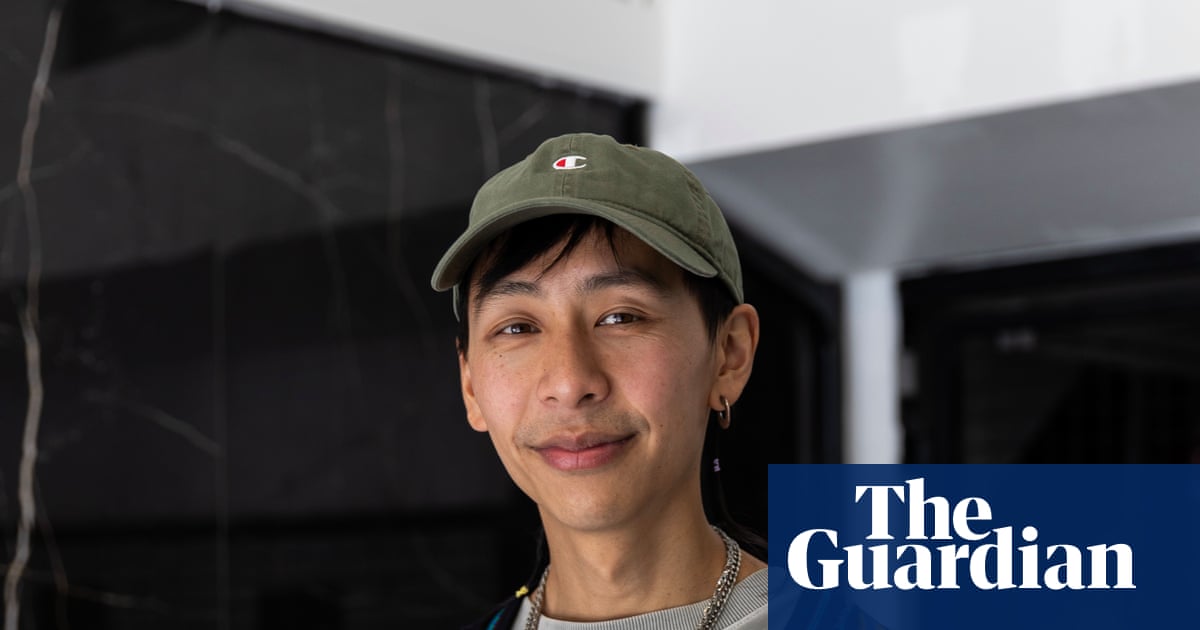
In Auckland, the nation’s largest city, the response to this fragmentation is manifesting in grassroots artistic interventions rather than formal policy experiments. Musician Jefferson Chen and artist Quentin Lind have established a music installation within a working laundromat on Karangahape Road, designed specifically to force physical interaction between strangers.
The project is a deliberate reaction to the erosion of public spaces and the insulating effect of digital existence. “It’s really easy to exist online and not have these connections, and we’re also slowly losing our public spaces,” Lind told the Guardian. Their installation, which invites people to pause, listen and talk while they wait for their washing, functions as an improvised civic forum as much as an artwork.
For Chen and Lind, these spaces are not just social assets but ideological battlegrounds. They argue that social isolation makes individuals more susceptible to authoritarian rhetoric. “We know that fascism is on the rise and if we don’t claim the spaces ourselves, then the right will be really quick to claim them – especially if people are lonely,” Lind said. “That’s why I think it’s really important we fill the room.”
Chen views the shared experience of economic struggle as a potential catalyst for new forms of unity. “There is nothing quite like being in the same stitch-up, recognising each other’s challenges and struggles and just being like well, we’ve only got each other and we can trust each other and get creative with the hand we have been dealt,” Chen said.
As these local experiments play out, New Zealand is currently preparing for a general election in November 2026, with the national discourse expected to center on the economy, healthcare, and the restoration of voter trust. Political parties across the spectrum are under pressure not just to offer policy fixes for inflation or hospital wait times, but to show how their programmes will rebuild the connective tissue between citizens, communities and the state. Behind the campaign slogans lies a deeper contest over whether one of the world’s most stable democracies can renew its social contract before the fracture lines widen further.
