
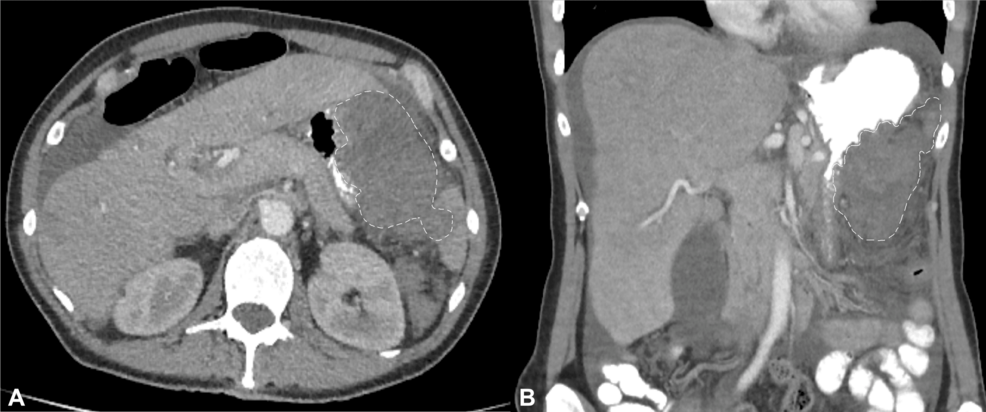
A rare gastric tumor that tests diagnostic reflexes
A newly published case report describes a stomach mass initially presumed to be a gastrointestinal stromal tumor (GIST) that proved, on full pathologic work‑up, to be extra‑uterine endometrial stromal sarcoma (EESS). The presentation is exceptionally uncommon and underscores how mesenchymal tumors in the gastrointestinal tract can blur histologic and radiologic boundaries. While endometrial stromal sarcomas most often arise in the uterus, they can originate or recur at extra‑uterine sites, sometimes on a background of endometriosis. When they present in the stomach, the overlap with GIST on imaging and even on limited biopsy can be profound, with clear implications for patient pathways, coverage decisions, and therapy selection.
Why this mimic matters for systems of care
- GIST and EESS sit in different disease taxonomies, rely on different systemic therapies, and follow different surveillance trajectories. A mislabel at diagnosis can cascade into non‑beneficial treatment, delayed access to the right specialists, and misaligned reimbursement-all of which play out inside national coverage frameworks such as Medicare’s use of diagnosis‑related groups and procedure codes.
- GIST has well‑defined tyrosine kinase inhibitor (TKI) options shaped by KIT/PDGFRA mutations, while low‑grade EESS is typically hormone‑receptor positive and may be managed with endocrine strategies in addition to surgery. Getting the histology right is not academic-it drives the care pathway, the prior authorization story, and in some jurisdictions the thresholds applied under national cancer plans.
- Community hospitals increasingly face complex mesenchymal tumors with overlapping markers; robust referral networks and second‑opinion pathology are now structural needs, not luxuries, particularly where accreditation standards and cancer center designation metrics emphasize multidisciplinary review.
At the microscope: overlapping clues and decisive tests
The stomach case highlights how much hinges on what pathologists see-and what they are resourced to test for. The comparative profile below is less a bench‑top detail than a roadmap for which institutions are equipped to avoid misclassification.
| Diagnostic feature | Extra‑uterine endometrial stromal sarcoma (EESS) | Gastrointestinal stromal tumor (GIST) |
|---|---|---|
| Common site | Uterus; extra‑uterine sites include ovary, peritoneum, bowel, rarely stomach | Gastrointestinal tract, most frequently stomach and small intestine |
| Typical histology | Proliferative endometrial‑type stroma; infiltrative “tongue‑like” myometrial/soft‑tissue permeation may be seen | Spindle and/or epithelioid cells with variable cellularity and stromal collagen/myxoid change |
| Immunohistochemistry | Often CD10 positive; frequent ER/PR positivity; variable smooth‑muscle markers; focal KIT/DOG1 staining can occur and mislead | Classically KIT (CD117) and DOG1 positive; CD34 frequently positive |
| Molecular genetics | Recurrent fusions (e.g., JAZF1‑SUZ12 and others) in low‑grade tumors; high‑grade tumors harbor distinct alterations | KIT or PDGFRA mutations in the majority; occasional SDH deficiency or other drivers |
| First‑line systemic therapy paradigm | Endocrine approaches favored in low‑grade disease; cytotoxic therapy in selected high‑grade/advanced settings | TKIs aligned to driver mutation status (e.g., imatinib for sensitive KIT/PDGFRA variants) |
| Policy and coverage touchpoints | Hormone‑receptor testing and fusion analysis support classification and coverage determinations within oncology benefit designs | Mutation testing guides access to mutation‑specific TKIs and associated prior authorizations and step‑therapy rules |
Key takeaways from the reported stomach case
- The gastric location amplified the risk of a GIST presumption on imaging and limited biopsy, illustrating how an anatomic “default diagnosis” can shape everything from consent discussions to initial coding.
- Comprehensive immunohistochemistry and molecular profiling resolved the diagnosis, despite potentially misleading focal staining patterns-underscoring why payer policies that restrict multi‑marker panels can have unintended clinical consequences.
- The final classification reoriented the treatment discussion away from GIST‑specific TKIs toward strategies consistent with endometrial stromal sarcoma biology, with direct implications for which drugs fall under pharmacy versus medical benefit and how value‑based contracts calculate response.
What this reveals about diagnostic governance
Behind the microscope is a web of governance choices: how laboratories are accredited, how multidisciplinary teams are mandated, and how insurers interpret evidence in coverage decisions. The case functions as a live‑fire test of whether those structures can accommodate rare, ambiguous tumors.
- Second‑opinion pathology: Institutions serving as regional hubs should formalize rapid consult pathways for unusual mesenchymal tumors, with payers recognizing the downstream value of avoiding therapeutic misdirection. In many systems, cancer center designation and quality programs already expect documented second‑opinion capacity for complex sarcoma.
- Molecular stewardship: CLIA‑certified, CAP‑accredited testing for KIT/PDGFRA and relevant sarcoma fusions should be embedded into diagnostic algorithms to prevent false equivalence based solely on morphology or single markers, and to satisfy regulatory expectations on laboratory quality and traceability.
- Tumor boards: Multidisciplinary review (surgical oncology, pathology, medical oncology, gynecologic oncology, radiology) remains the safety net when disease biology and anatomic site send conflicting signals. Some national cancer strategies explicitly tie reimbursement incentives to documented tumor board deliberation for rare cancers.
- Data linkage: Rare sarcomas benefit from registry capture; aligning institutional reporting with national and international sarcoma registries improves signal on outcomes in extra‑uterine sites such as the stomach and supports health‑technology assessments that depend on real‑world evidence.
Population‑level framing without sensationalism
For policymakers and payers, a single outlier case is rarely persuasive on its own. What matters is how these cases accumulate into trends that stress‑test existing rules.
- Endometrial stromal sarcomas are rare within uterine cancers and rarer still at extra‑uterine sites. Sparse baseline incidence complicates evidence generation and payer policy calibration, particularly for therapies and diagnostics that require health‑technology assessment before broad adoption.
- Overlap syndromes-where tumor markers blur lines-are a recurring challenge across mesenchymal oncology and a rationale for central review and standardized panels. They raise practical questions about how many markers an “adequate” work‑up should include for coverage to apply.
- Therapeutic divergence between EESS and GIST raises stakes for accurate classification in community settings that may see only a handful of such cases over many years, making regionalization of care and telepathology more than aspirational reforms.
Implications for care pathways and capacity
From a systems perspective, EESS masquerading as GIST is less a curiosity than a stress test of how resilient care pathways are when rare biology collides with standardized protocols. The checkpoints below mark where governance and investment decisions bite.
| System checkpoint | Operational need | Why it matters in EESS vs GIST |
|---|---|---|
| Specimen triage | Access to broad IHC panels and reflex molecular testing | Prevents over‑reliance on single markers that can be shared across entities and helps laboratories meet evolving standards for complex sarcoma work‑ups |
| Pathology review | Rapid second‑opinion workflows and digital slide sharing | Enables timely reclassification before therapy is locked in and supports compliance with institutional cancer‑committee policies on difficult cases |
| Tumor board | Inclusion of sarcoma expertise and gynecologic oncology | Aligns surgery and systemic plans to the correct biology, reducing the risk that local protocols default to GIST‑style management for any gastric mass |
| Payer interface | Coverage clarity for mutation/fusion testing and endocrine agents or TKIs as indicated | Reduces administrative delay when diagnosis shifts and ensures that coding changes do not interrupt continuity of drug access |
| Patient navigation | Referral routes to sarcoma centers of excellence | Concentrates uncommon cases where experience is deeper and aligns with policy pushes toward center‑of‑excellence models for rare cancers |
A measured view of risk and outcomes
For clinicians and regulators alike, the question is not only “what is this tumor?” but “what trajectory should we plan for, and who is accountable for tracking it?”
- Clinical course varies by grade: low‑grade tumors can recur after long intervals; high‑grade tumors behave more aggressively. That variability complicates fixed‑horizon outcome measures in value‑based contracts.
- Reported associations for extra‑uterine disease include prior or concurrent endometriosis, although not all cases show this linkage, reminding teams to avoid overly narrow case definitions in registries and coverage criteria.
- Survival and recurrence data remain limited in gastric presentations, reinforcing the value of registry participation and publication of well‑documented cases so that regulators and payers can move beyond anecdote when adjusting benefit designs.
Why terminology precision protects patients
Health systems increasingly rely on histology‑driven pathways, prior authorization algorithms, and value‑based payment models. When a stomach mass that looks like GIST is in fact EESS, the correction does more than tidy up a report-it realigns the entire episode of care. With targeted therapy access for GIST shaped by driver mutations and the endocrine sensitivity often seen in low‑grade endometrial stromal sarcoma, precise labeling is a form of harm reduction.
That shift happens within a wider governance frame. In the United States, for example, the Affordable Care Act hard‑wired quality reporting and coverage determinations to diagnostic coding and evidence standards, meaning that a single word in a pathology report can ripple through utilization management, outcomes benchmarking, and even institutional rankings.
Further reading for institutional teams
- National cancer agencies’ guidance on uterine sarcoma and soft‑tissue sarcoma care pathways can help governance teams benchmark their own protocols against emerging standards.
- For hospitals revisiting their rare‑tumor strategy, early engagement with national cancer registries and health‑technology assessment bodies can clarify what data will matter when rare entities like gastric EESS come under policy review.
Related reading
