
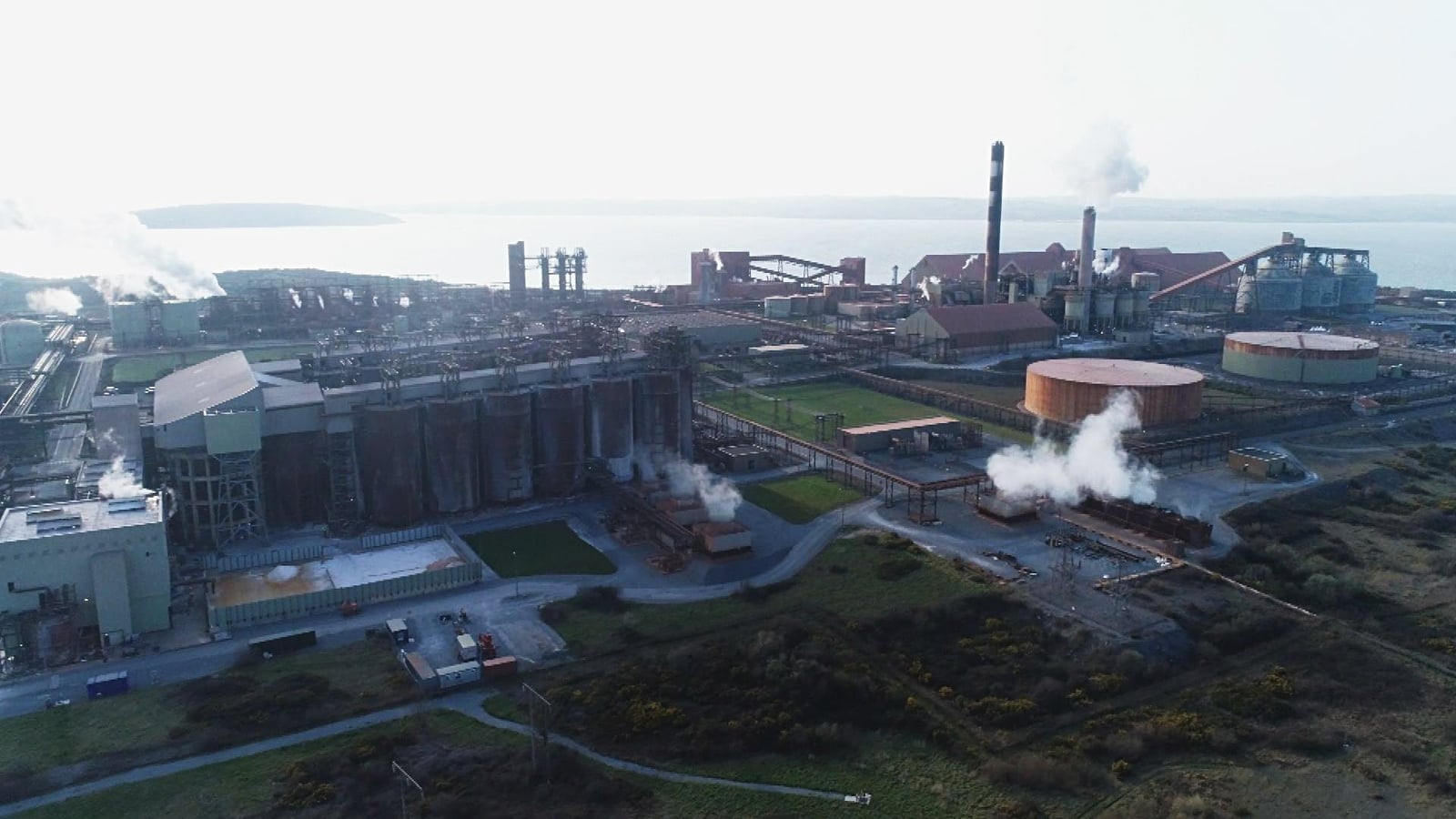
LIMERICK – The European Commission has declined to propose sanctions against Aughinish Alumina, a critical Irish refinery owned by a Russian conglomerate, despite evidence alleging that its output is being diverted into the production of Russian ballistic missiles used in Ukraine.
The decision underscores a persistent tension within the European Union’s sanctions regime: the struggle to balance the ethical necessity of isolating Moscow’s military-industrial complex with the pragmatic need to protect domestic energy infrastructure and strategic industrial supply chains.
Aughinish Alumina, located in County Limerick, is owned by Rusal, one of the world’s largest aluminum producers. While the plant operates on Irish soil, its integration into the Russian corporate ecosystem has placed it at the center of a geopolitical tug-of-war involving the Irish government, EU regulators, and international investigative journalists.
Economic Leverage and Infrastructure Risks
Internal briefing documents and correspondence seen by RTÉ News reveal that Aughinish Alumina has warned the Irish government that any attempt to restrict its sales to Russia could jeopardize the stability of Ireland’s national utility grids and trigger wider knock-on effects for households and industry.
The company asserts that its operations provide a critical subsidy to the state’s infrastructure. According to the briefing, the plant “exports excess electricity to the national grid, enough to power [circa] 200,000 Irish households.”
Furthermore, the company claims to contribute approximately €25 million annually toward the maintenance and capital expenditure of the national gas grid. The refinery warned that these are “fixed costs for Gas Networks Ireland” which would need to be “socialised”-spread across consumers and other users-if the plant were forced to cease operations.
The company’s lobbying effort emphasizes the risk of immediate economic contagion, noting that any restriction on exports to Russia would leave the refinery in a position where “a significant portion of its alumina production would need to be curtailed, reducing efficiency and increasing unit costs.”
“The ongoing viability of the refinery at Aughinish would be severely in question with the potential loss of employment,” the company warned in a letter to the Government.
The plant employs 475 people directly, and management argues that because the facility is “vertically integrated” into Rusal’s global supply chain, its viability as a standalone third-party operation is unlikely if its primary link to the Russian group is severed. For Dublin, that framing turns a sanctions question into a domestic industrial and regional employment dilemma.
The Alumina-to-Arms Pipeline
The controversy stems from an investigation by the Organised Crime and Corruption Reporting Project (OCCRP) and a consortium of European media outlets, including the Irish Times.
The investigation alleges a sophisticated transit route where alumina-the white powder produced at Aughinish-is shipped to Rusal-owned smelting plants in Russia. Once converted into aluminium, the metal is allegedly sold by a Moscow-based trader, ASK, to various weapons manufacturers.
Customs and trade data cited in the report suggest that this material has ended up in short-range ballistic missiles, weapons responsible for hundreds of civilian deaths across Ukraine. While the investigation does not claim that Aughinish controls end-use once the alumina leaves Ireland, it draws a direct line between the EU-based refinery, Russia’s aluminium sector and components used in the Kremlin’s war machine.
In response to these claims, Aughinish Alumina Managing Director Ciaran Kelleher wrote to Minister for Enterprise, Tourism and Employment Peter Burke, clarifying the plant’s export ratios. “In 2025, 55% of Aughinish’s alumina was supplied to European and global industries, with 45% exported to Russia,” Kelleher stated.
The company denies the OCCRP’s claim that a majority of its output goes to Russia and maintains it has received a warranty from Rusal that any aluminium derived from Aughinish alumina is exported and not utilized in military applications. Critics in Brussels and Strasbourg counter that such warranties are difficult to verify in practice, particularly once material enters complex Russian trading networks.
European Strategic Dependencies
Despite calls from 39 Members of the European Parliament (MEPs) across 12 member states to ban alumina exports to Russia, the European Commission has opted against such a move for the time being, effectively prioritizing internal market stability over additional pressure on Moscow.
The hesitation is rooted in the “strategic autonomy” of the EU’s own industrial base. Alumina is the essential precursor to aluminium, a metal vital for aerospace, automotive, construction and defense industries. Aughinish serves as the primary supplier for several smelting companies within the EU, specifically in France and Sweden, making it a cornerstone of Europe’s non-Russian aluminium supply.
European officials have indicated that imposing sanctions on Aughinish or restricting its exports would cause significant disruption to the European aluminium market, potentially stoking inflation in commodity markets across the bloc and forcing smelter curtailments at a time when Europe is still recalibrating its energy mix after cutting Russian gas imports.
The company has leaned into this argument, claiming that since Russia only relies on Aughinish for 10% of its alumina needs, sanctions would “have no material impact on Russia” while causing maximum disruption within Europe. MEPs pressing for tighter measures argue that even marginal constraints on Russia’s military-industrial capacity are politically and morally significant, and warn that Europe risks undermining the credibility of its own sanctions narrative.
The Sanctions Framework
The decision comes as Brussels prepares the 21st sanctions package against the Russian Federation under the EU’s Common Foreign and Security Policy and its implementing measures in the Treaty on the Functioning of the European Union. The process for adopting such measures is rigorous, requiring total consensus among the 27 member states, each of whom holds a veto, and translating political agreement into detailed listings and sectoral restrictions.
The current trajectory of the sanctions process is as follows:
- Initial consultations: Confidential discussions between the Commission, the European External Action Service and member states to identify potential listings, close loopholes and assess economic impact.
- Drafting phase: The Commission is expected to conclude the draft legal text for the 21st package by June 15, before circulating it to national capitals for final amendments.
- Endorsement and adoption: Foreign ministers will meet in Luxembourg to formally endorse the package, with formal adoption either at that meeting or via written procedure shortly afterwards.
Within that framework, Aughinish has so far remained outside the EU’s growing web of asset freezes and trade prohibitions that already cover Russian coal, oil, steel and a range of dual-use technologies. Any move to target the plant would require member states to accept not only the legal case for designation but also the domestic political costs of higher input prices and potential job losses.
Aughinish Alumina maintains that it remains in “strict compliance with all applicable European Union laws, including sanctions, export control measures and trade regulations,” and asserts that it operates under a robust due diligence framework. The company insists that any further restrictions should be based on evidence tested against existing EU law rather than, in its view, politically driven campaign pressure.
The European Commission is expected to finalize the legal text for the upcoming sanctions package on June 15. Between now and then, the question facing EU policymakers is whether a single Irish refinery can remain an exception to a sanctions regime that increasingly seeks to close every remaining channel into Russia’s war economy-or whether Aughinish has become too embedded in Europe’s own industrial security to be touched.
Worth a look
- Global Food Security Alliances: How Climate-Resilient Agricultural Corridors Are Stabilizing Wheat and Rice Supplies
- Cross-Border Renewable Energy Grids: North Sea and Mediterranean Subsea Cable Networks Enter Phase Two
- Russian lab worker's suspected plague death leaves experts puzzled (globallypulse.com)
