
WASHINGTON –
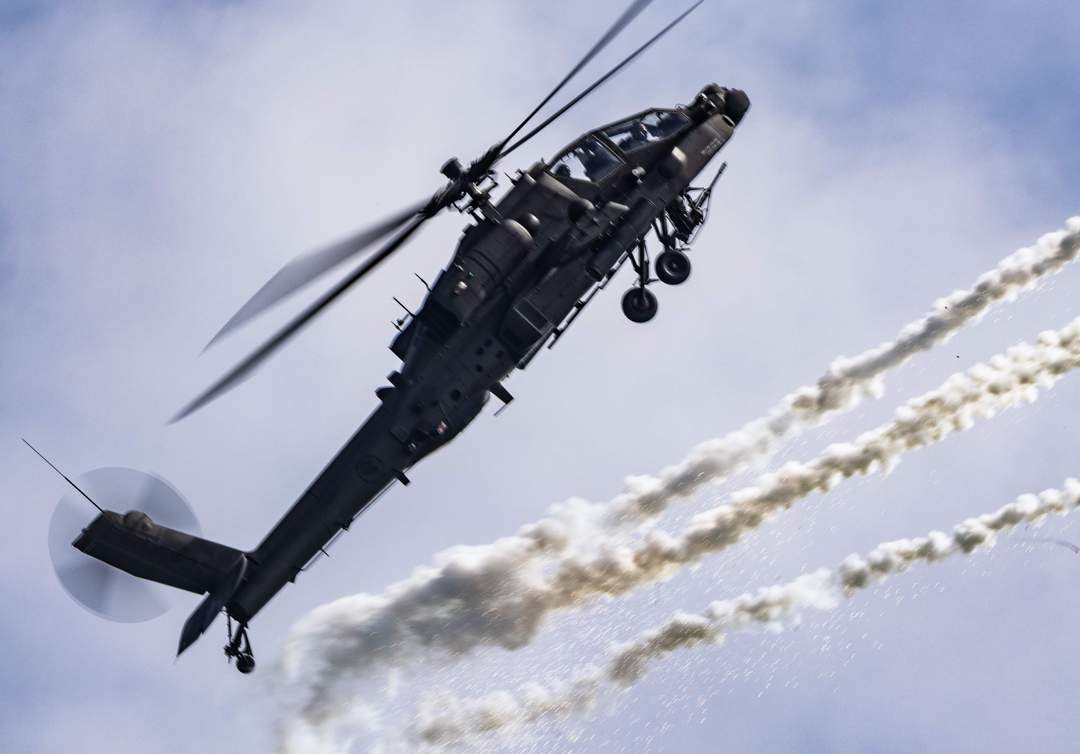
A US Army Apache helicopter crashed near the Strait of Hormuz early Tuesday, an incident that coincides with a significant escalation in maritime restrictions imposed by Yemen’s Iran-aligned Houthi movement in the Red Sea.
The crash occurs during a period of extreme volatility in the Middle East, as the region grapples with an ongoing war involving Iran, the United States, and Israel. With the Strait of Hormuz-the world’s most critical oil chokepoint-already closed by Tehran, the intersection of a US military mishap and new Houthi naval bans threatens to further destabilize global energy markets and disrupt the primary alternative shipping lanes used to bypass the Persian Gulf.
US President Donald Trump confirmed the safety of the crew members following the crash. Speaking on the runway at John F Kennedy International Airport before returning to Washington, DC, Trump stated that the pilots “are fine” and that there was “nobody injured.”
The White House indicated that a formal administration report regarding the incident would be released later Tuesday, and officials signaled that the findings would be shared with key congressional committees with oversight of defense and foreign affairs.
The New York Times, citing sources briefed on the event, reported that the Apache gunship went down near the Strait of Hormuz and the two crew members were safely rescued, in part with assistance from nearby US naval assets. It remains unclear whether the aircraft suffered a mechanical failure or was brought down by Iranian fire.
The US Department of State and US Central Command (CENTCOM) did not immediately respond to requests for comment. Pentagon officials have stressed in recent weeks that any incident in or near the narrow waterway-through which roughly a fifth of globally traded oil normally passes-is assessed not only as a safety event but also for potential implications under US commitments to safeguard freedom of navigation.
Maritime Blockades in the Red Sea
Simultaneously, the Houthi movement announced a total ban on Israeli maritime navigation in the Red Sea. The group stated it had launched an attack on Israel and would now prohibit any vessels it assesses as Israeli-affiliated from transiting the waterway.
This move marks a critical shift in the Houthis’ role in the wider conflict. While the group disrupted shipping between 2023 and 2025 in solidarity with Palestinians, they had largely remained on the periphery of the broader war that erupted in February following US-Israeli strikes on Iran.
The Red Sea is now the primary conduit for millions of barrels of Middle East oil transported via pipeline to bypass the closed Strait of Hormuz, making it the lifeline for global energy supplies during the current hostilities. The waterway forms part of the vital route linking the Arabian Peninsula to the Suez Canal and onward to Europe, and it is governed by a patchwork of national jurisdictions and the global maritime rules set out under the UN Convention on the Law of the Sea.
A Houthi source told Reuters that the ban on Israeli ships is merely a “first step,” suggesting that further escalation could include stopping all ships bound for Israel. Western diplomats say any such expansion of targeting criteria would sharply raise the risk of miscalculation and prompt fresh debate in allied capitals over naval escorts, convoy systems, or additional sanctions.
Economic Implications and Shipping Risks
The announcement has sent ripples through the maritime insurance and risk management sectors. Vanguard, a British maritime risk management group, noted that while the ban is specifically directed at Israeli-affiliated vessels, the ambiguity of the Houthis’ targeting criteria poses a systemic risk to all commercial traffic.
“Given the broad wording used, vessels operating in the region should maintain heightened vigilance and conduct enhanced affiliation screening,” Vanguard stated in a Monday note.
Industry analysts warn that the Houthis’ history of misidentifying targets may force a mass exodus of shipping from the Red Sea entirely, undermining assurances by flag states and port authorities that commercial traffic can remain safely insured and financed.
- Route Diversion: Many operators are considering, or have already begun, routing via the Cape of Good Hope around Africa to avoid the risk of seizure or attack, despite significantly higher fuel costs and longer transit times.
- Insurance Volatility: Red Sea war risk insurance rates held at approximately 0.3% of ship value as of Monday, according to brokers, though these are reviewed every 24 hours and are subject to rapid spikes if attacks intensify or flag states alter their risk guidance.
- Strategic Chokepoints: The combination of the closed Strait of Hormuz and a contested Bab el-Mandeb strait effectively puts the world’s two most vital energy arteries under hostile or highly uncertain control.
Shipping sources suggest that the lack of a reliable vetting process by the Houthis makes the Red Sea transit an unacceptable gamble for many firms. One source noted it is “probably better to go around Africa, pay the fuel bill, and benefit from lower war risk insurance costs.” Some major charterers have begun revising contracts of carriage and force majeure clauses to reflect the heightened threat environment, adding legal and financial complexity for governments seeking to keep trade flowing.
Military Posture and Oversight
The geopolitical tension comes as US military leadership briefs lawmakers on operational priorities in the theater. Admiral Brad Cooper, CENTCOM commander, recently briefed the Defense subcommittee for the House Appropriations Committee in Washington, D.C., with a subsequent briefing scheduled for the Senate. Lawmakers are expected to press for clarity on rules of engagement, contingency plans for escorting commercial shipping, and the budgetary implications of an extended naval presence.
The Apache crash near the Strait of Hormuz adds a layer of tactical complexity to CENTCOM’s mission, as the US attempts to maintain a deterrent presence in an environment where both the air and sea lanes are increasingly contested. Any confirmed hostile involvement in the downing would feed directly into debates within NATO and allied governments over how far to extend existing maritime security operations and whether additional mandates are needed.
The US military continues to monitor Houthi activity in the Red Sea while awaiting the final investigative report on the Apache crash. Defense officials say the findings will inform both immediate aviation safety measures and broader operational planning as Washington weighs how to secure critical energy corridors without triggering a wider regional confrontation.
Related reading
