
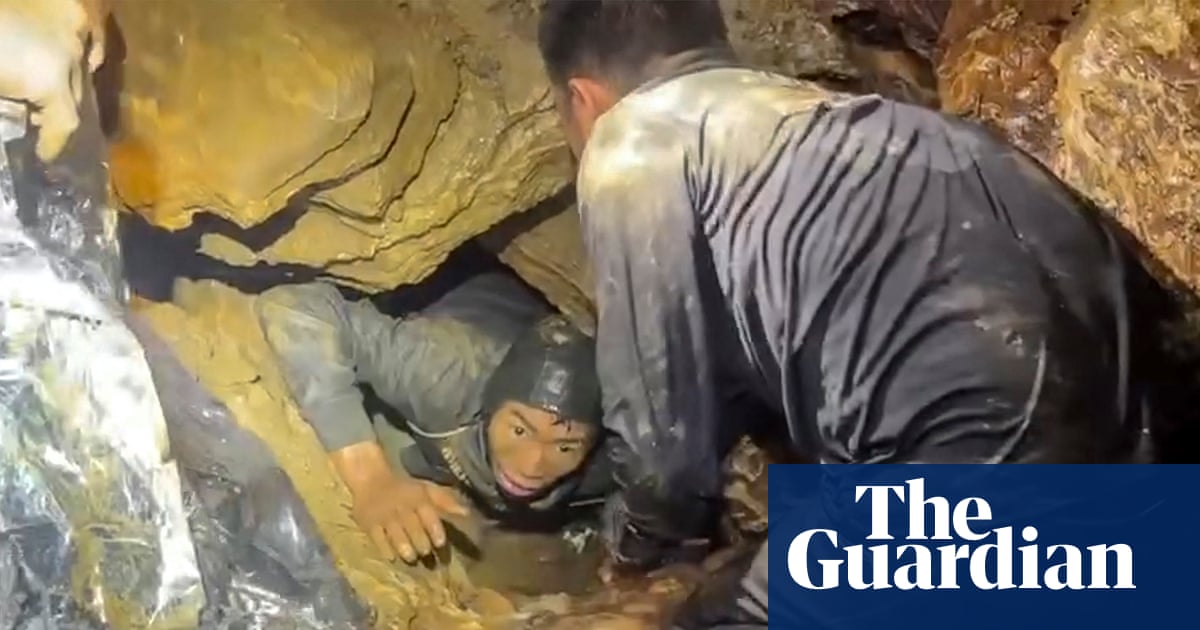
VIENTIANE – Divers have successfully extracted four more miners from a flooded cave system in the Xaisomboun province of Laos, though the operation remains critical as rescuers search for two missing men still trapped within the subterranean complex.
The rescue, which has spanned several days of high-risk diving and engineering, brings the total number of survivors to five. The men had been trapped for 10 days after flash flooding, triggered by torrential rains, blocked the exit of the cave they had entered in search of gold ore.
This operation highlights the recurring dangers of artisanal and small-scale mining (ASM) in Southeast Asia, where unregulated prospecting in rugged terrain often intersects with extreme weather patterns. The complexity of the rescue has necessitated a specialized international coalition, mirroring the high-stakes technical coordination seen in previous regional cave disasters.
A Perilous Subterranean Environment
On Saturday, rescue teams located four survivors huddled together on a rocky ledge within a chamber approximately 300 metres from the cave entrance. While the men were found on Wednesday, the precarious nature of the tunnels delayed their immediate evacuation as engineers and divers reassessed the stability of the passageways.
The extraction process requires divers to navigate a labyrinth of narrow, deluged passages characterized by sharp rock formations and near-zero visibility. Josh Richards, an Australian cave diver who joined the mission on Friday, described the environmental challenges as extreme due to the instability of the cave’s clay and mud walls.
“You’re essentially diving in coffee. You’re not going to be seeing anything through it,” Richards said.
To mitigate the risk of further collapses or total blockage, teams have been working to pump water out of the system, though the sediment-heavy water continues to hamper progress and limits how many divers can safely operate underground at any given time.
Regional Cooperation and Technical Challenges
The mission is a joint effort involving Lao authorities and specialized Thai rescue units, including the Saithan Saphanboon Foundation and Metta Tham Rescue Kalasin. This bilateral cooperation reflects a deepening of regional disaster response frameworks within ASEAN, leveraging specific expertise in cave diving that is rare globally and usually deployed only in the most complex operations.
The first survivor was extracted on Friday, emerging mud-covered and unsteady. His rescue was marked by visible physical trauma; rescuers noted his hands were severely injured as he was helped away from the cave entrance and transferred to waiting medical teams.
Manat Artmongkron, a rescue technician for the Saithan Saphanboon Foundation, confirmed the first extraction in a jubilant Facebook post: “The first one is out. Safe and sound!!!” Officials later said the man was in a stable condition but would undergo further assessment for dehydration and soft-tissue injuries.
The technical difficulties of the mission have been compounded by the physical architecture of the cave. Kengkaj Bongkawong of the Metta Tham Rescue Kalasin detailed the psychological and physical toll on the divers:
- Spatial constraints: Divers must navigate a 25-metre-long tunnel with no room to perform a U-turn, forcing them to commit fully to each passage.
- Environmental stress: Extreme temperature fluctuations, strong currents and poor visibility.
- Psychological management: The need to manage the panic of survivors in claustrophobic, flooded conditions while maintaining their own composure.
Bongkawong emphasized the necessity of rigorous safety protocols, stating, “Diving in the narrow passage that has no space to make a U-turn, this is really dangerous so we need to evaluate the safety measures, principles, routes and expertise in the cave area.” He added that each dive is planned as a one-way journey in and out, with no margin for equipment failure.
Risk, Regulation and Informal Mining
Authorities have not yet announced whether a formal investigation will be opened into the circumstances that led the men into the cave, but the incident is already intensifying scrutiny of informal mining in remote provinces. Laos has in recent years signalled a tighter approach to natural-resource oversight under its Minerals Law and related environmental regulations, yet enforcement in mountainous areas remains uneven and often depends on under-resourced provincial officials.
Artisanal mining is a vital source of income for many rural households, but safety standards typically fall outside the structured oversight applied to licensed commercial projects. Disaster-management analysts say the Xaisomboun operation will likely feed into internal reviews of how local authorities map hazardous sites, warn communities ahead of the rainy season and coordinate with national-level emergency committees when accidents occur.
The Legacy of Thai Cave Rescues
The presence of international diving teams, including specialists who participated in the 2018 rescue of a youth football team from the Tham Luang cave in Thailand, underscores the rarity of the skill set required for such missions. The 2018 event established a global precedent for “extreme extraction,” utilizing specialized anesthesia and precise dive-mapping to move non-divers through flooded conduits – methods that continue to inform training curricula for elite rescue divers worldwide.
In the current Lao operation, survivors were provided with water, soft food, and foil blankets while awaiting extraction to prevent hypothermia and malnutrition. Those rescued on Saturday were filmed climbing out of narrow openings, appearing shaken but stable as they were placed on stretchers, fitted with oxygen masks and moved to nearby ambulances for transfer to hospital.
The operation is unfolding as Southeast Asia again braces for intense monsoon rains and associated flooding. Regional disaster-response officials say the Laos rescue will likely feature in future joint exercises and technical exchanges on cave and flood emergencies, alongside documented lessons from Tham Luang and other large-scale incidents that have shaped ASEAN’s evolving crisis coordination mechanisms.
Rescuers are now focusing their efforts on a section of the cave located 20 to 25 metres beyond the ledge where the four survivors were found. Bongkawong warned that this deeper area remains heavily flooded, complicating the search for the final two missing miners and limiting the safe operating window for each dive.
Search and recovery operations continue in the Xaisomboun province as diving teams attempt to penetrate the deeper, flooded chambers of the cave system. Officials say the priority remains to locate the remaining two men alive, while concurrently planning for a longer-term review of how high-risk informal mining intersects with extreme weather in Laos’s most fragile landscapes.
Worth a look
