
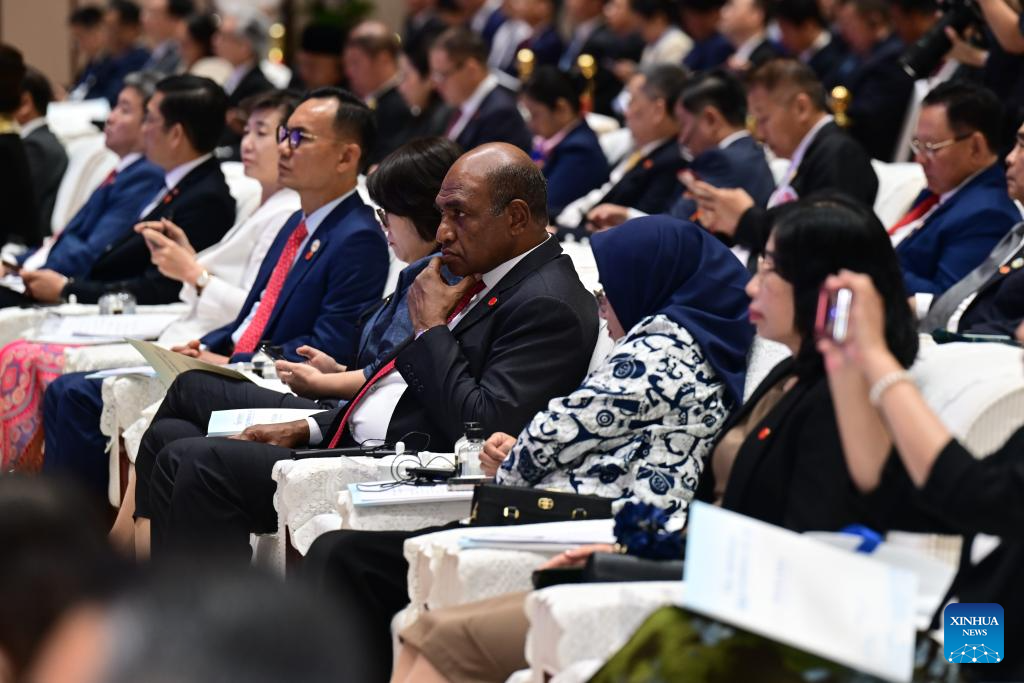
HUANGSHAN – The 2026 Regional Comprehensive Economic Partnership (RCEP) Local Governments and Friendship Cities Cooperation Forum opened in Huangshan, Anhui Province, on Thursday, centering on the operationalization of the world’s largest free trade agreement through municipal and provincial partnerships.
Hosted by the Chinese People’s Association for Friendship with Foreign Countries and the People’s Government of Anhui Province, the forum seeks to transition the RCEP framework from high-level diplomatic treaties into tangible local economic activity. While national governments negotiate tariffs and trade barriers, the Huangshan forum focuses on the sub-national level, where city-to-city agreements often dictate the actual flow of investment, tourism, and logistics.
The strategy underscores a broader shift toward “sub-national diplomacy,” allowing regional administrations to maintain economic momentum even when national geopolitical tensions fluctuate. By leveraging “friendship cities”-sister-city relationships that facilitate cultural and economic exchanges-China is attempting to embed RCEP’s institutional benefits deeper into the administrative fabric of the Asia-Pacific.
Integrating Technology and Tradition
The opening ceremonies in Huangshan blended displays of China’s industrial ambitions with its cultural heritage. Attendees viewed a performance by a humanoid robot, signaling the province’s push toward high-tech manufacturing and automation within the RCEP supply chain and aligning with Beijing’s broader drive to move up the value chain in advanced manufacturing.
Simultaneously, the forum highlighted the She inkstone, a traditional craft of the region, as part of a broader effort to promote cultural exports and “soft power” diplomacy. This duality reflects the RCEP objective of diversifying trade beyond raw materials and electronics to include services, intellectual property, and cultural goods, areas explicitly covered in chapters of the Regional Comprehensive Economic Partnership agreement itself.
A centerpiece of the event was a formal signing ceremony, where local governments and municipal representatives formalized cooperation agreements intended to plug cities more directly into regional value chains. These pacts typically focus on:
- Streamlining customs procedures for regional SMEs, including coordinated “single window” document handling at major ports of entry.
- Establishing joint investment zones for cross-border ventures, often with shared infrastructure and preferential local tax treatment.
- Increasing educational and professional exchange programs to build a pipeline of skilled workers familiar with RCEP rules of origin and digital trade norms.
- Developing sustainable tourism corridors between RCEP member cities that bundle transport, marketing, and environmental standards into joint plans.
Officials said the goal is to move from symbolic sister-city ties toward memoranda of understanding that carry measurable trade, investment, and people-to-people targets, with local bureaus responsible for follow-through.
The RCEP Framework and Regional Stability
The Regional Comprehensive Economic Partnership, which entered into force in 2022, creates a unified market encompassing 15 Asia-Pacific nations, including China, Japan, South Korea, Australia, New Zealand, and the ten ASEAN member states. Collectively, these nations account for approximately 30% of global GDP and roughly a third of the world’s population, giving the pact critical weight in setting trade and investment norms across the Indo-Pacific.
As a rules-based free trade area built around common tariff schedules, rules of origin, e-commerce provisions, and intellectual property disciplines, RCEP provides the legal umbrella under which local governments can harmonize procedures ranging from customs clearance to digital certification of goods. By focusing on local government cooperation, the Huangshan forum addresses a critical gap in the agreement’s implementation: translating framework commitments into day-to-day practice along specific logistics corridors and industrial clusters.
Trade facilitation-the ease with which goods move through ports and across borders-is often managed by local authorities, from customs districts to port administrations and bonded zones. When city governments align their regulatory environments and administrative procedures, the cost of doing business can drop more rapidly than it does through national tariff reductions alone, especially for small and medium-sized enterprises that lack the resources to navigate fragmented local rules.
The involvement of the Chinese People’s Association for Friendship with Foreign Countries indicates a diplomatic intent to use these economic ties to foster political goodwill. In the context of the Asia-Pacific, such forums serve as low-friction environments for officials to resolve operational disputes, pilot joint standards, and test digital trade tools before they are elevated to national-level negotiations. For regional partners, the local focus also offers a channel to engage directly with Chinese provinces that are key nodes in manufacturing and logistics networks.
The Huangshan gathering follows earlier steps by RCEP members to create implementing guidelines and national contact points, as documented by trade ministries across the bloc, including Singapore’s overview of how the pact is being phased in across tariffs, services, and investment access. The forum continues in Anhui Province, with scheduled sessions focusing on digital economy integration-such as interoperable e-invoicing and cross-border data flows-and the synchronization of regional environmental standards, including green port initiatives and low-carbon tourism models aimed at making RCEP-era growth more sustainable.
Keep reading
