
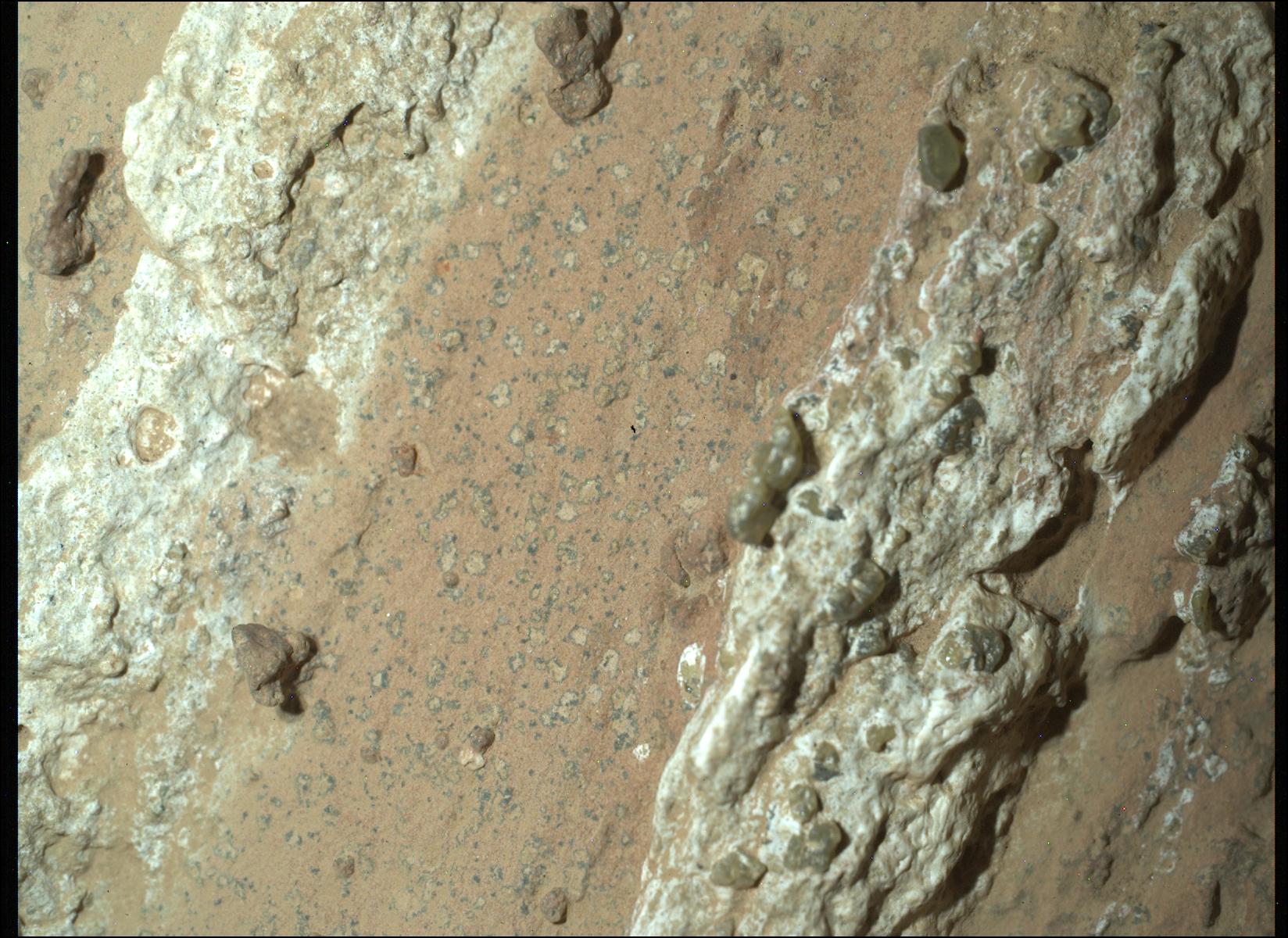
The detection of organic carbon paired with specific mineral patterns in a Martian mudstone has shifted the search for ancient life from broad geological surveys to a targeted chemical investigation. The sample, retrieved from the Cheyava Falls rock in the Bright Angel formation of Jezero Crater, represents one of the most complex chemical puzzles encountered by the Perseverance rover. While the presence of these materials is provocative, the distinction between a biological origin and a geochemical fluke remains the central tension of the mission – and a live question for the agencies and governments now deciding how far to invest in Mars Sample Return.
The Redox Chemistry of Cheyava Falls
The scientific interest in the Cheyava Falls sample centers on redox reactions-chemical processes where electrons are transferred between species. On Earth, these reactions are the primary energy source for microbes living in oxygen-poor sediments and are fundamental to biogeochemical cycles that regulators already monitor in groundwater and marine environments. The rover identified iron-rich mineral features, specifically iron phosphate (vivianite) and iron sulfide (greigite), which appear in close association with organic carbon.
These features manifest as small, circular textures nicknamed “poppy seeds” and larger reaction-front patterns known as “leopard spots.” Because these minerals often correlate with microbial sulfur cycling or decaying organic matter in terrestrial environments, they are classified as “potential biosignatures.” This terminology is a critical safeguard; it indicates that while the patterns are consistent with life, they do not prove it and should not yet drive policy or public spending decisions that assume biology has been found.
The paper “Redox-driven mineral and organic associations in Jezero Crater, Mars” notes that non-living chemistry can produce similar results. Abiotic pathways, such as catalytic reactions or specific geochemical alterations, can synthesize organic compounds and iron minerals without the intervention of biological organisms, underscoring why scientific agencies are emphasizing caution in their public communications about “signs of life.”
Remote Analytical Architecture
Analyzing these samples requires a sophisticated onboard sensor suite capable of mapping chemistry at a microscopic scale. Perseverance utilizes a dual-instrument approach to ensure data integrity before any drilling occurs, a safeguard designed not just for science but for the eventual legal and political scrutiny that will follow any claim of life beyond Earth.
| Instrument | Technical Method | Primary Objective |
|---|---|---|
| PIXL | X-ray Fluorescence | Elemental chemistry mapping of rock surfaces |
| SHERLOC | Raman & Fluorescence Spectroscopy | Identification of minerals and organic compounds |
By combining these tools, scientists can determine if organic carbon is randomly distributed or specifically concentrated within the “leopard spots.” This spatial correlation is what makes the Cheyava Falls sample more significant than previous organic detections, as it suggests a localized energy source that could have supported a microbial metabolism and therefore merits prioritization in the sample-return manifest.
Mars Sample Return Infrastructure
The cached core, designated as Sapphire Canyon, cannot be fully verified using current rover technology. The final determination of whether these patterns are biological requires terrestrial laboratory equipment capable of isotopic analysis and high-resolution microscopy that exceeds the payload capacity of a mobile rover and will likely be housed in new, purpose-built facilities on Earth.
The transition from discovery to verification depends on the Mars Sample Return (MSR) architecture, a multi-stage logistical operation involving several high-risk technical milestones and, increasingly, high-stakes budget and governance decisions in spacefaring nations:
- Sample Retrieval: A dedicated fetch mission to collect cached tubes from the Martian surface and consolidate them for launch, a step that must be synchronized with international partners and export-control regimes.
- Mars Ascent Vehicle (MAV): The first rocket launch from another planet to propel samples into orbit, an experimental capability that requires regulators to anticipate potential failure modes and debris scenarios in advance.
- Orbital Capture: An autonomous rendezvous between the ascent vehicle and an Earth Return Orbiter, demanding a level of automation that will test emerging norms on the safe use of autonomous systems in outer space.
- Bio-Containment: The secure transport and sealing of the sample to prevent planetary contamination, aligning engineering decisions with biosafety rules that were written for terrestrial pathogens, not hypothetical Martian ones.
Planetary Protection and Regulatory Oversight
The prospect of “potential biosignatures” triggers strict planetary protection protocols and pulls this mission squarely into the domain of law and policy. Internationally, the baseline expectations are set by the Outer Space Treaty, which obliges states to avoid harmful contamination of celestial bodies and adverse changes to Earth’s environment from extraterrestrial material. National space agencies then translate those obligations into binding or quasi-binding standards for their own missions.
These regulations are designed to prevent “back contamination”-the accidental introduction of Martian biological materials into Earth’s biosphere. Under current guidance, any sample containing potential biosignatures must be handled in high-containment facilities, likely Biosafety Level 4 (BSL-4) or facilities built to an equivalent or higher standard, until a rigorous screening process proves the material is sterile or safely contained. That requirement effectively forces governments to make early, expensive infrastructure decisions well before the science is settled.
This regulatory layer adds significant complexity to the September 2025 release regarding the findings. The infrastructure for receiving these samples must not only be capable of advanced science but must also function as a secure quarantine system, operating under clear legal authority and public oversight to manage the biological risks associated with extraterrestrial material. Local communities, environmental regulators, and health authorities will all demand clarity on where such a facility is built, who is liable in the event of an incident, and how transparent the risk assessment will be.
The finding at Cheyava Falls does not provide a definitive answer on Martian life, but it provides a specific physical target and a concrete test case for the world’s planetary protection regime. The success of the mission now rests on the ability of the return infrastructure to deliver this mudstone to Earth without compromising the integrity of the sample or the safety of the terrestrial environment-and on policymakers’ willingness to fund and authorize that system before the scientific verdict is in.
Worth a look
