
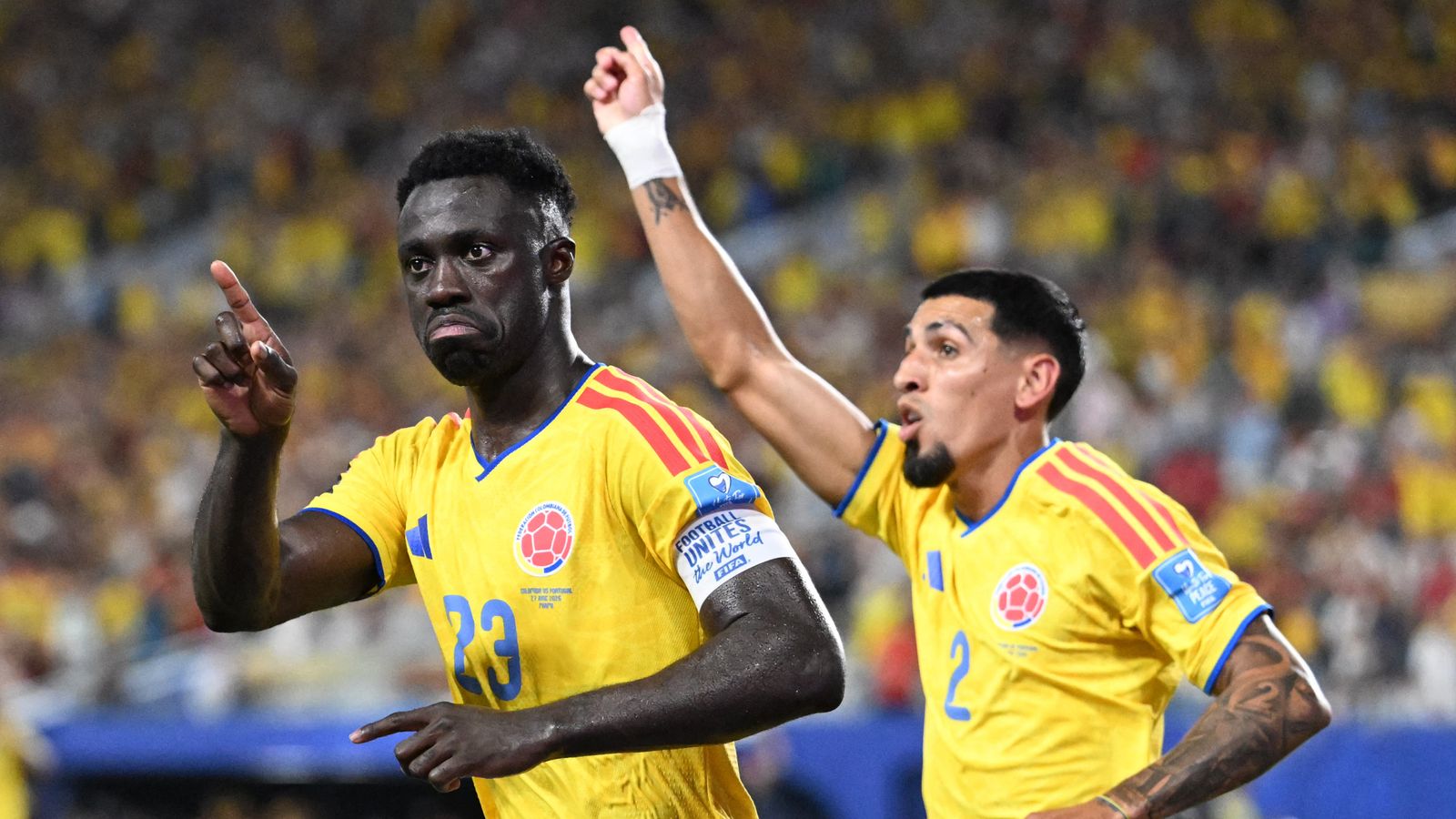
Colombia Clinch Group K Top Spot Following Tactical Stalemate With Portugal
Colombia have secured first place in Group K after playing out an entertaining 0-0 draw against Portugal in their final group stage encounter. The result ensures that Roberto Martinez’s Portugal side finish the group as runners-up, altering the trajectory of both teams as they enter the knockout phases of the World Cup.
The match, held in a raucous Miami atmosphere, was characterized by high intensity and missed opportunities. While the scoreline remained blank-marking the first time in history Colombia has failed to score in a World Cup match-the game featured several critical moments that could have decided the group’s leadership. The result also locks in Colombia’s side of the draw in a tournament jointly hosted across North America, where travel, climate and fan-base concentrations have become strategic considerations for team staff and national federations.
Knockout Stage Implications
By finishing top of Group K, Colombia have earned a favorable seeding for the next round under the expanded 48-team format, which sends the top two sides and select third-placed teams into a newly created round of 32. This positioning sets up a high-stakes narrative for their round of 32 clash, where they will face Ghana. The tie also reunites the Colombian squad with former manager Carlos Queiroz, whose tenure with the team between 2019 and 2020 was widely regarded as unsuccessful and whose approach was often criticized by the Colombian federation for not maximizing an attacking generation led by James Rodriguez.
Portugal, who required a victory to claim the top spot, now face a more challenging path. Their second-place finish leads them to a confrontation with Croatia, with the potential for a last-16 encounter against Spain. For the Portuguese Football Federation, the outcome sharpens scrutiny on whether a veteran core built around Cristiano Ronaldo can still navigate the compressed, high-stakes knockout schedule that tournament organizers and broadcasters have pushed for in recent World Cup reforms.
Upcoming Round of 32 Schedule (local time):
- Portugal vs. Croatia: Friday, July 3 – Toronto
- Colombia vs. Ghana: Saturday, July 4 – Kansas City
Both fixtures will be played in venues operating under the joint host nations’ safety, visa and match-operations frameworks, with national associations conscious that on-pitch decisions at this stage are now tightly interwoven with commercial, security and diplomatic considerations around one of the world’s most watched events.
Match Analysis and Key Moments
Despite the lack of goals, the game was an open, end-to-end affair. Colombia appeared to have the upper hand for much of the match, pressing high and creating several clear-cut chances, while Portugal alternated between controlled possession and rapid counter-attacks.
The most dramatic moment occurred in stoppage time when Davinson Sanchez found the net from a tight angle; however, the goal was disallowed for offside. VAR subsequently confirmed that Sanchez’s toe was in an offside position, underlining how video review-now fully embedded in the competition’s refereeing protocol-continues to decide fine margins at elite level.
Portugal nearly stole the game in the 93rd minute, but Rafael Leao poked his effort wide, sparing Colombia from a late defeat and preserving the group’s existing hierarchy.
Chronology of Critical Incidents:
- 1′: Jhon Cordoba heads over the bar after finding space between Portugal’s centre-backs.
- 22′: Ruben Neves clears a Jhon Arias effort off the goal line following sustained Colombian pressure.
- 39′: Camilo Vargas produces a key save to deny Bruno Fernandes from the edge of the area.
- 60′: Cristiano Ronaldo’s effort goes wide, though the flag was already raised for offside.
- 62′: Richard Rios pokes a low chance around the post from close range.
- 90+1′: Davinson Sanchez scores from a loose ball, but the goal is ruled out by the on-field official and VAR for offside.
- 90+3′: Rafael Leao misses a late opportunity to secure a Portuguese win, sliding his finish wide of the far post.
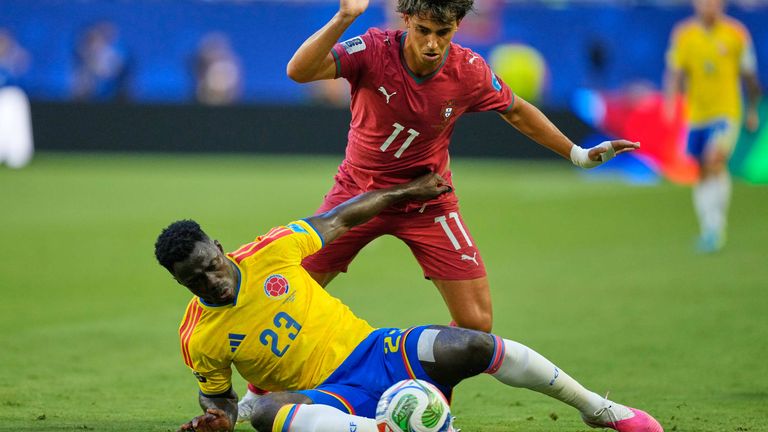
Portugal’s Joao Felix and Colombia’s Davinson Sanchez battle for the ball in Miami
The Influence of James Rodriguez
The match served as a significant personal milestone for James Rodriguez. The 34-year-old became the first Colombian player to reach 11 World Cup appearances, surpassing the previous record of 10 held by Freddy Rincon and Carlos Valderrama. For the Colombian Football Federation, his longevity at this level is a reminder of how one playmaker has shaped the national team’s identity across multiple tournament cycles.
Rodriguez proved pivotal to Colombia’s attacking structure, utilizing his vision and precision to drive the team forward, constantly dropping into pockets of space to connect midfield and attack. His statistical contribution highlighted his dominance in the middle of the park:
- Chance creation: 5 (joint-match high)
- Passes in final third: 43 (match high)
- Total duels: 7 (second highest)
- Possession won: 4 (second highest)
Despite a club career that has seen various moves, including a period at Everton, Rodriguez’s performance in Miami suggests he remains an essential leader for the national side, both technically and symbolically. He received a standing ovation from the crowd upon his substitution, an acknowledgment of his status as the reference point for a generation of Colombian players and fans.
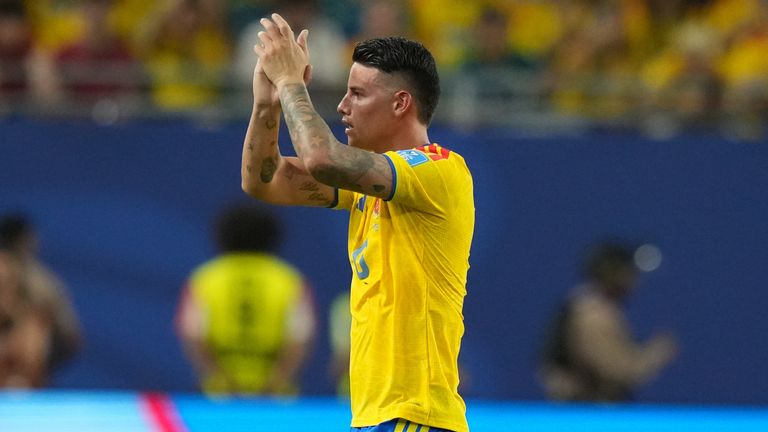
Colombia’s James Rodriguez showed his quality against Portugal
Managerial Perspectives
Following the match, Colombia boss Nestor Lorenzo praised his team’s dominance, stating that they deserved to win due to the volume of chances created. He noted that the combination of the supportive fan base and the Miami heat created an atmosphere reminiscent of Barranquilla, effectively turning a neutral venue into a home-style setting and underlining how diaspora communities can shape the competitive balance at World Cups hosted far from South America.
Roberto Martinez took a more cautious view, admitting that the game was more open than Portugal would have preferred. However, he emphasized that facing a “top-tier team” like Colombia provided necessary insights and alignment for the knockout stages, which he described as a “completely different tournament.” For both coaches, Miami served as a live stress test of their squads’ tactical flexibility and their federations’ investment in support structures-from sports science to travel planning-now regarded as essential to progressing deep into global tournaments.
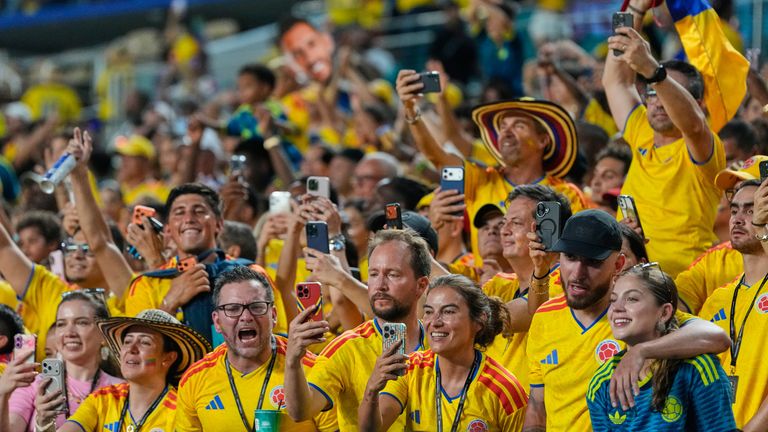
Colombia fans were out in force in Miami as their team qualified for the round of 32
