
Modern international football is increasingly defined by the complexities of dual heritage and the globalization of the game. From players navigating the emotional divide of scoring against their ancestral homes to managers traversing nearly every continent, the records of the sport reflect a shifting landscape of identity and professional longevity. In an era when eligibility rules allow players to represent countries through birth, ancestry or residency, and when national associations compete intensely for talent, every goal and every cap now carries a layer of diplomatic and regulatory meaning.
The Diplomacy of the Goal Celebration
The act of abstaining from a goal celebration has become a recognized, almost codified, gesture of respect for players with connections to the opposition. In a sport where images travel instantly and are replayed endlessly, that restraint is as much a signal to families and diasporas as it is to the fans in the stadium.
Recent examples include Sweden’s Yasin Ayari, who refrained from celebrating his first goal against Tunisia due to his Tunisian father, and Declan Rice, who mirrored this restraint after scoring against the Republic of Ireland in 2024, having previously represented Ireland at youth level. Both cases underscored how dual identity, and the choices permitted by modern eligibility frameworks, can later return in the emotionally fraught context of competitive fixtures.
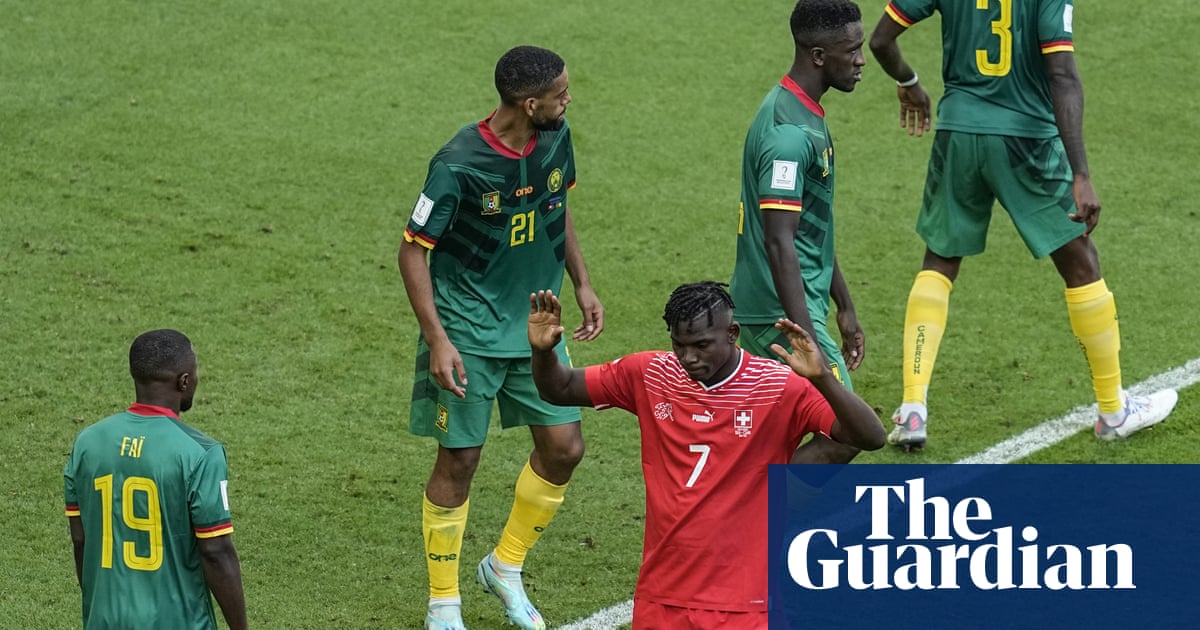
This trend of professional restraint dates back further. At the 2022 World Cup, Swiss international Breel Embolo, born in Cameroon, declined to celebrate after scoring against his birth country. In a globally broadcast tournament overseen by the FIFA Statutes, even a muted reaction can be read as a player’s personal diplomacy within a heavily regulated, flag-and-anthem environment.
Earlier instances highlight the psychological pressure these players face. In 2010, Mesut Özil showed similar restraint when scoring for Germany in a 3-0 victory over Turkey, the country of his parents’ origin, amid an intense public debate in Germany about integration and national loyalty. However, one of the earliest widely noted examples of this gesture occurred at Euro 2008. Lukas Podolski, born in Poland, scored two goals against the Polish national team without celebrating.
Podolski later described the match as a difficult emotional experience, noting that the intensity of the press and the presence of numerous Polish fans created significant pressure. His decision not to celebrate was a balance between his professional obligation to Germany and his personal support for Poland. For federations, those moments are no longer just human-interest stories; they sit at the intersection of sports diplomacy, diaspora engagement and the politics of national team selection.
Globalized Management and Coaching Versatility
If players increasingly embody dual or multiple identities, international managers now personify the game’s globalization. The career of Dick Advocaat, current manager of Cape Verde, is often cited for its breadth, having coached eight different men’s international teams and both the senior men’s and women’s national teams of the Netherlands. His path illustrates how federations recruit technical expertise across borders to navigate demanding qualification calendars and expanding tournaments.
While that breadth is rare, the record for international versatility belongs to Rudi Gutendorf. The German manager’s 53-year career spanned 17 national manager roles, often in countries building or rebuilding their football infrastructures. His portfolio included:
- Americas: Chile, Bolivia, Venezuela, Trinidad and Tobago, Grenada
- Africa: Botswana, Tanzania, Ghana, Zimbabwe, Mauritius, Rwanda
- Asia/Oceania: Australia, New Caledonia, Nepal (twice), Tonga, Fiji
- Additional roles: Iranian and Chinese Olympic teams (1988 and 1992)
While some analysts note that certain appointments did not result in official matches, Gutendorf’s reach remains unmatched. For host associations and governments, such appointments were often part of broader development strategies: importing technical expertise to accelerate national programmes, professionalise domestic leagues and align with continental confederation standards. Other managers with significant international footprints include Tom Saintfiet (12 teams across four federations), Danny McLennan (10 teams), Claude Le Roy (9 teams), and Bora Milutinovic (8 teams).
Beyond the volume of teams, John Herdman achieved a rare feat in gender-inclusive management. Between 2011 and 2023, Herdman led both the Canada women’s and men’s national teams. He transformed the women’s side from a 2011 World Cup low to Olympic bronze medals in London 2012 and Rio 2016. He later transitioned to the men’s team in 2018, guiding them to their first FIFA World Cup appearance in nearly four decades in 2022. That progression mirrored wider institutional shifts in how federations structure high-performance departments, often bringing men’s and women’s programmes under a single technical leadership model to meet governance and funding requirements.
World Cup Longevity and Appearance Gaps
The gap between a player’s first and second World Cup appearance serves as a marker of extreme career longevity – and of a national association’s fluctuating fortunes in qualification. New Zealand’s Chris Wood and Tommy Smith recently equaled the record for the longest wait between appearances at 16 years. This matches the feat of Colombia’s Faryd Mondragón, who appeared in the 1998 and 2014 tournaments, spanning different eras of coaches, selection policies and strategic priorities.
Prior to this, the standard for longevity was a 12-year gap. A significant number of players have achieved this interval:
| Player | Country | World Cup Years |
|---|---|---|
| Alfred Bickel / Erik Nilsson | Switzerland / Sweden | 1938 & 1950 |
| José Martínez Sánchez “Pirri” | Spain | 1966 & 1978 |
| Wilfried Van Moer | Belgium | 1970 & 1982 |
| Michael Laudrup | Denmark | 1986 & 1998 |
| Hernán Medford / Niall Quinn | Costa Rica / Ireland | 1990 & 2002 |
| Santiago Cañizares | Spain | 1994 & 2006 |
| Lee Dong-gook | South Korea | 1998 & 2010 |
| Van Buyten / Kerzhakov | Belgium / Russia | 2002 & 2014 |
| Randall Azofeifa | Costa Rica | 2006 & 2018 |
| Dzeko / Kolasinac | Bosnia & Herzegovina | 2014 & 2026 |
| Bentaleb / Mandi / Mahrez | Algeria | 2014 & 2026 |
| Lucas Digne | France | 2014 & 2026 |
In each case, the gap reflects more than individual longevity. It speaks to how federations cycle through generations, alter tactical blueprints and respond to changing qualification formats. For smaller or mid-tier nations, returning veterans often become continuity figures who bridge different governance eras within their national associations.
Regulatory Myths: The Italia 90 Substitution Case
Historical debates often center on tactical errors during high-stakes tournaments. A recurring theory regarding England’s penalty shootout loss to West Germany at Italia 90 suggests that manager Bobby Robson should have substituted goalkeeper Peter Shilton for penalty specialist Dave Beasant before the shootout.
However, regulatory constraints of the era make this theory a myth. Under the rules at the time, teams were required to name a specific five-man substitute bench for each match, from which only two substitutions could be used. While England had only used one substitution (Trevor Steven for Terry Butcher), Beasant was not among the five named substitutes. The available options were Chris Woods, Tony Dorigo, Steve McMahon, and Steve Bull.
This distinction underscores the rigid squad management rules of the early 1990s, where coaching flexibility was far more limited than in the current era of expanded benches and five-substitution protocols. It also highlights how modern debates about in-game decision-making can overlook the formal competition regulations that shape what is actually possible for managers on the touchline.
Current International Anomalies
The international game continues to produce statistical outliers that test both data models and policy assumptions. Canada recently recorded a 6-0 victory over Qatar, marking their first men’s World Cup win with an unusually high margin of victory and reinforcing the case made by Canadian officials for sustained federal and provincial backing of high-performance programmes.
Other lingering questions in the sport include the lack of World Cup points for certain nations – an outcome that can trigger internal reviews of talent pathways, coaching standards and governance structures – and the discrepancy between national flags and team colors. The blue of Cape Verde or the orange of the Netherlands, for example, often stem from royal traditions or historical flags rather than current national symbols, reminding viewers that every kit on the pitch is also an institutional choice about how a country presents itself to the world.
As eligibility rules, competition formats and broadcast expectations continue to evolve, international football is becoming an increasingly formalised arena for soft power. Whether in a restrained goal celebration or a coach’s fifth passport stamp, the sport now sits squarely at the intersection of regulation, identity and diplomacy.
Worth a look
