
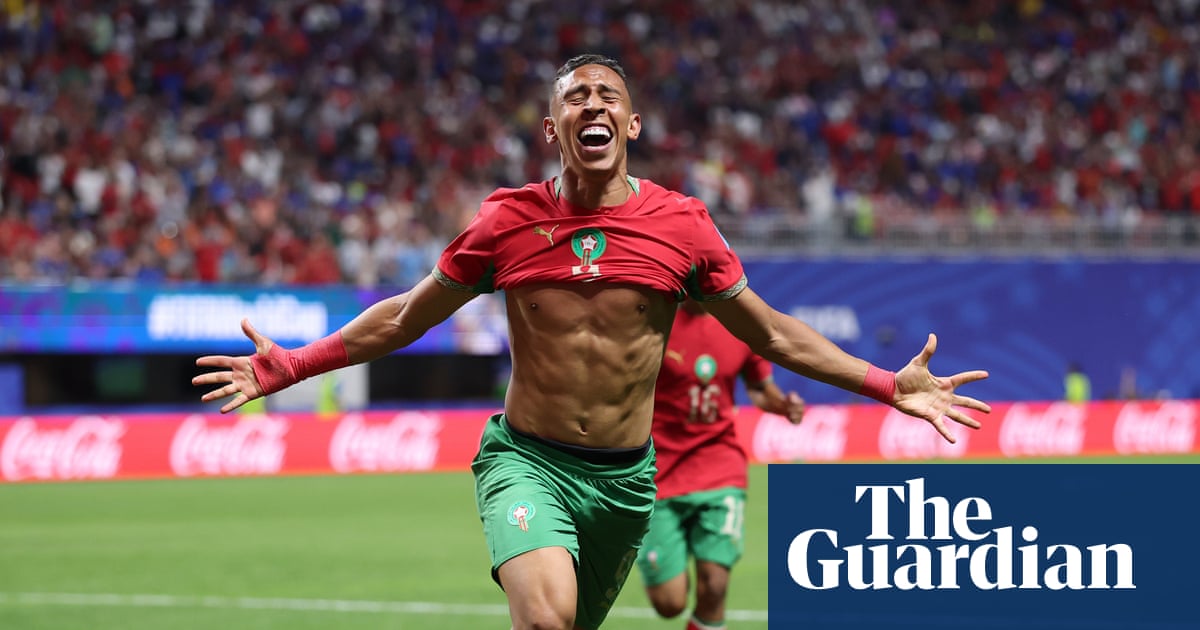
Morocco Secure Round of 32 Spot After Six-Goal Thriller Against Haiti
Morocco have confirmed their progression to the World Cup last 32 following a resilient 4-2 victory over Haiti on Wednesday, a result that underlines the country’s sustained investment in elite football structures in recent years. Despite twice trailing in an action-packed encounter, the Atlas Lions secured their place in the knockout stages, though they finished as runners-up in Group C behind Brazil.
Brazil secured the top spot in the group following a 3-0 win over Scotland. Morocco finished level with the five-time world champions on seven points but conceded the top seed on goal difference, a marginal detail that could shape their path through the tournament’s newly expanded 48-team bracket.
- Outcome: Morocco progress to Round of 32 as Group C runners-up
- Morocco scorers: Achraf Hakimi (39′), Ismael Saibari, Soufiane Rahimi (78′), Gessime Yassine (90′)
- Haiti scorers: Yassine Bounou (own goal), Wilson Isidor (43′)
- Next fixture: Morocco vs Group F winners (Japan, Netherlands or Sweden) on Monday in the Round of 32
Resilience Under Pressure
The match began with high intensity as Haiti, buoyed by vociferous support and playing with the freedom of a side already eliminated, took an early lead. In the 10th minute, Josué Casimir shielded the ball for Jean-Kévin Duverne, whose cross was audaciously backheeled toward goal by Lenny Joseph. While initially awarded to the striker, the opening strike was later recorded as an own goal by Morocco goalkeeper Yassine Bounou after a deflection off his leg.
Morocco relied on the experience of African footballer of the year Achraf Hakimi to stabilize the game and restore composure. In the 39th minute, Hakimi reacted quickest to a parried cross from Bilal El Khannouss to bundle the ball home for the equaliser, a moment that shifted momentum back towards the North Africans.
Haiti responded almost immediately. In the 43rd minute, Wilson Isidor struck a powerful shot from outside the area to restore the lead for the Caribbean side and briefly silence the Moroccan support. However, Morocco’s recovery was swift and controlled. Deep into first-half stoppage time, Sofyan Amrabat released Hakimi down the right flank, and the full-back’s low cross was swept in by Ismael Saibari to level the score. The goal marked Saibari’s third in as many FIFA World Cup appearances, reinforcing his emergence as a reliable scorer on the biggest stage.
Tactical Shifts and Final Blows
After the interval, Morocco gradually asserted control, tightening their defensive shape while continuing to probe down both flanks. Haiti’s veteran goalkeeper Johny Placide, appearing in his final international match after 15 years of service, kept Morocco at bay with several critical saves against Ayoub El Kaabi and Hakimi, briefly suggesting a tense finale.
The breakthrough finally arrived in the 78th minute, moments after Morocco introduced fresh legs in attack. Substitute Soufiane Rahimi capitalized on a failed Haitian clearance from a corner, reacting fastest to a loose ball in the six-yard box to steer home from close range and give Morocco the lead for the first time on the night.
The victory was sealed in the final minute of normal time. As Haiti appealed in vain for the ball having crossed the byline, Rahimi kept playing, cutting the ball back for 20-year-old Gessime Yassine to tap into an unguarded net. A brief VAR check confirmed the ball had remained in play, allowing the goal to stand and fixing the scoreline at 4-2. The episode underlined both Morocco’s game intelligence and the central role of the video review system under the current IFAB Laws of the Game framework, which governs major international tournaments.
Implications and Ambitions
For Morocco, the result cements their status as a rising power in international football and as a standard-bearer for African representation on the global stage. It follows their deep run at the 2022 World Cup and reflects years of coordinated policy between the Moroccan Football Federation, domestic clubs and national academies, including long-term investment in infrastructure and youth development.
Coach Mohamed Ouahbi indicated that the team has entered a “whole new dimension,” stating that the squad and staff now believe they possess the necessary ingredients to challenge the established powers. Advancing from a group containing Brazil while rotating the squad and managing minutes for key players will be seen in Rabat as vindication of those strategic decisions.
For Haiti, the tournament ends in disappointment as they become the first team eliminated from the expanded 48-team format. Despite losing all three group matches, this marked their first World Cup appearance in 52 years and a rare moment of global visibility for a federation operating under severe economic and political constraints at home. Manager Sebastien Migne noted that the team’s performances proved they deserved their place in the competition, even without securing a point, and several players have likely enhanced their prospects in European and North American club football.
Morocco now prepare for a high-stakes knockout clash on Monday, when they will face the winner of Group F, which consists of Japan, the Netherlands and Sweden. With the margins at the top of the group phase decided by goal difference and head-to-head records, their route through the last 32 will test whether this new generation can translate structural progress into sustained influence deep into another World Cup.
Related reading
