
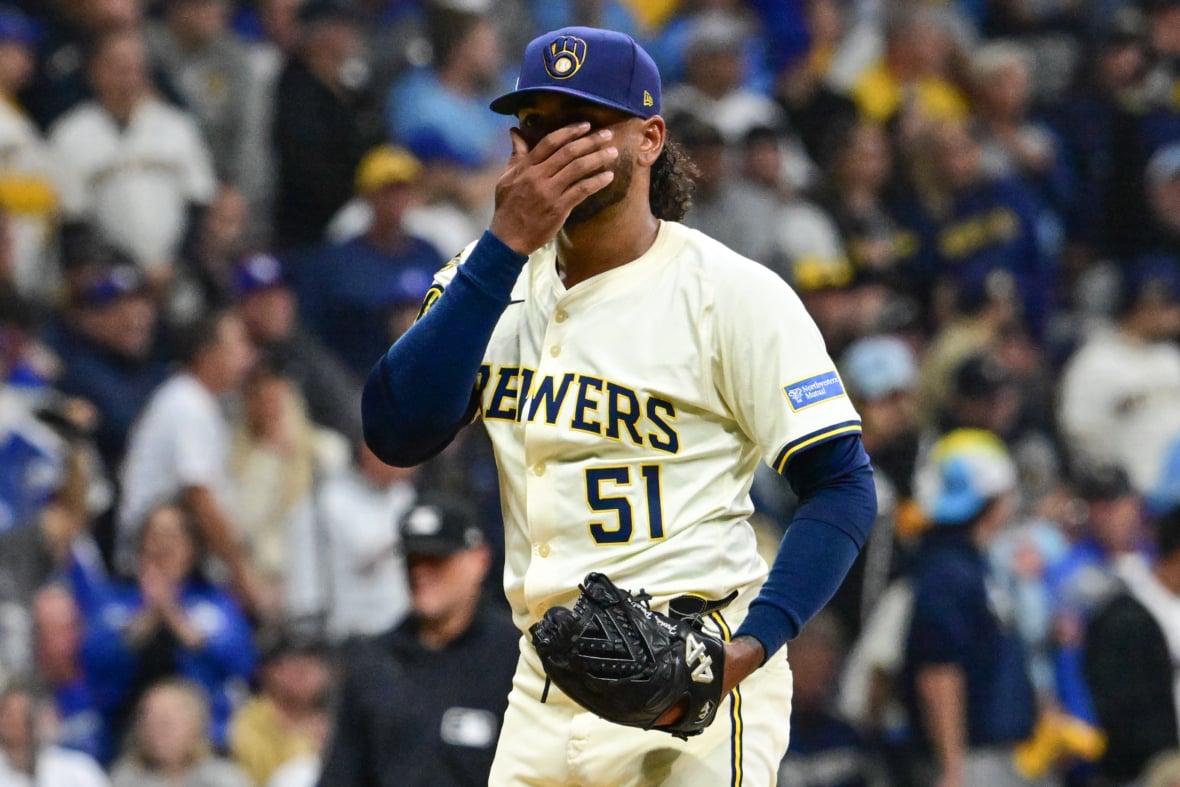
Dodgers intensify pursuit of Freddy Peralta as trade discussions gather pace
The Los Angeles Dodgers are exploring a high-end rotation upgrade, with industry chatter centering on Milwaukee Brewers right-hander Freddy Peralta. The possibility of a deal has drawn fresh scrutiny of how an already star-laden club could further consolidate its pitching ahead of 2026 and navigate the financial guardrails that shape roster-building decisions across Major League Baseball.
Talks around a potential deal
MLB insider Hector Gomez described the dialogue around Peralta as “becoming increasingly intense,” noting the Dodgers are “strongly pushing” for the two-time All-Star. While no agreement has been announced and neither club has commented publicly, the temperature of discussions underscores how aggressively Los Angeles continues to target frontline pitching in the wake of recent high-profile investments in its rotation.
Peralta, 29, has developed into one of the National League’s more reliable strikeout arms, combining a fastball that plays at the top of the zone with a deep mix that can carry him through multiple turns of a postseason lineup. His availability signals that Milwaukee is at least willing to listen on a pitcher who is under club control and central to its current identity.
A rotation move with postseason ramifications
Peralta’s profile fits the way October baseball is often won: swing-and-miss stuff at the top of a short-series rotation and the capacity to absorb high-leverage innings on regular rest. For a club already built to contend, adding an established starter would:
- Deepen matchup options in best-of-five and best-of-seven series, allowing the Dodgers to shorten games for their bullpen and script more favorable platoon scenarios.
- Reduce variance across a 162-game season by stabilizing the front end of the staff and easing pressure on depth starters who have been pushed into larger roles in recent years.
- Provide insurance against performance dips, injuries or workload management for younger arms expected to shoulder meaningful innings into October.
In practical terms, a Peralta addition would give manager Dave Roberts another pitcher capable of starting Game 1 or 2 of a postseason series, reshuffling current starters down the pecking order and potentially turning one or more into multi-inning relief options when the calendar flips to October.
Cost control, the tax line and prospect capital
Peralta is owed $8 million for the coming season under a club-friendly contract that also includes team options in future years. That figure would represent a modest payroll addition relative to a typical ace, a key distinction for a franchise that regularly operates near the thresholds of the Major League Baseball collective bargaining tax system, which effectively penalizes the highest spenders through escalating surcharges and draft-pick consequences.
Under that framework, the Dodgers must weigh every major addition not just against raw payroll, but also against repeat-offender tax rates and restrictions on future international and amateur spending. A cost-controlled starter who pitches like a top-of-rotation arm is therefore more valuable than a similar talent approaching free agency at market rates.
Los Angeles also possesses significant prospect capital, with upper-minors position players and pitchers who have already debuted in the majors. That depth allows the Dodgers to engage on premium targets without necessarily touching their major-league core, a dynamic that often separates genuine bidders from exploratory conversations in the winter market. The front office has historically shown a willingness to move prospects if it believes the years of control and on-field impact of the return justify the outlay.
What a trade would mean for Milwaukee
From the Brewers’ perspective, moving a top starter would be a strategic choice, not a necessity. The return would almost certainly be headlined by multiple high-ceiling prospects or young, controllable major leaguers, aligning with the organization’s track record of remaining competitive while retooling on the fly rather than committing to full-scale rebuilds.
Such a decision would also influence how Milwaukee sequences its pitching development and allocates innings early in the season. A Peralta trade could accelerate opportunities for younger arms, reshape the club’s internal hierarchy, and free financial resources to address other areas of the roster, whether in the short term or in future winters. It would, however, require ownership and baseball operations to accept near-term risk in exchange for a potentially broader competitive window later in the decade.
Timing, market dynamics and institutional risk
Deals of this magnitude are shaped by timing. With clubs finalizing rosters ahead of spring training, leverage fluctuates as front offices balance immediate needs against midseason options such as the July trade deadline. For the Dodgers, striking now would integrate Peralta into the rotation from Opening Day, maximizing his value over the full season and giving the organization greater clarity on future spending decisions.
For Milwaukee, waiting could invite a stronger market if multiple contenders lose starting pitching to injury, but it also carries the risk that performance, health or league-wide spending patterns shift in ways that erode Peralta’s perceived value. Both front offices must reconcile price with opportunity: the Dodgers chasing incremental October certainty and long-term cost predictability, and the Brewers measuring present value against long-term upside and their obligation to keep the club competitive within a constrained market.
For now, the spotlight remains on Peralta and a Dodgers front office unafraid to pursue marginal gains at the top of the roster. If negotiations cross the finish line, the competitive landscape in the National League – and the balance of power between a large-market spender and a smaller-market operator working within the same regulatory framework – would shift before a pitch is thrown.
