
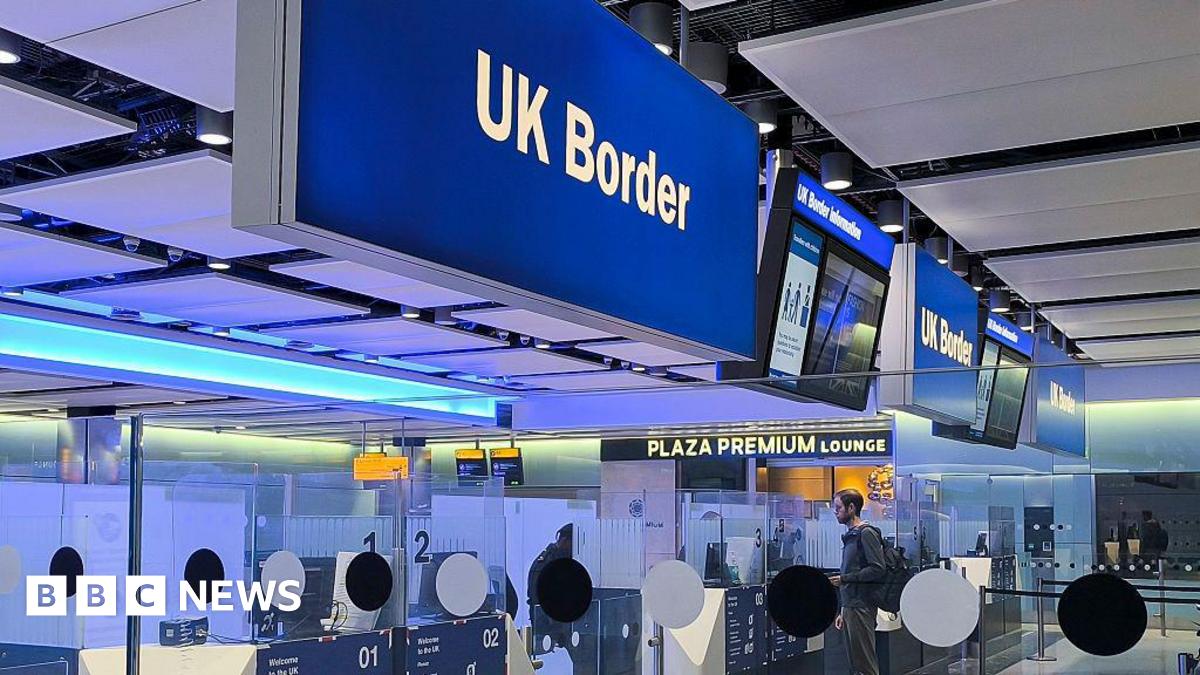
The number of asylum seekers placed in hotels has fallen as more people are moved into longer-term housing, according to the latest figures from the Home Office, the UK government department responsible for immigration and asylum.
The update points to a managed shift away from emergency hotel placements and toward accommodation intended to be more stable while claims are considered.
Key numbers and timeline
- December 2025: 30,657 people were staying in hotels, a 19% decrease compared with December 2024.
- December 2025: 72,769 people were in longer-term accommodation, including houses in multiple occupation (HMOs) and “other accommodation,” such as repurposed former military sites including Wethersfield in Essex.
- September 2023: Hotel use peaked at around 56,000 people.
The December 2025 snapshot shows more than twice as many people in longer-term settings as in hotels, underlining a significant rebalancing of how the asylum system provides accommodation while claims are processed.
Policy context and what the placements cover
Accommodation for people seeking asylum in the UK is provided under the government’s statutory duties in the Immigration and Asylum Act 1999, which requires support for those who would otherwise be destitute while their claims are decided.
- Longer-term accommodation includes HMOs and “other accommodation” categories cited by officials, which can encompass repurposed large sites. These settings are intended to be more stable and, in principle, better suited to medium-term stays than hotels.
- Asylum seekers are entitled to housing if they cannot support themselves while their claim is being considered, and are generally not permitted to work during this period.
- Hotels are used when other types of accommodation are not available, typically as an emergency overflow measure when the system comes under acute pressure.
The shift away from hotels therefore reflects both operational pressures and political commitments to reduce the use of short-notice, high-cost placements.
Government position on ending hotel use
Ministers have pledged to end the use of asylum hotels by the end of this parliament, arguing they are significantly more expensive than longer-term housing and can generate local opposition in communities where hotels have been contracted at short notice. The Home Office has repeatedly framed the reduction in hotel numbers as evidence that new dispersal arrangements and large-scale sites are beginning to take effect.
As of December 2025, 30,657 people were in hotels and 72,769 were in longer-term accommodation. Officials say continued expansion of non-hotel capacity will be needed if the government is to meet its commitment to close the remaining hotel contracts, particularly in areas where local authorities have raised concerns about pressure on services such as health, education and social care.
Keep reading
- Urban Infrastructure Resilience: How European and Asian Megacities Are Adapting to Extreme Climate Oscillations in 2026
- UN General Assembly 2026 Framework on Autonomous Systems: International Diplomacy Faces Algorithmic Governance
- Spanish election: Pedro Sanchez calls snap election for 29 November after housing protests (globallypulse.com)
