
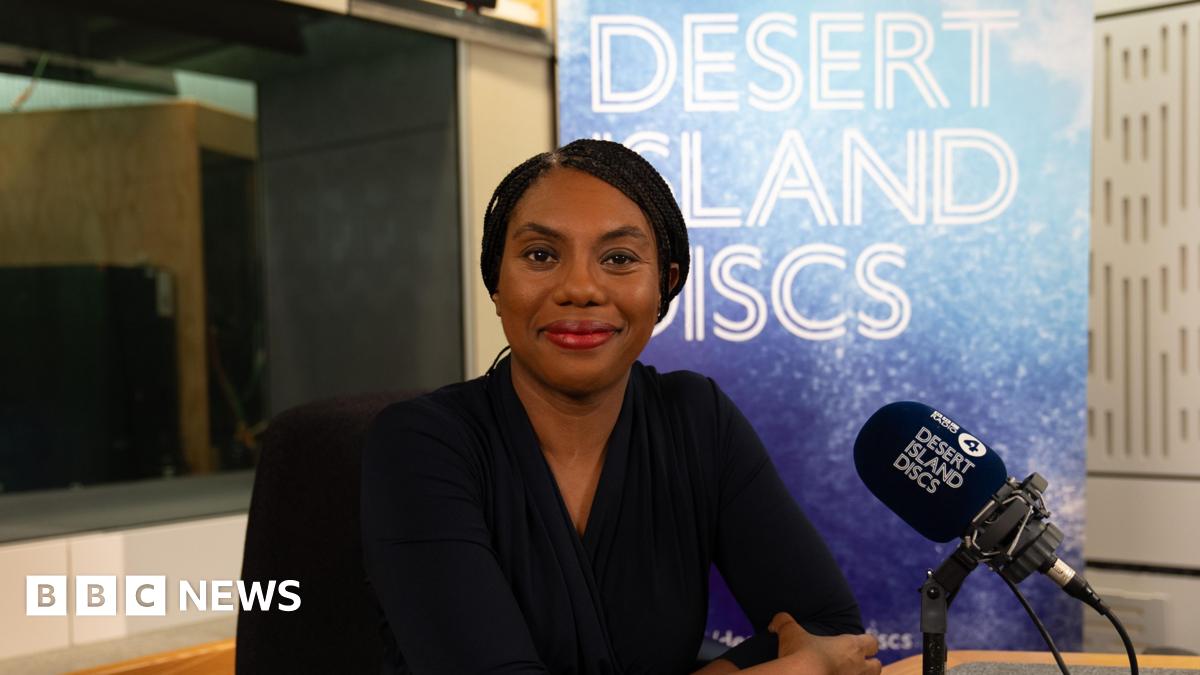
Kemi Badenoch said she began her parliamentary career by winning the Essex seat of Saffron Walden for the Conservatives in 2017, recounting that local party members selected her despite her having no links to the area.
She framed the remarks as a personal account of how authenticity shaped her selection and how family views influenced her entry into politics, presenting them against the backdrop of her later rise to senior cabinet roles and, ultimately, the Conservative leadership.
“They tell me that I was funny, I was very honest, I wasn’t trying to be something I wasn’t.”
“I started off by saying I could pretend that my family has been here since, you know, the Battle of Hastings, but I don’t think anyone here would believe me – and they just burst out laughing.”
“They said later on that this is someone who’s just herself. And Essex is like that.”
“Essex is very much my personality – I call myself an Essex girl.”
Selection without local ties
Badenoch said she had “no links to the area” when seeking selection in Saffron Walden, crediting her tone and openness with persuading local Conservatives to adopt her as their candidate.
She described the response from members as grounded in her being herself rather than tailoring a pitch to local heritage. That selection ultimately put her into the House of Commons, the chamber that, alongside the House of Lords, forms the core of the UK’s law‑making system under the Parliament Acts framework, giving her a platform in national debates on issues ranging from post‑Brexit regulation to culture‑wars policy.
At the time, Saffron Walden was regarded as a safe Conservative seat, meaning members’ choice of candidate effectively determined which voice would represent the constituency in Westminster and participate in future decisions of government. Badenoch’s account of being chosen despite a lack of local roots is presented as evidence that personal style and political message outweighed questions of geographic connection.
Family reactions and motivation
Badenoch said her late father supported her decision to enter politics, telling her: “I know you’re going to go all the way.”
By contrast, she said her mother was skeptical about her career move: “She was like, why would you do this… you’ve got a good job… why do you want to go into this horrible career.” She added: “She had a very, very dim view of politicians thinking they were all out for themselves… so I think part of what I’m trying to do now in politics is to prove to her that politicians can be good people.”
She linked those family reactions to her later bid for the Conservative leadership and to how she approaches public office, suggesting that scepticism at home sharpened her focus on integrity and conduct in government. As a minister, and later as party leader, those themes have surfaced in her responses to internal party dissent and defections, including recent warnings to MPs not to “damage [the party] from within” amid defections to Reform UK.[1]
Key points, as stated
- 2017 entry to Parliament: Badenoch began her parliamentary career after winning the Conservative seat of Saffron Walden in Essex, securing a role in the House of Commons that has since underpinned her ministerial and leadership bids.
- Selection without local roots: She said local Conservatives chose her despite her having no links to the area, citing her honesty and humor during the selection process as decisive factors.
- Essex identity: She characterized Essex as matching her personality and said, “I call myself an Essex girl,” using that label to signal a plain‑speaking, direct political style.
- 2022 family milestone and leadership run: She said her father died in 2022; her first run for the Conservative leadership came later that year, a contest that increased her national profile and paved the way for her eventual return as party leader after a later internal crisis.
- Contrasting family views on politics: She contrasted her father’s encouragement with her mother’s skepticism about politics, presenting her own conduct in office as, in part, an attempt to rebut the view that “politicians are all out for themselves.”
No date or location for the remarks was provided, and Badenoch did not specify whether they were made in a constituency setting, a party gathering, or a media interview.
Worth a look
