
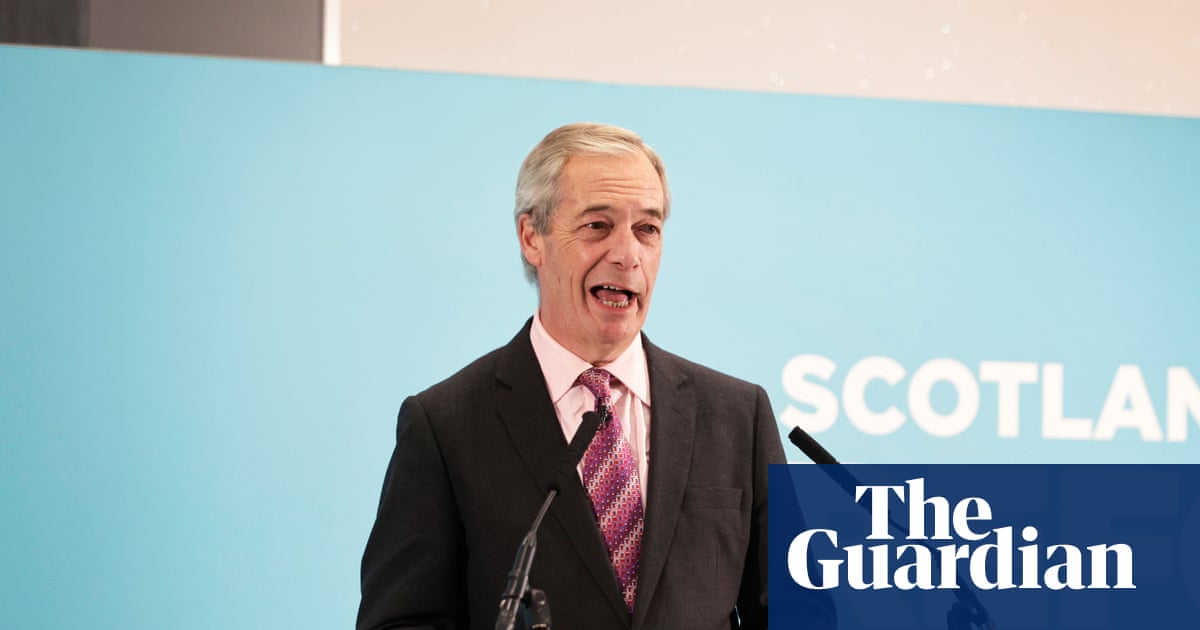
DAVOS, Switzerland – Nigel Farage, leader of Reform UK, is attending the World Economic Forum‘s annual meeting in the Swiss resort of Davos, despite years of portraying the gathering as a hub of “globalism” at odds with nation‑state sovereignty. His itinerary has not been disclosed, and his party deputy Richard Tice said he hopes Farage will meet Donald Trump, who is also attending the event run by the WEF.
Tice said he intends for Farage, who presents Trump as a friend, to use the forum to relay concerns about U.S. trade measures affecting European allies. He told the BBC that Farage wants to raise worries “over the US threatening tariffs against the UK and other European nations as part of efforts to annex Greenland,” framing the point as a message to the American president.
What Farage’s deputy says he wants to discuss in Davos
In an interview, Tice said the aim was a candid conversation if schedules allow, casting the potential encounter as part of a broader attempt to influence the direction of Western trade and security policy.
“Let’s hope they have an opportunity to have some words; both will have very busy schedules for sure, but in a sense that’s where real friendship can come in, to say: ‘Look, we understand what you’re trying to achieve; this is the wrong way to go about it,'” Tice said.
Tice did not release details of any planned meeting, and no public agenda for Farage in Davos has been published. Any talks with Trump would take place on the margins of a gathering where formal sessions sit alongside tightly choreographed bilateral meetings and informal corridor diplomacy.
Farage’s long record of attacking the WEF
Farage has for years cast Davos as emblematic of a political and corporate elite overriding national interests. He has described the forum as a venue where decisions “bow down to the European Union” and characterized attendees as “people deciding our futures in Swiss ski resorts.”
He has also said, “All the arguments for globalism have been there at Davos for the last 50 years or more,” adding that there was “no space for the little man, no space for the nation state.” Those criticisms sit alongside his broader campaign in favour of tighter national borders and against what he presents as supranational governance through bodies such as the European Union.
There have been exceptions. In 2018, after Trump addressed the WEF, Farage wrote: “Trump superb at Davos. If only we had a leader that could inspire confidence.” In a January 2012 post, he also said: “Congratulations to Prince Andrew for his comments at the reception he hosted in Davos. Supporting Britain!”
- 2012 – “Congratulations to Prince Andrew for his comments at the reception he hosted in Davos. Supporting Britain!”
- 2018 – “Trump superb at Davos. If only we had a leader that could inspire confidence,” written during Trump’s first term after the president’s WEF speech.
- Video about Davos – Described it as a place where decisions are made that “bow down to the European Union,” and attendees as “people deciding our futures in Swiss ski resorts.”
- 2023 – Referred to Keir Starmer as a “full-on globalist, hanging out with his mates at the WEF.”
The comments illustrate a tension between Farage’s longstanding use of Davos as shorthand for a distant global elite and his willingness to engage with the same forum when it offers access to high‑level decision‑makers.
Criticism and responses around Farage’s rhetoric
Farage’s repeated attacks on the WEF and “globalism” have drawn criticism over the years, not only for their populist pitch but for the themes they touch. The Board of Deputies of British Jews said his discussion of supposed plots by bankers to create a global government at times veered into territory associated with antisemitic conspiracy theories. Farage rejects any such intent and has insisted his arguments are aimed at what he sees as an unaccountable political and financial class rather than at any religious or ethnic group.
His allies argue that raising concerns about sovereignty and democratic oversight is a legitimate contribution to debates on how global economic rules are made. Opponents counter that such language can echo tropes long used to target minorities, and say politicians have a responsibility to avoid amplifying them in mainstream discourse.
Why Davos is a stage politicians still seek
The WEF’s annual meeting in Davos brings together heads of government, cabinet ministers, central bankers, corporate leaders, and civil society figures for public panels and private meetings. For any political leader, it offers exposure to business and policy networks in a single location in the Swiss Alps, at a time when issues such as trade, climate policy and technology regulation increasingly cut across borders.
Although the WEF is a private, non-governmental organization headquartered in Switzerland, it describes itself as committed to “improving the state of the world” by convening public‑private cooperation and is formally structured as an international foundation under Swiss law. The forum itself does not set laws or policy; rather, it convenes discussions and voluntary initiatives among participants, which can in turn inform national decisions taken under domestic constitutional frameworks such as the UK Constitutional Reform and Governance Act 2010 when governments negotiate and ratify international agreements.
Supporters of Farage’s attendance argue that direct engagement is necessary wherever international economic and security debates are concentrated, and that declining an invitation would simply leave the field to rivals. Critics point to his past attacks on the event and say the appearance contradicts his rhetoric, reinforcing their view that populist figures are willing to tap into anti‑elite sentiment while still courting the access those same elites can offer.
For Davos organizers, the presence of outspoken figures such as Farage and Trump underscores the forum’s ambition to remain a convening point for competing visions of globalization rather than a club of like‑minded technocrats.
Key statements on the record
– Tice said he wants Farage to raise concerns about “the US threatening tariffs against the UK and other European nations as part of efforts to annex Greenland.”
– Farage has said Davos attendees are “people deciding our futures in Swiss ski resorts.”
– Farage wrote in 2018: “Trump superb at Davos. If only we had a leader that could inspire confidence.”
– In January 2012 he wrote: “Congratulations to Prince Andrew for his comments at the reception he hosted in Davos. Supporting Britain!”
Status: Farage’s public schedule in Davos has not been released, and neither Reform UK nor the World Economic Forum had confirmed any bilateral meeting with Trump at the time of publication.
- Urban Infrastructure Resilience: How European and Asian Megacities Are Adapting to Extreme Climate Oscillations in 2026
- UN General Assembly 2026 Framework on Autonomous Systems: International Diplomacy Faces Algorithmic Governance
- Ann Widdecombe murder suspect charged with planning terror act against Nigel Farage (globallypulse.com)
