
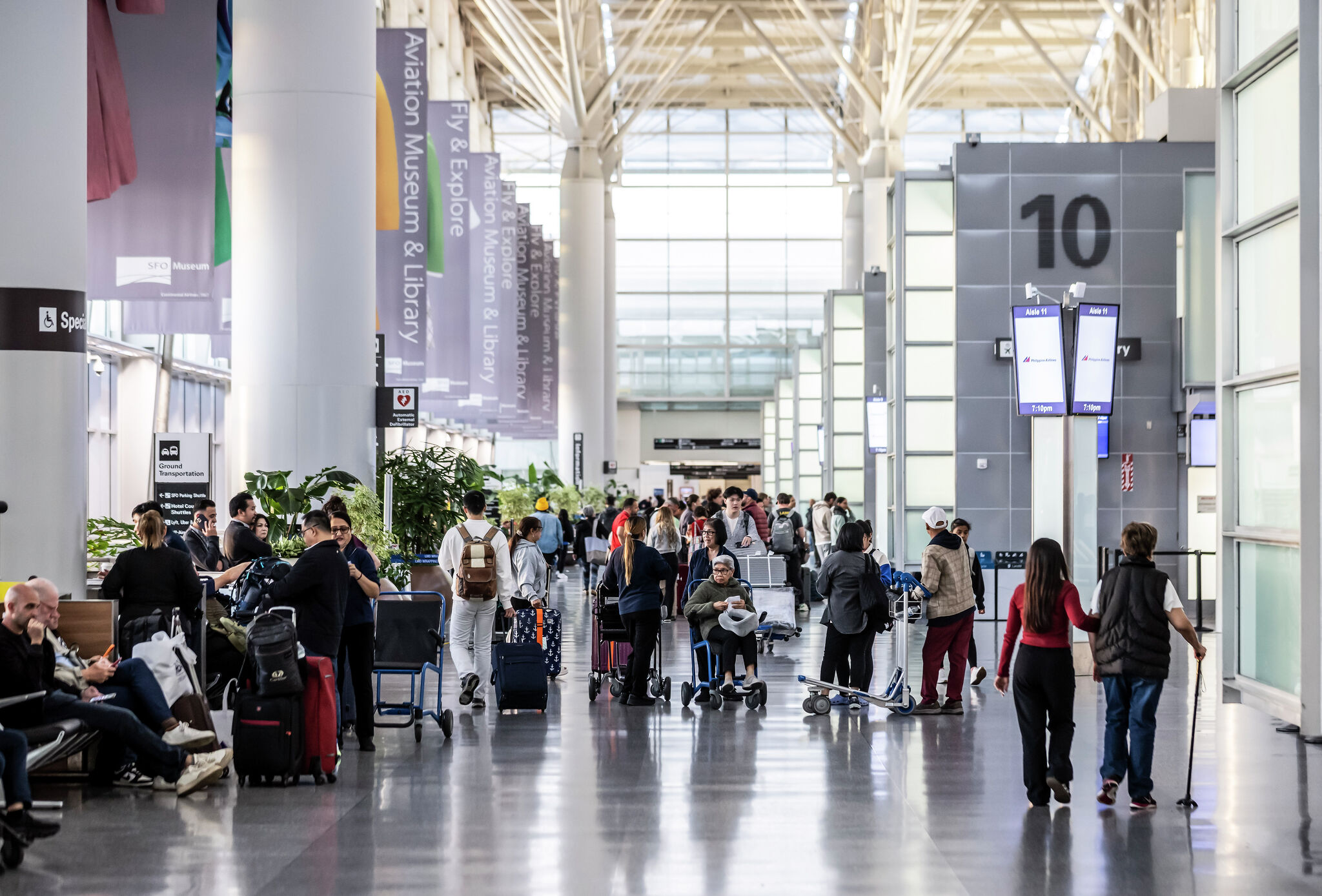
WASHINGTON – Homeland Security Secretary Markwayne Mullin on Monday signaled a potential withdrawal of Customs and Border Protection (CBP) officers from major U.S. airports designated as “sanctuary” jurisdictions, a move that could effectively halt international travel at hubs like San Francisco International Airport (SFO).
The proposal, revealed in an interview with Fox News’s “Special Report,” represents a significant escalation in the ongoing dispute between the federal government and cities and states limiting cooperation with federal immigration enforcement. Mullin stated the Department of Homeland Security is reviewing whether areas restricting collaboration should continue to receive federal customs processing services, framing the move as part of the administration’s broader effort to tighten interior immigration enforcement.
“If they’re a sanctuary city, should they really be processing customs into their city?” Mullin asked. “If they’re a sanctuary city and they’re receiving international flights, and we’re asking them to partner with us at the airport, but once they walk out of the airport, they’re not going to enforce immigration policy – maybe we need to have a really hard look at that.”
The potential withdrawal of CBP personnel would impact airports like SFO and John F. Kennedy International Airport (JFK) in New York, forcing airlines to reroute thousands of daily international flights or shift customs processing to alternate gateways. Aviation and trade experts say even a partial reallocation of officers could snarl flight schedules, disrupt supply chains, and reverberate through the tourism and tech sectors that depend on fast, predictable access to international markets.
California Governor Gavin Newsom’s office immediately denounced the idea, posting on X, formerly known as Twitter, “If you thought the economy was bad with Trump’s war driving prices at the pump up … just wait until international travel is halted at some of the busiest airports in the world. Talk about a stupid idea.” His aides later argued the administration would be weaponizing a federal security function to punish local policy choices, warning that such a step could undermine confidence among foreign governments, airlines, and investors in the reliability of the U.S. aviation system.
Legal challenges are anticipated. U.S. District Judge William H. Orrick III of San Francisco previously issued an injunction in 2019 prohibiting the Trump administration from retaliating against sanctuary jurisdictions by withholding federal funds or services. That ruling drew heavily on constitutional limits on coercing states and localities, as well as statutory constraints in federal immigration law. California Attorney General Rob Bonta, in a statement earlier this year, asserted the administration’s threats are “completely lawless,” adding, “We’ll stop him in court.” Any attempt to pull CBP from major airports would likely test those limits again and invite rapid emergency filings in federal court.
Mullin’s comments come as a partial government shutdown continues due to a stalemate over DHS funding. He accused Democrats of “holding the country hostage” by refusing to fund agencies like Immigration and Customs Enforcement and Border Patrol. “I’m going to have to be forced to make hard decisions,” Mullin told Fox News. “Who is willing to work with us and partner with us?” The funding fight has left DHS operating under stopgap measures, giving the secretary added leverage – and political exposure – as he weighs moves that could directly affect travel and trade.
The concept of “sanctuary cities” generally refers to jurisdictions that have adopted policies limiting their cooperation with federal immigration authorities. These policies vary, but often include restrictions on local law enforcement sharing information about individuals’ immigration status with federal officials or honoring certain immigration detainer requests. Local leaders say such rules are aimed at building trust with immigrant communities and keeping federal immigration enforcement separate from routine policing, while critics in Washington argue they undercut the enforcement regime created under the Immigration and Nationality Act.
The CBP plays a critical role in securing U.S. borders and facilitating legitimate trade and travel. The agency is responsible for inspecting people, baggage, and cargo entering the United States, as well as enforcing customs and immigration laws at ports of entry. Under long-standing interagency arrangements, international arrivals cannot be processed without CBP officers physically present to conduct primary and secondary inspections, verify documents, and collect duties. A complete withdrawal of CBP personnel from major airports would require significant logistical adjustments – including possible preclearance or diversion to non-sanctuary airports – and could lead to substantial delays and disruptions for travelers and businesses.
As of Tuesday, the Department of Homeland Security has not announced a specific timeline for any potential changes to CBP staffing at airports. The agency confirmed it is conducting a review of policies related to sanctuary jurisdictions and federal services, and senior officials have begun outreach to airlines and airport authorities to assess how far such a policy could go – and how quickly – without jeopardizing basic aviation safety and security standards.
- Urban Infrastructure Resilience: How European and Asian Megacities Are Adapting to Extreme Climate Oscillations in 2026
- UN General Assembly 2026 Framework on Autonomous Systems: International Diplomacy Faces Algorithmic Governance
- Political Officers Training School takes first place in military sports festival (archysport.com)
