
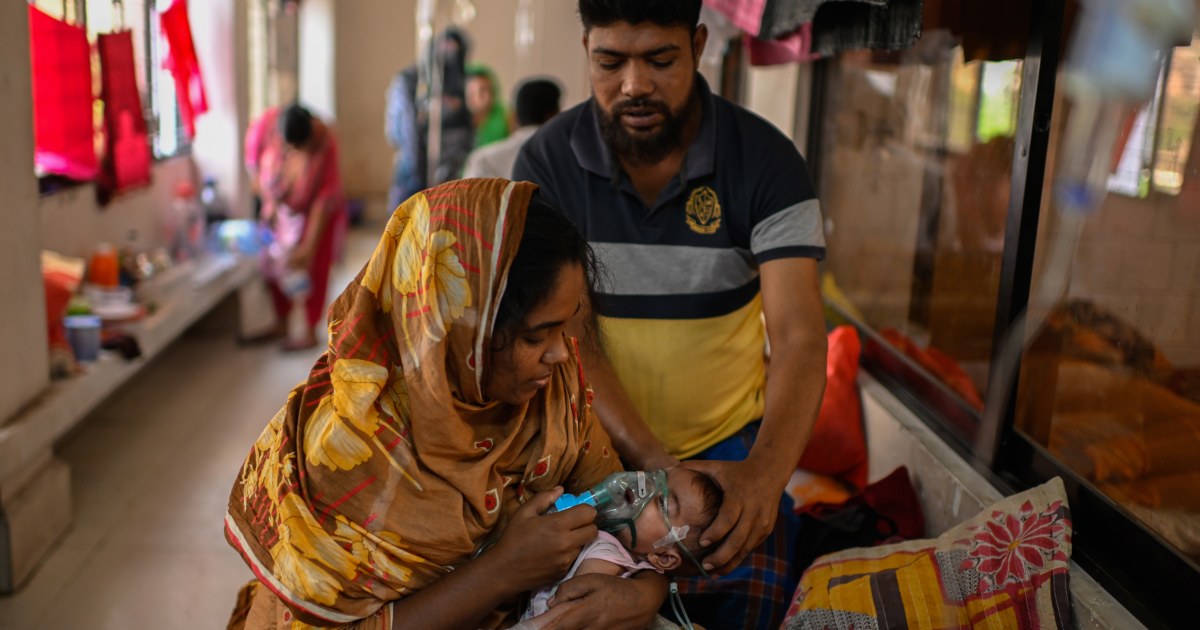
Bangladesh Responds to Measles-Rubella Outbreak Amidst Systemic Challenges
Bangladesh is undertaking emergency measles-rubella vaccinations to contain an ongoing outbreak that has resulted in over 100 child deaths in under a month. The government, in partnership with the World Health Organization, the U.N. children’s agency and the Gavi vaccine alliance, began vaccinating children age 6 months to 5 years old in 18 high-risk districts Sunday, with plans to expand nationwide in phases starting next month, a joint statement said. Officials describe the campaign as an extraordinary deployment under the country’s national immunization and drug regulatory framework, which guides procurement, emergency authorizations and quality control of vaccines.
Public Health Response and Immunization Gaps
The outbreak underscores critical gaps in population immunity, particularly among children who have not received vaccinations or missed scheduled doses during recent years of political and economic disruption. Infections among infants under nine months, who are too young for routine vaccination, are especially concerning, highlighting the importance of community-level herd protection. More than 900 confirmed cases of measles have been reported alongside 7,500 suspected cases since March 15 in the nation of over 170 million people, according to health officials.
Measles is a highly contagious airborne disease characterized by fever, respiratory symptoms, and a distinctive rash. Complications can include pneumonia, encephalitis and long-term disability, and can be fatal, particularly in young children and malnourished populations. Vaccination remains the most effective preventative measure, but achieving and maintaining herd immunity-where at least 95% of the population is vaccinated with two doses-is essential to halt transmission and prevent the virus from exploiting pockets of under-immunized communities.
Political Transition and Vaccine Supply Chain Disruptions
The current outbreak is occurring against a backdrop of recent political transition, bringing questions of accountability and continuity of care to the center of Dhaka’s policy debate. The vaccination campaign for measles was disrupted during Bangladesh’s recent political upheavals. A mass uprising in 2024 led to the ousting of Prime Minister Sheikh Hasina, followed by an interim administration led by Nobel Peace Prize laureate Muhammad Yunus, which then transferred power to an elected government after February elections.
Bangladesh’s Health Minister Sardar Mohammed Sakhawat Husain, responding to questions in Parliament, attributed the outbreak to mismanagement and failures in vaccine stockpiles by previous administrations. He specifically cited decisions made by the ousted Hasina government and the subsequent interim government as contributing to shortages affecting measles and six other vaccines. Lawmakers and public health experts are now pressing for a transparent audit of procurement decisions, inventory management and distribution bottlenecks, saying lessons from the crisis should be codified into future health-sector planning and budget oversight.
Systemic Immunization Progress and Persistent Disparities
Bangladesh has historically demonstrated significant progress in immunization coverage, often being cited as a lower-income country that successfully scaled up basic vaccines through community health workers and door-to-door campaigns. Since launching a large-scale immunization campaign in 1979, the country increased the proportion of fully immunized children from just 2% to 81.6%. However, UNICEF has cautioned that despite these gains, substantial disparities in access to vaccination persist across the country, with urban slums, riverine char communities and remote hill tracts frequently lagging behind national averages.
- Historical Immunization Coverage: 2% (1979) to 81.6% (recent national estimate)
- Outbreak Cases (since March 15): 900+ confirmed, 7,500+ suspected
- Target Vaccination Age in Emergency Campaign: 6 months to 5 years
Health policy analysts note that these figures point to a dual reality: a system capable of achieving high coverage on paper, but one that remains vulnerable to localized gaps when funding, political attention or supply chains falter. The measles-rubella emergency is now testing whether the new government can translate its promises of reform into concrete improvements at ward clinics and district health complexes.
Clinical Guidance and Public Awareness
Authorities are urging parents to seek immediate medical attention if they suspect their child has measles and to rely on qualified clinicians rather than informal drug sellers. “They should avoid taking medicine from shopkeepers unnecessarily. If a child has a fever, especially high fever – 101, 102, 103, 104 [Fahrenheit, or higher than 38.3 Celsius] – they should not rely on medicine from local shops,” said F. A. Asma Khan, deputy director of the Infectious Diseases Hospital in Dhaka.
“Instead, they must take the child to a hospital as soon as possible, because our medical officers are capable of providing proper basic treatment,” she said. Public health messaging is being pushed through community health workers, mosque loudspeakers and local radio to counter misinformation about vaccines and to reassure families that measles-rubella shots are free of charge at government facilities.
Long-Term Implications for Public Health Infrastructure
The current measles-rubella outbreak highlights the vulnerability of public health systems to both infectious disease threats and political instability. Maintaining consistent vaccine supply chains, strengthening surveillance mechanisms, and addressing disparities in access are critical for preventing future outbreaks. It also underscores the need for stable financing and cross-party commitment to immunization, so that changes in government do not disrupt cold-chain operations or frontline outreach.
The World Health Organization emphasizes the importance of robust immunization programs as a cornerstone of global health security, and the Bangladesh government has signaled it will align its next health-sector plan with that guidance and its international commitments under the Sustainable Development Goals. For families now queuing at local clinics, however, the test of policy will be whether doses arrive on time – and whether the country can close the gaps that allowed a preventable childhood disease to regain a deadly foothold.
Related reading
