
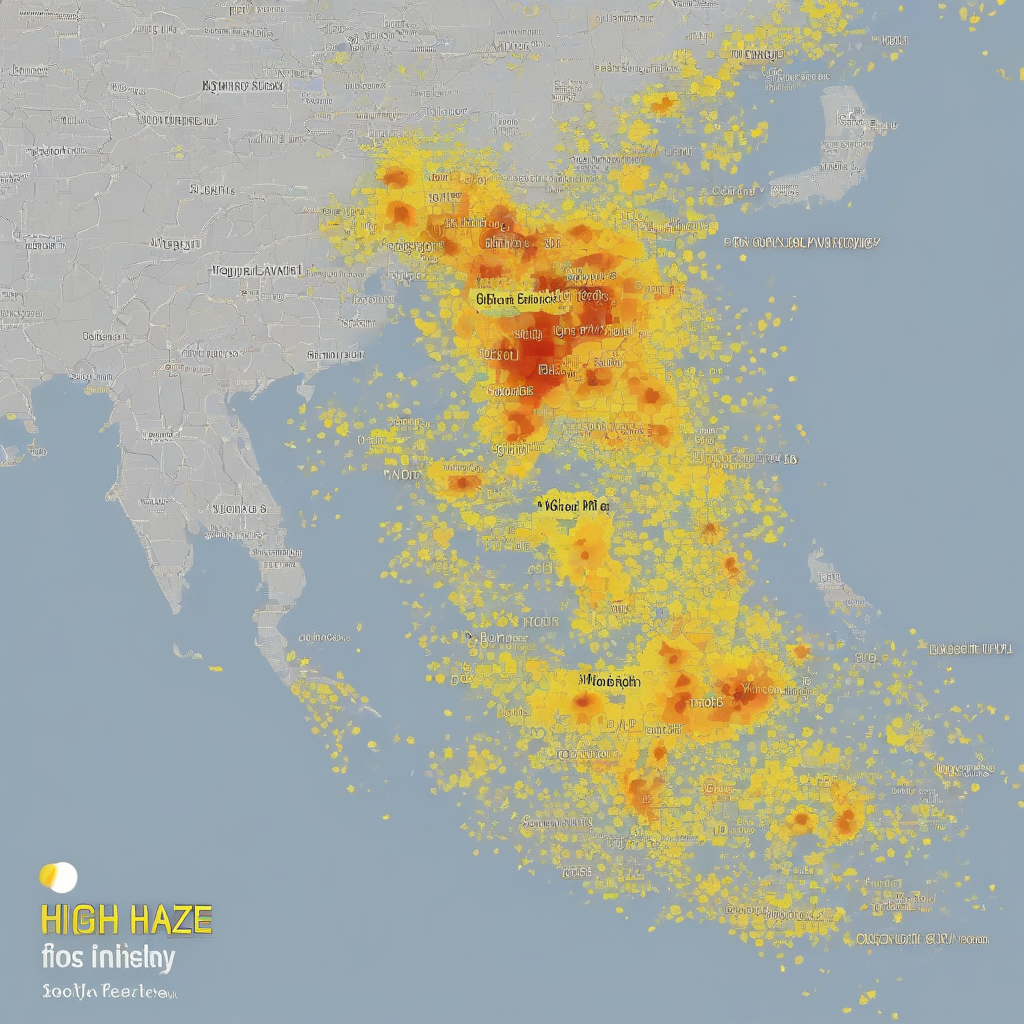
SINGAPORE – The Singapore Institute of International Affairs (SIIA) has issued a red alert warning of a high risk of severe haze blanketing the region in the second half of 2026.
The alert, the second since the think-tank began its annual outlooks in 2019, cites a convergence of extreme climate phenomena and economic pressures that increase the likelihood of widespread wildfires.
The warning comes as the return of El Niño and a potential positive Indian Ocean Dipole coincide with rising deforestation driven by biofuel demands and regional budget shortages.
Convergence of Climate Phenomena
Meteorological data indicates that El Niño conditions are already present in the region and are expected to strengthen between August and September, raising the risk of prolonged drought in parts of Indonesia, Malaysia and Singapore.
Scientists predict this cycle could evolve into a “super El Nino,” potentially making 2026 and 2027 exceptionally hot years and amplifying fire danger in already stressed forest and peatland areas.
Simultaneously, a positive Indian Ocean Dipole-a warming of the sea surface in the equatorial Indian Ocean-is expected to develop in July or August, typically suppressing rainfall over the maritime continent.
According to the National Environment Agency and regional weather forecasts, the combination of these two phenomena could prolong and intensify the dry season, extending it into October and delaying the onset of relief rains that usually help extinguish lingering hotspots.
Historical precedents highlight the severity of this combination and its policy implications for the region:
- 1997: A severe haze crisis coincided with a super El Niño and positive Indian Ocean Dipole, triggering months of transboundary pollution and prompting the first serious regional discussions on shared haze management.
- 2015: Singapore’s skyline was obscured by thick grey haze for approximately two months, leading to school closures as air quality reached hazardous levels and renewing calls to fully implement the ASEAN Agreement on Transboundary Haze Pollution.
Biofuel Mandates and Economic Pressures
The risk of fire is being exacerbated by a shift in energy policy and rising agricultural costs. On July 1, Indonesia implemented a mandate requiring vehicles to use a blend of 50 percent palm oil-based biodiesel and conventional diesel, part of a broader effort to cut fuel imports and support domestic producers.
The SIIA report notes that growers must now meet simultaneous demands for food and fuel, increasing the likelihood of unsustainable land expansion via slash-and-burn methods unless monitoring and enforcement keep pace. Nearly a fifth of all deforestation in 2025 was attributed to the clearing of land for food and bioenergy crops.
Economic instability is further compromising land management. Disruptions in the Strait of Hormuz have caused fuel and fertilizer price shocks that are expected to take months to subside, squeezing margins for smallholders and local governments responsible for fire prevention.
“The haze is not simply an environmental problem. The challenge is to ensure that sustainable practices are maintained across entire supply chains, including by small and medium-sized enterprises that may be operating under tighter economic pressures,” said Simon Tay, SIIA chairman, calling for banks, traders and manufacturers to factor fire and deforestation risks into their procurement and financing decisions.
Khor Yu-Leng, SIIA associate director, noted that producers of food crops such as vegetables and fruit are facing significant difficulties as farm operation costs have risen by 20 to 30 percent, making investments in fire-free land clearing and restoration harder to justify without targeted public support.
Budgetary Shortfalls and Fire Readiness
Financial constraints are limiting the ability of regional authorities to respond to early outbreaks. Reports from April indicate that 2026 budgets for fire-prone regions, including Kalimantan and Riau, have already been exhausted following an early surge in forest fires, constraining manpower deployments and aerial firefighting capacity ahead of the peak dry season.
Earlier this year, Singapore experienced several weeks of haze resulting from wildfires in Johor, including a 200-hectare peatland fire across Pengerang and Kota Tinggi. Those episodes pushed the city-state’s Pollutant Standards Index into the unhealthy range on several days and prompted public reminders on mask use and outdoor activity.
Peatland fires are particularly hazardous as they can smoulder underground for weeks, making them significantly harder to extinguish than surface fires and releasing large volumes of carbon and fine particulate matter that travel across borders.
Benjamin Tay, a board member of the environmental charity PM.Haze, stated that while large oil palm and pulp and paper corporations have the resources for fire-free operations, a critical gap remains.
“The critical gap is independent smallholder and village lands outside (larger plantations), where people lack the capital for fire-free clearing alternatives,” Tay said, adding that incentives and clear enforcement standards are needed to shift practices at the landscape level.
Governance Under the Prabowo Administration
The 2026 dry season marks the first high-risk period for the administration of Indonesian President Prabowo Subianto, and an early test of Jakarta’s ability to contain fires that can swiftly turn into regional diplomatic flashpoints.
In 2025, President Prabowo launched a new inter-agency desk to strengthen fire responses; this entity was reactivated in mid-June 2026 to prepare for the upcoming season, tasked with coordinating provincial authorities, law enforcement and sectoral ministries.
The SIIA report indicates that President Prabowo has centralized control of commodity exports and increased oversight of land-use sectors, including investigations into environmental violations by companies. These efforts sit alongside existing legal tools such as strict liability provisions for plantation firms under Indonesian environmental law.
While these moves have caused some investor apprehension, the report suggests that tighter governance could result in positive outcomes for haze prevention if backed by consistent enforcement and transparent data on concessions, hotspots and sanctions.
The Indonesian government conducted community fire awareness training earlier in 2026 to prepare for the severe forecasts, as regional governments come under growing pressure to align local land-use decisions with national climate commitments and neighbours’ expectations of cleaner air.
Keep reading
