
WASHINGTON – The United States has issued a directive to its embassy in Jerusalem to pressure the Palestinian leadership into withdrawing its candidacy for a senior leadership position at the United Nations General Assembly, warning that “consequences will follow” if the bid is not abandoned.
The move reveals a concerted effort by the Trump administration to restrict the diplomatic visibility of the Palestinian Authority (PA) on the world stage and prevent Palestinian officials from presiding over high-level deliberations concerning the Middle East.
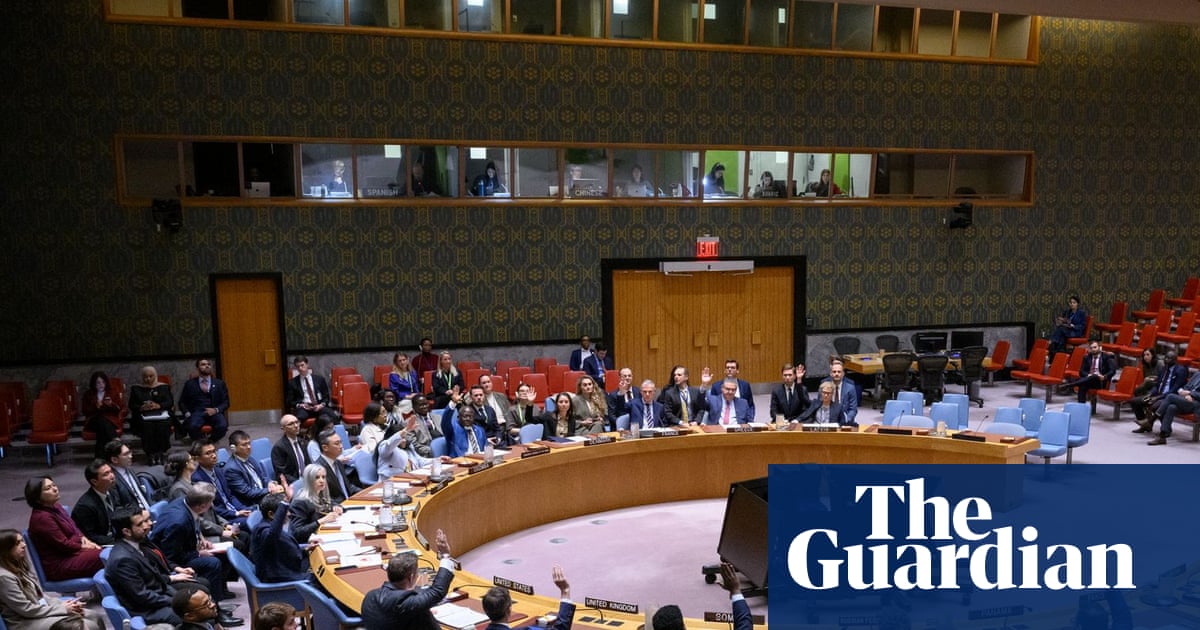
The diplomatic friction centers on the election of the General Assembly’s vice-presidents, a set of 16 positions that serve as key administrative and procedural roles within the UN. While the presidency is the primary leadership post, vice-presidents are frequently deputized to oversee sessions, granting them significant influence over the timing and conduct of debates under the rules set out in the UN General Assembly’s Rules of Procedure.
A State Department cable dated May 19, obtained by the Guardian, instructed U.S. diplomats to deliver a formal demarche to PA leaders. The communication set a strict deadline of May 22 for the withdrawal of the bid, ahead of the June 2 elections for the assembly’s next year-long session, when regional groups typically present agreed slates for the posts.
The U.S. mission’s anxiety stems from the potential for the role to be used as a platform for Palestinian narratives during the UNGA81 high-level week in September, where world leaders gather in New York for a series of summits and general debates.
“In a worst case scenario, the next PGA [president of the general assembly] might assist the Palestinians in presiding over high-profile sessions related to the Middle East or during UNGA81 high-level week,” the cable read.
Diplomatic Leverage and Precedent
The current pressure campaign follows a similar pattern of U.S. intervention in Palestinian UN ambitions. In February, the long-serving Palestinian representative, Riyad Mansour, withdrew his candidacy for the presidency of the General Assembly following intense American lobbying among key regional blocs and Security Council members.
At the time, Washington characterized Mansour’s withdrawal as an indication that he “understood the gravity of the issue and intended to be constructive.” However, the new bid for the vice-presidency-where Palestinians are running as part of an Asia-Pacific group slate-has reignited tensions and exposed divergent views among member states over the PA’s status and role at the UN.
The State Department has framed the bid as a pursuit of “symbolic appointments” rather than substantive diplomacy. U.S. officials contend that the candidacy directly undermines the Trump administration’s “Comprehensive Plan,” a 20-point proposal for the reconstruction of Gaza that includes the establishment of a “Board of Peace” and is being promoted as the primary U.S. framework for postwar governance and reconstruction.
The cable explicitly warns that a “bully pulpit” for Mansour would not improve the material conditions for Palestinians but would instead “significantly damage US relations with the PA,” adding that the U.S. Congress would view the move “extremely seriously.” Congressional scrutiny is particularly relevant given lawmakers’ power over foreign assistance appropriations and existing legislative restrictions tied to Palestinian recourse to international forums.
Economic and Administrative Pressures
To ensure compliance, the U.S. has signaled it may employ a combination of administrative sanctions and economic leverage, escalating the dispute from symbolic representation to matters that directly affect the PA’s capacity to govern.
The cable suggests two primary points of pressure:
- Visa Restrictions: Washington recalled a previous incident in August where the administration revoked visas for Palestinian officials prior to a UN summit. The cable noted, “It would be unfortunate to have to revisit any available options,” an apparent threat to revoke the visas of the Palestinian UN mission or other senior officials, potentially curtailing their access to multilateral forums in New York and beyond.
- Financial Withholding: U.S. diplomats were instructed to remind the PA that progress in recouping tax and customs revenues-withheld by the Israeli government-is contingent on the PA avoiding the “internationalizing [of] disagreements in courts,” a reference to Palestinian efforts at the International Criminal Court and other judicial bodies.
These tax and customs funds, often referred to as “clearance funds,” constitute approximately 60% of the Palestinian Authority’s total revenue. Collected by Israel on behalf of the PA under long-standing economic arrangements, their withholding has created a severe liquidity crisis for the PA, hindering its ability to pay public sector salaries and maintain basic services such as healthcare, education and policing in the West Bank.
The Role of the Israeli Finance Ministry
The financial pressure is being exerted in tandem with the policies of Israel’s far-right Finance Minister, Bezalel Smotrich. Smotrich has largely blocked the transfer of these funds since the onset of the Gaza war in October 2023, frequently calling for the total dismantling of the Palestinian Authority and seeking to harden Israel’s economic and administrative posture toward it.
Smotrich’s own standing has become a focal point of international legal scrutiny. On Tuesday, the minister stated that the International Criminal Court (ICC) is seeking an arrest warrant against him. While the specific charges were not detailed in the communication, Smotrich has been under ICC investigation for his role in the expansion of settlements and the displacement of Palestinians in the West Bank, alongside broader inquiries into alleged violations of international humanitarian law. The ICC, based in The Hague, operates under the Rome Statute, which allows it to pursue individuals for war crimes, crimes against humanity and genocide.
The emerging alignment between U.S. diplomatic pressure, Israeli financial restrictions and ongoing international legal proceedings underscores how a seemingly procedural UN contest has become entangled with wider questions of Palestinian statehood, accountability and the future of governance in the occupied territories.
The U.S. State Department has been approached for comment regarding the directives issued in the cable.
Related reading
- Global Food Security Alliances: How Climate-Resilient Agricultural Corridors Are Stabilizing Wheat and Rice Supplies
- Cross-Border Renewable Energy Grids: North Sea and Mediterranean Subsea Cable Networks Enter Phase Two
- NY Attorney General Letitia James named special prosecutor in Cornell case (globallypulse.com)
