
NEW DELHI – India is accelerating a strategic overhaul of its trade architecture across the Indo-Pacific, initiating a comprehensive review of its goods agreement with ASEAN and advancing negotiations for a deeper economic partnership with Australia.
The move signals a concerted effort by New Delhi to modernize its commercial ties in Southeast Asia and Oceania, aligning its economic policy with the broader “Act East” geopolitical strategy. By updating aging frameworks and pursuing comprehensive agreements, India aims to integrate more deeply into regional supply chains and provide a viable economic alternative to the Regional Comprehensive Economic Partnership (RCEP), which India opted not to join in 2019.
Modernizing the ASEAN Trade Framework
The Ministry of External Affairs (MEA) confirmed that it is currently working with ASEAN partners to review and upgrade the ASEAN-India Trade in Goods Agreement (AITIGA). The current agreement, signed in 2009, is viewed by New Delhi as outdated in the face of rapidly evolving digital economies and shifted industrial structures.
AITIGA, which operationalises tariff preferences between India and the 10-nation Association of Southeast Asian Nations under the bloc’s own ASEAN Economic Community framework, has long been criticised by Indian industry for uneven benefits and persistent market-access barriers. Officials now frame the review as an opportunity to rebalance obligations while keeping India plugged into one of its fastest-growing trade corridors.
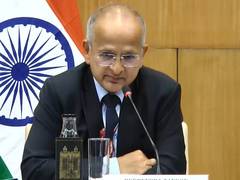
Rudrendra Tandon, Secretary (East) in the MEA, emphasized the complexity of the process, noting that because AITIGA is a multilateral instrument, consensus among all ten ASEAN member states is required.
“It’s a multilateral agreement, so it requires all ASEAN countries together. We of course discussed with all our ASEAN partners about the importance of upgrading, reviewing the ASEAN-India Trade in Goods Agreement, which is a very old agreement and probably does not reflect the structures of the economies either in India or in ASEAN,” Tandon said.
The review focuses on further liberalizing trade and addressing tariff disparities that have become more apparent as supply chains have reorganized since the agreement was first implemented. Tandon noted that the original agreement established varying levels of tariff concessions across sensitive and exclusion lists, which the ongoing process seeks to streamline and rationalize.
“The review process will try to bring about greater liberalisation on both sides,” Tandon said. “But mind you, this is a multilateral agreement. So it will be everyone together; we do have continuous conversations with all the significant economies in the ASEAN region, because naturally the negotiations with them will be critical in getting the review process through.”
Indian officials also stress that non-tariff measures, rules of origin and customs procedures are likely to feature more prominently this time, reflecting New Delhi’s push to prevent trade deflection and protect emerging domestic manufacturing schemes. Tandon added that while the multilateral track continues, India is simultaneously pursuing the “upgradation of ties bilaterally” with individual ASEAN members to maintain momentum and secure early deliverables ahead of a final package.
Advancing the Australia-India CECA
In parallel with the ASEAN review, India is moving toward a Comprehensive Economic Cooperation Agreement (CECA) with Australia. This follows the 2022 Economic Cooperation and Trade Agreement (ECTA), which served as an interim deal providing early access to tariffs and market entry and is anchored in the broader framework of India’s foreign trade policy.
Vishwesh Negi, Joint Secretary (Oceania), stated that the current objective is to move beyond the ECTA toward a more holistic economic framework that brings services, investment protection and regulatory cooperation under a single, enforceable text.
“As you all are aware, in 2022, India and Australia had signed the Economic Cooperation and Trade Agreement. Now the effort on the two sides is to finalise a balanced, comprehensive uh economic cooperation agreement,” Negi said.
The CECA is expected to cover broader sectors, including services and investment, which were more limited in the ECTA. Negotiators are also examining disciplines on digital trade, standards and mobility for professionals, areas seen as critical to making the agreement relevant for businesses rather than a purely tariff-cutting exercise.
Negi indicated that the Ministry of Commerce is leading the negotiations and that “further rounds of negotiations between our chief negotiators are happening soon.”
“We are expecting a balanced document to be adopted on both sides, and our teams are closely engaged,” Negi added, underscoring that the political mandate on both sides is to land an agreement that can withstand domestic scrutiny in parliaments and among key industry groups.
Diplomatic Pivot to the South Pacific
These economic maneuvers coincide with a high-profile diplomatic tour by Prime Minister Narendra Modi, who is scheduled to visit Indonesia, Australia, and New Zealand between July 8 and July 11. The sequencing underlines that trade architecture, market access and security partnerships are being advanced as part of a single regional strategy rather than as isolated negotiations.
The itinerary reflects a tiered approach to regional engagement:
- Indonesia (July 8-9): Focus on reviewing the bilateral partnership with the largest economy in ASEAN, including implementation of AITIGA commitments and coordination in wider Indo-Pacific forums.
- Australia (July 10): Participation in the third India-Australia Annual Summit process to solidify security and trade ties and provide political guidance to CECA negotiators.
- New Zealand (July 11): A historic visit marking the first time an Indian Prime Minister has visited the country in forty years, with trade, education and mobility expected to anchor discussions on a refreshed bilateral framework.
The visit to New Zealand is seen as a significant diplomatic signal, expanding India’s footprint in the South Pacific and diversifying its strategic partnerships beyond the immediate littoral states of the Indian Ocean. For Wellington, the engagement offers a chance to re-set ties with one of the world’s fastest-growing large economies at a time when both governments are reassessing supply-chain risks and overdependence on single markets.
Taken together, the trade negotiations and the prime ministerial tour reflect an attempt by New Delhi to hard-wire its “Act East” policy into binding economic and institutional arrangements. Prime Minister Modi’s visit to Indonesia begins on July 8, followed by engagements in Canberra and Wellington, with officials on all sides framing the week as an inflection point for how India positions itself inside, rather than on the margins of, Indo-Pacific economic governance.
Keep reading
- Global Food Security Alliances: How Climate-Resilient Agricultural Corridors Are Stabilizing Wheat and Rice Supplies
- Cross-Border Renewable Energy Grids: North Sea and Mediterranean Subsea Cable Networks Enter Phase Two
- India vs New Zealand: Bhuvneshwar Kumar returns to India's T20I squad (globallypulse.com)
