
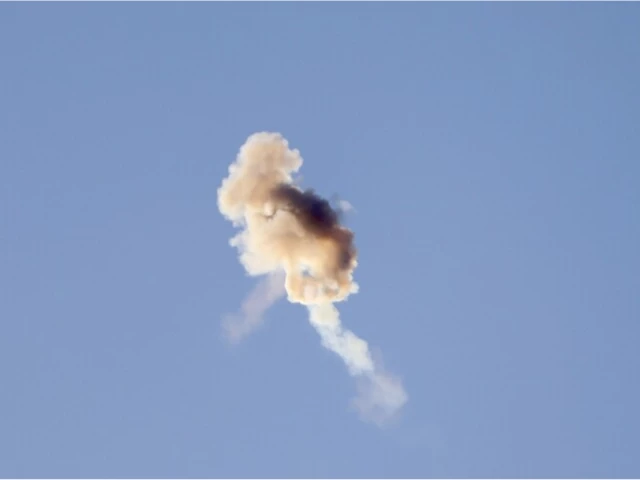
DOHA – A rapid escalation of military hostilities between the United States and Iran has expanded into a multi-front regional conflict, with Iranian missiles striking targets in Kuwait, Bahrain, Qatar, and Jordan, while the U.S. military completes a week-long campaign of intensive airstrikes inside Iranian territory.
The widening scope of the engagement marks a critical failure of recent diplomatic efforts and threatens the stability of the Strait of Hormuz, the world’s most vital oil transit chokepoint. With the U.S. resuming a naval blockade and Iran threatening to halt all energy exports, the conflict has evolved from a bilateral dispute into a systemic crisis affecting the security architecture of the entire Persian Gulf and testing existing regional security agreements.
Regional Strikes and Civilian Impact
On Friday, Bahrain and Kuwait reported direct Iranian aerial attacks, the first such publicly acknowledged strikes on their territory in the current round of fighting. In Kuwait, the Ministry of Electricity, Water and Renewable Energy confirmed that a precision strike hit an electricity generation and water desalination plant, causing fire and structural damage and briefly disrupting power and water supplies in surrounding districts.
The ministry urged residents to “rationalise” electricity consumption as technical teams worked to restore affected units and protect grid stability during peak summer demand. Simultaneously, the Islamic Revolutionary Guard Corps (IRGC) claimed to have destroyed High Mobility Artillery Rocket System (HIMARS) platforms and missiles in Kuwait, asserting that American forces and Israeli-backed fighters were stationed at the sites. Kuwaiti authorities did not immediately confirm any foreign military casualties, and the IRGC’s battlefield claims could not be independently verified.
In Bahrain, military officials stated that air defense systems intercepted and destroyed several “hostile Iranian aerial attacks.” The Bahraini military condemned the strikes as “cowardly attacks targeting civilians,” noting that the use of missiles and drones against private property constitutes a “blatant violation of international humanitarian law” governing the protection of civilians and civilian infrastructure.
Qatar, which has served as a primary mediator between Washington and Tehran, also became a target. The Qatari Ministry of Defence announced the interception of a missile attack over its territory, though falling debris subsequently injured a child and damaged nearby buildings. The strike underscored how states previously positioned as diplomatic intermediaries are now being drawn directly into the conflict’s security fallout.
The IRGC further claimed to have successfully hit U.S. fighter jets stationed in Jordan. This claim follows an earlier report from the Jordanian army, which stated it had shot down three Iranian missiles targeting the kingdom and that no U.S. aircraft had been destroyed. No independent confirmation of the IRGC’s assertion has emerged, highlighting the information battle now accompanying the physical confrontation.
U.S. Offensive and Iranian Casualties
The regional volatility follows six consecutive nights of U.S. military operations targeting Iranian assets across multiple provinces. U.S. Central Command (CENTCOM) confirmed the completion of its latest wave of strikes, which commanders said were focused on:
- Coastal surveillance and air defense sites deemed critical to Iran’s ability to threaten regional shipping
- Military logistics infrastructure supporting missile and drone operations
- Maritime capabilities linked to what U.S. officials describe as “destabilizing” activities in the Gulf
The strikes inside Iran have targeted critical transit and transport hubs, signalling an effort to degrade Iran’s capacity to move personnel and equipment. Iranian state media reported that overnight attacks hit an airport, a railway station, and two bridges. In Hormozgan province, strikes on two bridges killed three people and wounded nine, according to local authorities.
Additional targets included the Iranshahr airport in the southeast and the Bandar Abbas Railway Junction Station, a key link between Iran’s inland transport routes and its Gulf coastline. The Mehr news agency also reported a U.S. missile strike on the Chabahar maritime control tower-the third time the facility has been hit within a week-further constraining Iran’s ability to manage traffic along its southeastern coast.
The human cost of the resumed hostilities has risen sharply. Hossein Kermanpour, Head of Public Relations for Iran’s Ministry of Health and Medical Education, reported that as of July 17, 38 people have been killed and over 400 injured since the U.S. resumed strikes in July.
“Health is the first victim of war,” Kermanpour stated, noting that the casualties include women and children under the age of 18 and warning that damage to medical facilities and transport routes is complicating emergency response.
The Battle for the Strait of Hormuz
At the center of the escalation is the Strait of Hormuz, where roughly one-fifth of the world’s total oil consumption passes daily and where navigation is governed under the broader framework of the UN Convention on the Law of the Sea. The U.S. announced the resumption of a naval blockade on Tuesday, targeting vessels transiting to and from Iranian ports and intensifying questions over the legality and sustainability of extended maritime interdiction operations in one of the world’s most sensitive chokepoints.
CENTCOM reported that American forces have already redirected three commercial vessels attempting to bypass the blockade and disabled one non-compliant ship it said had failed to heed multiple warnings. White House spokeswoman Karoline Leavitt defended the action, stating the strikes were necessary because Iran violated a memorandum of understanding (MoU) regarding the safety of commercial shipping, and arguing that the U.S. measures were narrowly tailored to restore what she described as “freedom of navigation” for non-Iranian traffic.
In response, the IRGC asserted full control over the waterway, declaring that no oil or gas would be exported through the Strait for as long as U.S. attacks continue. Energy traders and regional officials fear that even partial disruption could trigger a spike in prices and strain the emergency response mechanisms set up by major importers after previous Gulf crises.
The conflict has also spilled into Syria. The IRGC reported attacking a U.S. special operations command centre at al-Tanf in retaliation for the killing of Iranian soldiers in Iranshahr, though Reuters has been unable to independently verify the claim. U.S. officials have so far declined to give operational details but insist that any attacks on American personnel in Syria will draw a “proportionate” response.
Diplomatic Collapse and Internal Friction
The current violence represents a collapse of the Islamabad MoU, a Pakistan-mediated agreement that established a 60-day negotiation period following talks in Switzerland on June 22. The framework was designed to slow escalation by requiring both sides to notify intermediaries of any planned major military action and to submit maritime incidents to a joint review mechanism. Those provisions have now effectively unraveled.
While President Donald Trump asserted that the U.S. is “winning big in Iran,” the diplomatic process has been clouded by allegations of misconduct at the highest levels of the American negotiating team. U.S. Vice President JD Vance recently denied reports that White House advisers Jared Kushner and Steve Witkoff had sought to benefit financially from their roles as negotiators, allegations that, if substantiated, could trigger congressional scrutiny under federal ethics and conflict-of-interest rules.
Vance described the claims-originally reported by Drop Site News as originating from Iranian communications-as “completely bogus.” He argued that Tehran was attempting to delegitimize the U.S. delegation and fracture the domestic political consensus needed to sustain any eventual agreement.
The Vice President’s defense comes amid his own accusations that members of the Israeli government have attempted to “derail” U.S. diplomacy through a “foreign influence campaign.” The charge adds a new layer of tension to already complex alliance dynamics, raising the prospect that future negotiations will be shaped not only by U.S.-Iranian positions but by how Washington manages competing demands from regional partners.
The U.S. currently maintains more than 50,000 service members across the Middle East to support ongoing operations and ensure blockade compliance, a footprint that ties the trajectory of the conflict directly to American force protection decisions and to the rules of engagement governing those troops. As regional capitals brace for further strikes and counterstrikes, officials on all sides acknowledge that each additional incident now carries diplomatic, legal, and economic consequences far beyond the immediate battlefield.
