
CAIRO – Egypt and Algeria have maintained their positions as the preeminent military powers in Africa, according to the 2026 Global Firepower Index, while Nigeria retains its standing as the continent’s third-strongest force.
The annual assessment reflects a period of significant procurement and strategic restructuring across the continent, as nations balance the need for conventional deterrence with the rising demands of asymmetric warfare and internal security. It also lands at a time when African governments are under growing pressure-from parliaments, finance ministries, and international partners-to justify defense spending within broader development and fiscal-consolidation agendas.
The rankings come at a time of heightened volatility across the Sahel and the Horn of Africa, where military capability is increasingly measured not just by hardware, but by the ability to project power across porous borders and counter non-state armed groups. For policymakers, the index has become one of several inputs into bilateral defense cooperation, arms-transfer decisions, and regional security dialogues.
The North African Hegemony
Egypt continues to lead the continent with a Power Index (PwrIndx) score of 0.3651. Cairo’s dominance is underpinned by a diversified procurement strategy, maintaining a massive fleet of aircraft and naval assets designed to secure the Suez Canal and project influence in the Eastern Mediterranean. Its posture is closely aligned with national security priorities set out under Egypt’s constitution and implemented through annual defense appropriations.
Algeria holds the second position with a PwrIndx score of 0.4849. Despite a slight decline in its index rating, Algiers remains a primary military hub in the Maghreb, characterized by heavy investment in sophisticated air defense systems and armored divisions. Its force structure reflects a long-standing focus on border security and counterterrorism following years of internal conflict.
The concentration of power in North Africa underscores a continuing trend of high capital expenditure on conventional military platforms, often sourced through long-term partnerships with Russia, France, and the United States. These partnerships are typically framed within bilateral defense cooperation agreements and are monitored against international export-control regimes and arms-transfer norms.
West African Security Dynamics
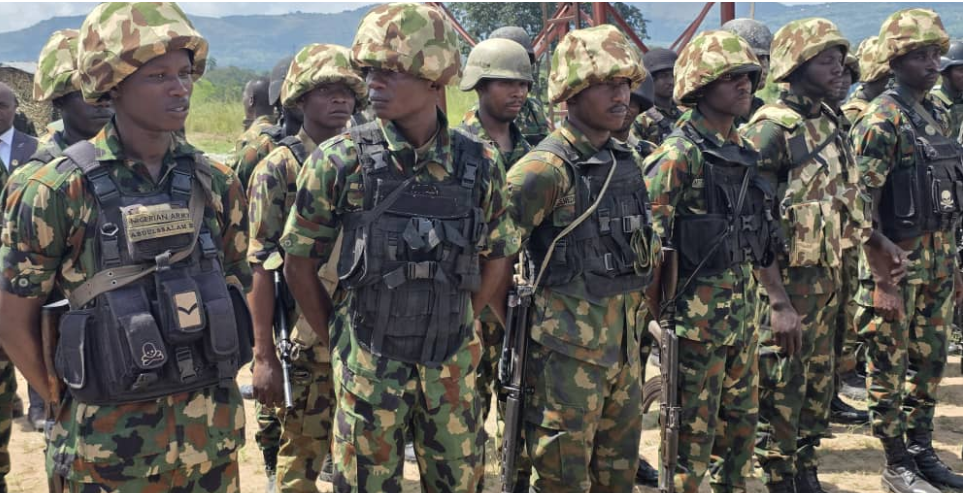
Nigeria remains the third-strongest military power in Africa, recording a PwrIndx score of 0.6097. As the regional heavyweight within the Economic Community of West African States (ECOWAS), Nigeria’s military standing is critical for stability in the Gulf of Guinea and for the credibility of ECOWAS security guarantees.
The Nigerian Armed Forces continue to operate under the dual pressure of maintaining conventional readiness while engaged in protracted counter-insurgency operations against Boko Haram and ISWAP in the northeast, as well as combating banditry in the northwest. Abuja’s security posture has direct implications for regional border management, refugee flows, and cross-border trade, making its military performance a recurring topic in ECOWAS ministerial and heads-of-state summits.
South Africa follows in fourth place with a PwrIndx of 0.6843. While historically a leader in military technology and aerospace engineering on the continent, Pretoria has faced ongoing challenges regarding budget constraints and the maintenance of its aging hardware. Successive defense reviews have warned that underfunding risks eroding South Africa’s ability to meet obligations under African Union peace and security frameworks.
Shifts in East Africa and the Maghreb
The 2026 index highlights an upward trajectory for Ethiopia, which has climbed to fifth place with a score of 0.8525. This ascent reflects Ethiopia’s role as a central security actor in the Horn of Africa and its continued investment in manpower and drone technology. Addis Ababa’s military footprint remains closely watched by neighbors, especially in light of unresolved border and water-resource disputes.
Morocco has also moved up the rankings to sixth place, recording a PwrIndx of 1.0368. Rabat has focused heavily on modernization and strategic alliances, enhancing its interoperability with NATO forces and positioning itself as a preferred partner for joint exercises and training initiatives.
Conversely, Angola has slipped to seventh place with a score of 1.1045, while the Democratic Republic of the Congo has risen to eighth with a PwrIndx of 1.3051, reflecting the scale of its security apparatus amid ongoing conflict in its eastern provinces. In both countries, the balance between internal security operations and broader conventional modernization remains a central policy dilemma.
The top 10 is rounded out by Sudan in ninth (1.3563) and Tunisia in tenth (1.7823). Political transitions, sanctions exposure, and fiscal stress in these states continue to shape how defense budgets are allocated and how effectively forces can be deployed beyond core regime-protection tasks.
Measuring Military Capability
The Global Firepower Index utilizes the PwrIndx to quantify a nation’s military strength. A lower PwrIndx score indicates a more capable military force.
The index evaluates more than 60 individual factors to determine these rankings, including:
- Manpower: Total population, available manpower, and reserve personnel.
- Equipment: Total aircraft, tanks, artillery, and naval assets.
- Logistics: Geography, natural resources, and infrastructure.
- Financials: Defense budgets and foreign exchange reserves.
While the index provides a comprehensive view of conventional capacity, analysts note that it does not account for the operational effectiveness of troops in the field or the impact of political instability on command-and-control structures. Nor does it directly measure compliance with international humanitarian law or arms-control instruments that govern how military power may be used in practice, such as the Arms Trade Treaty.
For defense ministries, foreign-policy planners, and multilateral lenders, the Global Firepower Index has become a reference point when assessing the opportunity cost of large-scale procurement, the sustainability of military payrolls, and the risks associated with spiraling arms races. As African states seek to professionalize their forces and expand peacekeeping roles abroad, such benchmarks increasingly intersect with debates over transparency, governance, and civilian oversight of the security sector.
| Rank | Country | PwrIndx Score |
|---|---|---|
| 1 | Egypt | 0.3651 |
| 2 | Algeria | 0.4849 |
| 3 | Nigeria | 0.6097 |
| 4 | South Africa | 0.6843 |
| 5 | Ethiopia | 0.8525 |
| 6 | Morocco | 1.0368 |
| 7 | Angola | 1.1045 |
| 8 | DR Congo | 1.3051 |
| 9 | Sudan | 1.3563 |
| 10 | Tunisia | 1.7823 |
The Global Firepower Index serves as a benchmark for international defense analysts tracking the proliferation of arms and the shifting balance of power across the African continent. Yet for African governments and their partners, its greatest value may lie in highlighting the enduring gap between headline military strength and the institutions, oversight mechanisms, and political stability required to turn raw capacity into lasting security gains.
