BURGENSTOCK – Technical negotiators from the United States and Iran have concluded a high-stakes round of talks in Switzerland, establishing a fragile diplomatic roadmap and a 60-day sanctions waiver aimed at ending a conflict that has destabilized global energy markets and ignited warfare across the Levant.
The discussions, held at the Bürgenstock resort overlooking Lake Lucerne and conducted under the mediation of Qatar and Pakistan, seek to operationalize the Islamabad Memorandum of Understanding signed on June 17. The resulting framework attempts to transition the two adversaries from active military confrontation to a structured diplomatic process, though deep contradictions remain regarding nuclear transparency and the administration of strategic waterways.
The international community views these talks as a critical pivot point for global economic security. The conflict has not only displaced millions in Lebanon and Iran but has triggered what United Nations Secretary-General António Guterres described as the “mother of all energy shocks,” creating a cascading crisis of debt and food insecurity for developing nations.
The Technical Framework and Economic Levers
Deputy Foreign Minister Kazem Gharibabadi, leading the Iranian technical team, announced that the parties have agreed to establish four specialized working groups to manage the transition toward a permanent peace agreement. These groups will focus on:
- The comprehensive removal of sanctions.
- Nuclear-related sanctions and monitoring.
- Regional reconstruction and economic development.
- Monitoring and implementation mechanisms.
These tracks are designed to run in parallel rather than sequentially, with diplomats describing them as a “laddered” process in which concrete progress on implementation triggers additional economic relief.
As an immediate gesture of confidence, the U.S. Treasury has issued a general license effective until August 21, allowing Tehran to export oil and petrochemical products. Under U.S. law, such licenses are issued pursuant to the International Emergency Economic Powers Act and administered through the Treasury’s Office of Foreign Assets Control, making the waiver both a diplomatic signal and a formal adjustment to the sanctions regime. This waiver is paired with the immediate release of $12 billion in frozen Iranian assets, to be routed through supervised financial channels, according to officials briefed on the talks.
However, the use of these funds has become a point of public contention in both capitals. U.S. President Donald Trump suggested the assets would be used solely to purchase U.S. agricultural goods, stating, “the money that we lift is going to go to our farmers.”
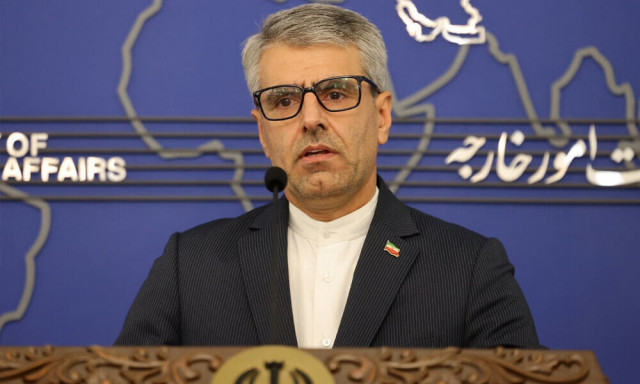
Iranian Foreign Ministry spokesperson Esmaeil Baghaei rejected this restriction, asserting that “our assets will be employed with absolute liberty.” Baghaei characterized the war as an attempt to “exterminate Iran’s civilisation” that had since shifted into a mechanism for bringing “US farmers massive revenues.”
For Tehran, control over how the unfrozen funds are spent has become a test of sovereignty; for Washington, the design of the license and its reporting requirements is emerging as a key domestic accountability issue as Congress presses for oversight of any sanctions relief.
The Struggle for the Strait of Hormuz
One of the most volatile elements of the negotiations involves the Strait of Hormuz, the world’s most vital oil chokepoint and a waterway long governed by the principles of transit passage under the UN Convention on the Law of the Sea. While both nations agreed to establish military and maritime communication lines to ensure the safe passage of commercial vessels, Tehran is asserting a new level of control over the route.
Iran’s chief negotiator, Mohammad Bagher Ghalibaf, declared that the strait “will never return to its pre-war conditions and will be administered by the Islamic Republic of Iran, in accordance with international law.”
The waterway, which Iran closed at the start of the conflict and briefly reopened last week, remains a primary flashpoint. While maritime traffic has increased since Monday, shipowners and insurers report that war-risk premiums remain elevated, and the tension between Tehran’s claim of “administration” and the international demand for unrestricted navigation persists.
Western diplomats say any durable agreement will likely require an explicit mechanism for incident reporting and deconfliction in the narrow shipping lanes, as well as technical assurances to Gulf producers whose exports transit the strait.
The Lebanon Deadlock and Israeli Resistance
The peace process is inextricably linked to the conflict in southern Lebanon, where the line of contact between Israel and Hezbollah has repeatedly derailed regional diplomacy. As part of the Swiss arrangements, the parties agreed to create a “conflict-prevention unit” involving Pakistan and Qatar to monitor the ceasefire between Israel and Hezbollah and to share verified incident reports with both Washington and Tehran.
Despite this, the situation on the ground remains lethal. Israeli troops recently opened fire in the town of Nabatieh al-Fawqa, killing two men-an incident that occurred despite the US-brokered ceasefire and which local officials say has further eroded trust in international monitoring efforts.
Iran has warned that it “will respond” if Israel continues attacks on Lebanon. Iranian Ambassador to the UN in Geneva, Ali Bahreini, noted that while technical talks are progressing, threats from President Trump have put the process in “serious jeopardy.”
Simultaneously, friction is growing between Washington and Tel Aviv over the terms of any post-war security architecture. Reports indicate the U.S. may demand a gradual Israeli withdrawal from southern Lebanon to allow the Lebanese army to return as a confidence-building measure, potentially under a revised mandate for existing UN peacekeeping forces.
Israeli Prime Minister Benjamin Netanyahu has signaled a pivot toward military autonomy in response to these pressures. Addressing troops last week, Netanyahu stated:
“I greatly appreciate the support we have received from our American friends, but we need to free ourselves from dependence and build our own independent armament system.”
Regional officials caution that the Lebanon track could still upend progress in Switzerland if battlefield incidents trigger a new cycle of retaliation.
The Nuclear Transparency Gap
The most significant discrepancy between the two delegations concerns the International Atomic Energy Agency (IAEA) and the future of nuclear verification in Iran.
U.S. Vice President JD Vance maintained an upbeat assessment, claiming Tehran had agreed to allow nuclear inspectors back into the country. President Trump echoed this, stating on Truth Social that Iran will agree to inspections to ensure “nuclear honesty.”
Tehran has flatly denied these claims. Spokesperson Esmaeil Baghaei ruled out allowing IAEA inspectors to visit nuclear facilities that were targeted during the US-Israeli war, stating, “We do not intend to allow inspectors from the International Atomic Energy Agency to visit the nuclear sites targeted during the conflict.”
Iranian officials insist that any renewed access for inspectors must await repairs and security assessments at damaged facilities. Western diplomats, by contrast, argue that without restored verification-particularly under the IAEA’s Additional Protocol, which grants expanded inspection rights-the broader framework will be politically unsustainable in Washington and in key European capitals.
President Masoud Pezeshkian further cautioned that the success of the talks depends on “practical adherence” rather than rhetoric, noting that “statements outside the agreed text do not help advance the negotiations.” His remarks were widely read as an effort to keep hardliners on both sides from defining the emerging deal through public posturing.
Markets Watch the Clock
The conflict continues to exert downward pressure on crude prices, which settled 3% lower on Monday as markets react to the possibility of a sustained lull in fighting and a partial normalization of exports through the Strait of Hormuz. Energy traders say the new U.S. license, combined with even a limited return of Iranian barrels to market, is already being priced into forward contracts.
For now, the U.S. sanctions waiver remains in effect until August 21, pending the progress of the four established working groups. Officials close to the talks describe that date as both an economic and political deadline: if verifiable steps on nuclear monitoring, maritime security and regional de-escalation are not in place by then, the Treasury could allow the license to lapse, snapping key restrictions back into force and testing whether the fragile roadmap agreed at Bürgenstock can survive its first real stress test.