
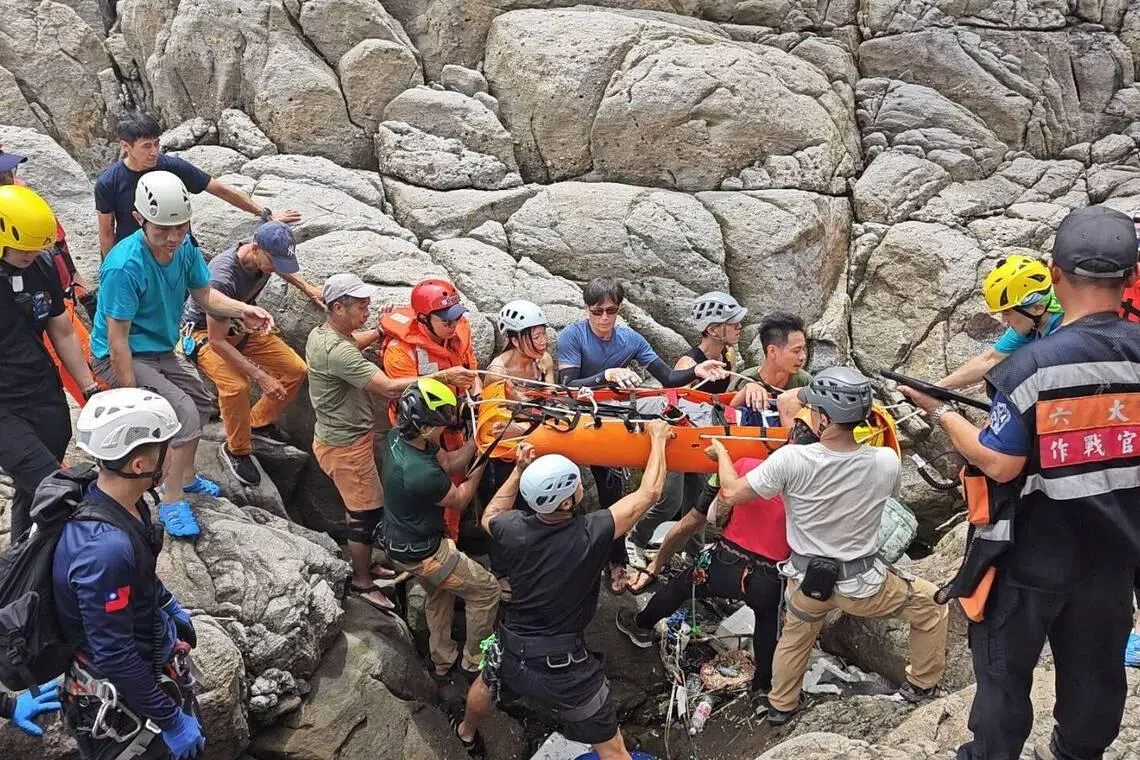
NEW TAIPEI CITY – A 25-year-old Singaporean national was hospitalized with head and hand injuries on May 16 after falling from a cliff at the Longdong recreation area in New Taipei City.
The incident occurred during the morning hours at the site popularly known as the Dragon Caves, located in the Gongliao district along the island’s north-eastern coast. The area, situated approximately one hour from the capital, Taipei, is a recognized hub for outdoor enthusiasts, particularly those engaging in rock climbing and snorkeling.
The accident underscores the volatile nature of Taiwan’s coastal geography and the ongoing challenges associated with adventure tourism in the region. As East Asia sees a rise in international travelers seeking high-risk recreational activities, the incident highlights the critical intersection of personal safety equipment and the necessity of rapid-response mountain rescue operations in rugged terrains.
Rescue Operations and Casualty Condition
Local authorities report that the climber, identified as James, lost his footing and fell from a slope approximately seven meters high. Members of a local civilian rescue group arrived on the scene to find the man bleeding from the head.
The New Taipei City Fire Department received the emergency alert at 11:19 a.m. Due to the treacherous, rocky nature of the terrain, rescue personnel were forced to employ a relay system to transport the climber to safety, handing the stretcher across narrow ledges and uneven ground. The extraction process took approximately two hours.
The New Taipei City Fire Department was alerted at 11.19am and its staff stretchered him to safety by relay around two hours later, after navigating the rocky terrain.
Medical reports indicate that James remained conscious throughout the rescue and upon his arrival at the hospital. He is currently receiving treatment for injuries to his head and hands, and doctors are monitoring him for potential complications associated with falls from height.
Safety Records at Longdong
The fall is the second serious climbing accident reported at the Dragon Caves within the month of May. Earlier in the month, a 44-year-old local woman died after falling from a slope estimated to be 10 meters high at the same location.
The recurrence of falls at Longdong has prompted a closer look at the site’s safety profile and the adequacy of warning signs, route markings and access controls at popular sea cliffs. The Dragon Caves are characterized by volcanic rock formations that offer challenging climbs, attracting both seasoned mountaineers and amateur tourists, often in mixed-experience groups.
- Location: Gongliao District, New Taipei City, on Taiwan’s north-eastern coast
- Primary Risks: Steep volcanic slopes, unstable footing, sudden wind and wave changes, and relatively remote coastal access that can delay evacuation
- Recent Incidents: Two major falls in May (one fatality, one serious injury) prompting renewed scrutiny of site management and visitor safety practices
Regulatory and Policy Context
Coastal recreation sites such as Longdong fall under a broader national framework that governs water-based and near-water tourism activities. Taiwan’s Regulations Governing Water Recreation Activities, administered by the Ministry of Transportation and Communications and implemented by local governments, set out requirements for operators, equipment, safety briefings and risk management at designated coastal and marine leisure areas. Recent amendments have focused on tightening standards for high-risk pursuits such as snorkeling and diving, and local authorities are under growing pressure to ensure that climbing and cliff-access zones adjoining these waters are managed to comparable safety benchmarks.
Emergency response to such incidents is coordinated through Taiwan’s National Fire Agency under the Ministry of the Interior, which oversees municipal fire departments and specialized rescue teams for mountain and coastal environments. In practice, this means local fire units work closely with certified volunteer rescue associations under nationally defined search-and-rescue procedures, including mandatory reporting to central authorities in serious or cross-jurisdictional cases.
Investigation and Diplomatic Coordination
Taiwanese authorities have launched a formal investigation into the cause of the fall. A primary focus of the inquiry is the inspection of the climbing gear used by the Singaporean national to determine if equipment failure contributed to the accident, alongside an assessment of whether the party was using established routes and observing posted safety advisories.
Given the nationality of the victim, the incident has triggered standard diplomatic notification protocols. The Straits Times has contacted Singapore’s Ministry of Foreign Affairs (MFA) for further information regarding consular assistance and the climber’s current status. In previous cross-border adventure tourism incidents, MFA officials have typically liaised with local hospitals, police and rescue agencies to support family notifications and, where necessary, medical evacuation decisions.
The New Taipei City Fire Department continues to monitor the site and coordinate with local civilian rescue groups to ensure emergency readiness for other visitors to the north-eastern coast. Officials are also expected to share findings from the investigation with the central tourism and interior ministries, a step that could inform future safety campaigns, operator guidelines or access restrictions at Longdong during periods of heightened risk.
