
SINGAPORE – Senior Minister Lee Hsien Loong has announced that the Singaporean government is prepared to deploy additional support measures to shield citizens from the escalating economic volatility triggered by the conflict in Iran.
The instability in the Middle East, specifically the closure of the Strait of Hormuz-a critical maritime artery through which approximately one-fifth of the world’s total oil consumption passes-has sent ripples through Asian markets. For a trade-dependent city-state like Singapore, these disruptions manifest as heightened energy costs and supply chain fragility, necessitating a state-led intervention to maintain social stability and economic resilience.
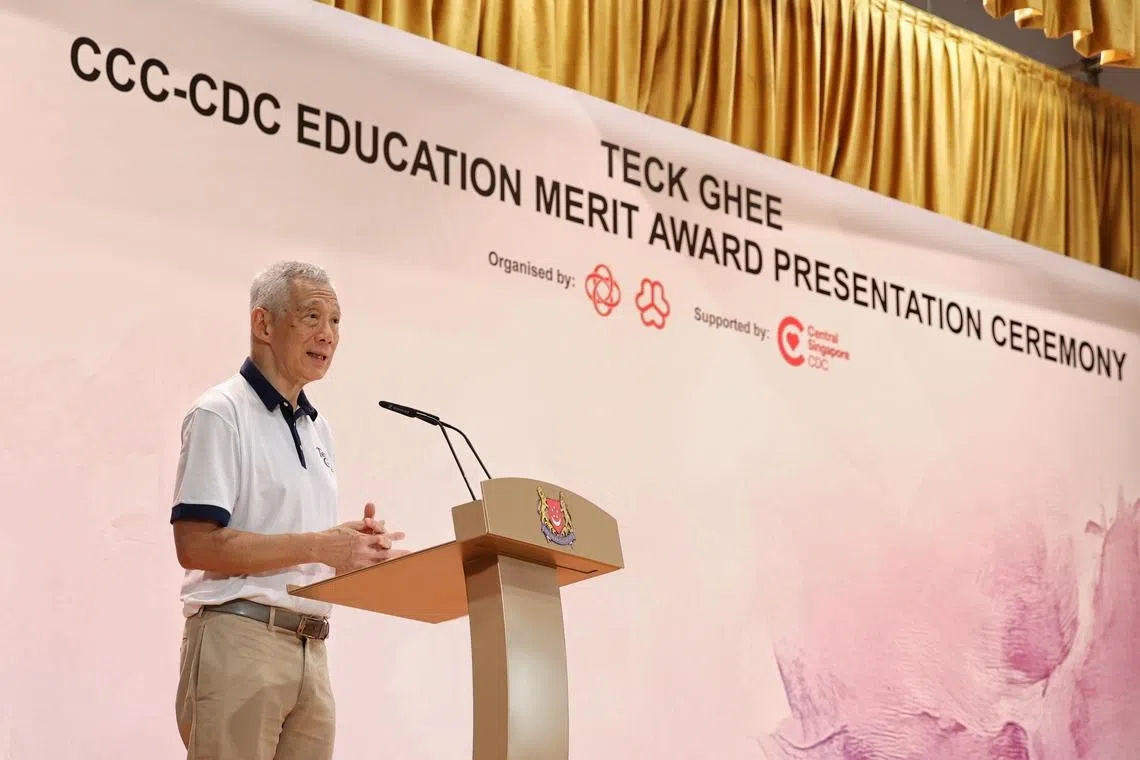
Speaking on April 18 at an awards presentation ceremony at Ang Mo Kio Primary School, Lee stated that the government is monitoring the situation closely and remains ready to expand its response if the crisis worsens.
“Having built up our resources and capabilities over the years, we have what it takes,” Lee said. “And I think we are in a strong position to deal with the situation, and to help Singaporeans survive the crisis.”
Energy Security and Global Trade Disruptions
The closure of the Strait of Hormuz by Iran has severely disrupted the flow of energy and critical goods globally. While Asian nations have been among the hardest hit by the resulting shocks, Lee noted that Singapore has experienced less severe impacts compared to some of its immediate neighbors, in part due to earlier diversification of fuel sources and long-term contracts.
Despite a two-week ceasefire deal and ongoing peace talks between the United States and Iran, the Senior Minister warned that the global economy cannot expect a rapid return to pre-war conditions.
“But what we do know is this – even if the war stops immediately, we cannot go back to where we were before the war started. And even if we could, it would take months or even years to repair the damage and to restore the energy production and supply fully.”
Singapore’s vulnerability to such shocks is rooted in its status as one of the world’s primary oil refining and bunkering hubs. Any prolonged blockage of the Hormuz choke point threatens not only fuel prices but the broader logistics of international shipping, with knock-on effects for container traffic, aviation fuel costs and the wider trading system on which the Republic’s open economy depends.
Officials have framed the response within Singapore’s broader economic governance toolkit, including contingency planning under the Civil Defence and Civil Emergency management framework and existing mechanisms that allow the government to draw on fiscal reserves in times of severe crisis, subject to presidential approval. The current measures stop short of such extraordinary steps but are being positioned as part of a calibrated, multi-stage response should the disruption to energy flows be prolonged.
Fiscal Interventions and Domestic Support
To mitigate the immediate economic fallout, the Singaporean government has already implemented a support package valued at nearly $1 billion. This fiscal response is designed to alleviate the pressure on households and businesses facing rising operational costs, complementing ongoing inflation-control efforts and existing social schemes.
Key components of the relief effort include:
- CDC Vouchers: $500 vouchers per household, originally scheduled for January 2027, have been accelerated for disbursement in June 2026, bringing forward support to help residents offset higher daily expenses at participating heartland merchants and supermarkets.
- Cash Payments: The Cost-of-Living Special Payment has been increased by $200 per person, bringing the total cash assistance to between $400 and $600 for eligible citizens, with lower- and middle-income groups receiving the largest shares.
- Sector-Specific Aid: A $200 payment in April for active platform workers, private-hire drivers and taxi drivers, who are directly exposed to fuel price spikes and weaker trip demand.
- Business Support: Temporary support for school bus operators and enhanced corporate tax rebates for affected enterprises, aimed at cushioning transport-related costs and preserving jobs.
Lee acknowledged that while these measures will not eliminate every challenge, they are intended to help the population manage the immediate pressures wrought by the crisis. He added that the package is designed to be targeted and time-limited, so as not to undermine longer-term fiscal prudence or distort market signals on energy conservation.
The Senior Minister also stressed that policymakers are watching global oil benchmarks and shipping indicators closely, and that further policy tools-including adjustments to fees, charges and regulated tariffs-remain available if there is a sustained deterioration in external conditions.
Social Resilience and Community Networks
Beyond financial aid, the Senior Minister called for a collective national effort to reduce energy consumption and maintain social cohesion, underscoring that resilience is not solely a matter of government spending but of social norms and community behaviour. He urged citizens to adopt a “keep calm and carry on” mentality, focusing on practical steps to increase personal and communal security.
“For example, we should all do our part to conserve energy – turn off the lights you do not need,” Lee said. “Do not waste energy; save a little bit. Energy costs have gone up, fuel is scarce, electricity is expensive.”
Lee emphasized the importance of strengthening informal social networks, drawing a parallel to the grassroots response during the Covid-19 pandemic between January 2020 and May 2023. He recalled how residents in Teck Ghee and Ang Mo Kio produced homemade masks and delivered essentials to quarantined neighbors, complementing formal measures such as nationwide advisories under the Infectious Diseases Act and stepped-up public health controls.
“In uncertain times, our togetherness is crucial for seeing us through the troubles,” he added, urging the public to nurture these networks during both stable and volatile periods so they remain reliable during future crises.
As the United States and Iran continue to engage in diplomatic negotiations and the international community awaits the outcome of the current ceasefire, Singapore’s leaders are signalling that the Republic’s response will be governed by a combination of vigilant monitoring, calibrated fiscal support and an emphasis on community-level resilience, rather than assumptions of a swift return to business as usual.
Keep reading
