
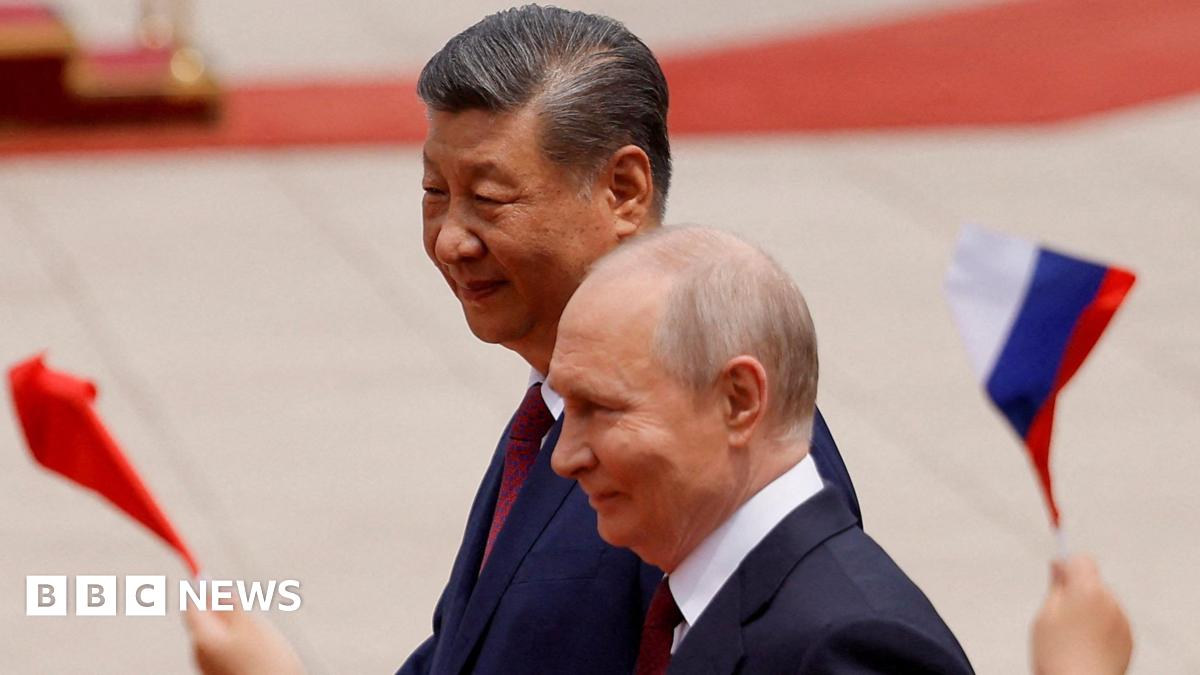
BEIJING – Vladimir Putin is set to reunite today with a Chinese national he first encountered 26 years ago, transforming a chance diplomatic encounter from the early days of his presidency into a curated symbol of enduring bilateral ties.
While the meeting is presented as a human-interest story, it underscores the strategic cultivation of “soft power” within the Russia-China relationship. The reunion of Putin and Peng Pai, facilitated by a state-led social media campaign, reflects a broader effort to project an image of personal warmth and historical continuity amid a deepening geopolitical alliance.
The connection dates back to 2000, during one of Putin’s first major state visits to China. While visiting Beihai Park, a historic imperial garden in the heart of Beijing, the Russian leader paused to interact with a young boy, lifting him from a railing for a photograph.
Peng Pai, then a child, recalls the encounter as a formative moment.
“I never imagined I would have the opportunity to meet him again. It’s truly incredible,” Peng said, recalling how the Russian president had lifted him from a railing in the park to take a photo. “He also gently kissed my forehead before we parted. Those are scenes I still remember vividly.”
The Digital Search for a Diplomatic Symbol
The path to today’s reunion began not through traditional diplomatic channels, but via social media. Last year, the Russian state-funded media outlet Russia Today (RT) launched a search for the boy from the 2000 photograph, posting a notice on the Chinese platform Weibo.
The outlet suggested that locating the individual would be “truly meaningful,” sparking a viral search among users. Within days, Peng was identified and brought into a carefully choreographed media narrative.
The search revealed that the encounter had left a lasting impact on Peng’s professional trajectory. Now a middle-aged engineer, Peng holds a master’s degree from a university in Moscow-a choice he told Chinese media was inspired by his brief interaction with the Russian president and later exposure to Russian culture and language programs.
Reflecting on his current appearance compared to the child in the photo, Peng noted in a video posted by Chinese state media: “I want to tell President Putin, seeing you again, you’re still as charming as back then, while I’ve turned from a young boy into a fattened middle-aged man.”
For both governments, the rediscovery of Peng provided an ideal storyline: an ordinary citizen whose life path appears to illustrate the benefits of long-term educational and people-to-people links between the two countries.
Strategic Alignment and Soft Power
The timing of the reunion aligns with the current era of the “no-limits” partnership between Moscow and Beijing. Since 2000, the relationship has evolved from cautious cooperation to a strategic alignment designed to counterbalance Western influence in Eurasia and the Indo-Pacific, underpinned by regular presidential summits and expanding energy, defense and technology ties.
Behind the personal narrative sits a dense architecture of state-to-state agreements. The broader relationship is formally framed by the 2001 Treaty of Good-Neighborliness and Friendly Cooperation, which commits both sides to mutual respect, non-interference and long-term collaboration and has since been renewed and updated to reflect deepening coordination.
The use of such personal stories serves a specific function in state diplomacy:
- Humanization: Softening the image of leaders through nostalgic, personal connections that can be replayed across television and social media.
- Cultural Exchange: Highlighting tangible outcomes of educational and scholarship programs, such as Peng’s studies in Moscow under expanding bilateral academic exchanges.
- Bilateral Sentiment: Leveraging viral social media trends to foster grassroots goodwill and normalize closer ties between the two populations.
A second layer is the information environment itself. Russia’s use of RT and China’s deployment of tightly managed platforms such as Weibo operate within domestic media systems shaped by state regulation and party oversight, allowing both governments to amplify emotionally resonant stories that support their foreign policy narratives.
The 2000 visit occurred during a period of significant transition for both nations, as Russia sought to stabilize its post-Soviet identity and China began its rapid ascent as a global economic superpower. Today, the reunion serves as a visual bridge between those early diplomatic overtures and the formalized strategic coordination of the present, including closer coordination in forums such as the Shanghai Cooperation Organisation and parallel criticism of U.S.-led security alliances.
The meeting between President Putin and Peng Pai is scheduled to take place today as part of the broader diplomatic itinerary, offering state media in both countries fresh images that blend personal nostalgia with the projection of a durable, institutionalized partnership.
Related reading
