
CHISINAU – Moldova declared a two‑month state of emergency in its energy sector after a high‑voltage interconnector to Romania was knocked offline amid Russia’s latest mass strikes on Ukraine, as Ukraine endured an unusual daytime drone barrage that damaged Lviv’s UNESCO‑listed medieval center and killed at least seven people nationwide. Moldova’s decree takes effect on Wednesday, March 25, 2026, for 60 days. (apnews.com)
Moldovan officials said the Isaccea-Vulcănești 400 kV line-Moldova’s principal conduit for importing power from EU member Romania and which runs across southern Ukraine-was disconnected following overnight strikes. Crashed drones were identified on the Ukrainian side of the route and demining is required before repairs can begin, with restoration of the line itself expected to take up to seven days, the government said. (apnews.com)
Prime Minister Alexandru Munteanu appealed to households and industry to conserve electricity “especially during peak hours” and to “stay united,” while Parliament voted to grant the cabinet extraordinary powers to protect critical infrastructure and manage supplies. President Maia Sandu laid direct blame on the Kremlin: “Russia alone bears responsibility,” she wrote on X. (apnews.com)
Cross‑border shock to a fragile energy lifeline
Moldova’s grids were emergency‑synchronized with continental Europe alongside Ukraine in March 2022, a wartime realignment that enabled imports from Romania but left key flows dependent on corridors skirting active battlefields. The affected Isaccea-Vulcănești corridor is a central artery for those transfers. ENTSO‑E, Europe’s transmission‑operator network, has repeatedly underscored the system’s wartime synchronization and the careful management this entails. ([usea.org](https://usea.org/article/reflecting-ukraine-and-moldova%E2%80%99s-european-network-synchronization-one-year-later?utm_source=openai))
The new emergency decree allows the pro‑EU government in Chisinau to bypass some standard procurement and tariff‑setting procedures, reroute electricity contracts on short notice and, if needed, impose temporary consumption restrictions. Officials say that toolkit is designed to avoid rolling blackouts in the capital and to shield critical services such as hospitals and water systems.
Even before this week’s cut, Moldova’s energy system had been strained by Russia’s campaign against Ukrainian infrastructure and by the country’s accelerated shift away from electricity historically sourced via the Russian‑controlled Cuciurgan (Moldavskaya GRES) plant in Transnistria. In recent months, Moldova has covered major shares of consumption with Romanian imports and spot‑market purchases coordinated by transmission operators Moldelectrica and Transelectrica. (energie.gov.md)
Diplomats in Bucharest and Brussels are watching closely: any prolonged disruption to Moldova’s interconnection underscores the security dimension of the EU’s energy union, including the role of cross‑border interconnectors in cushioning smaller, non‑member neighbors against shock attacks on regional grids.
Unusual daytime strikes hit Lviv’s heritage core
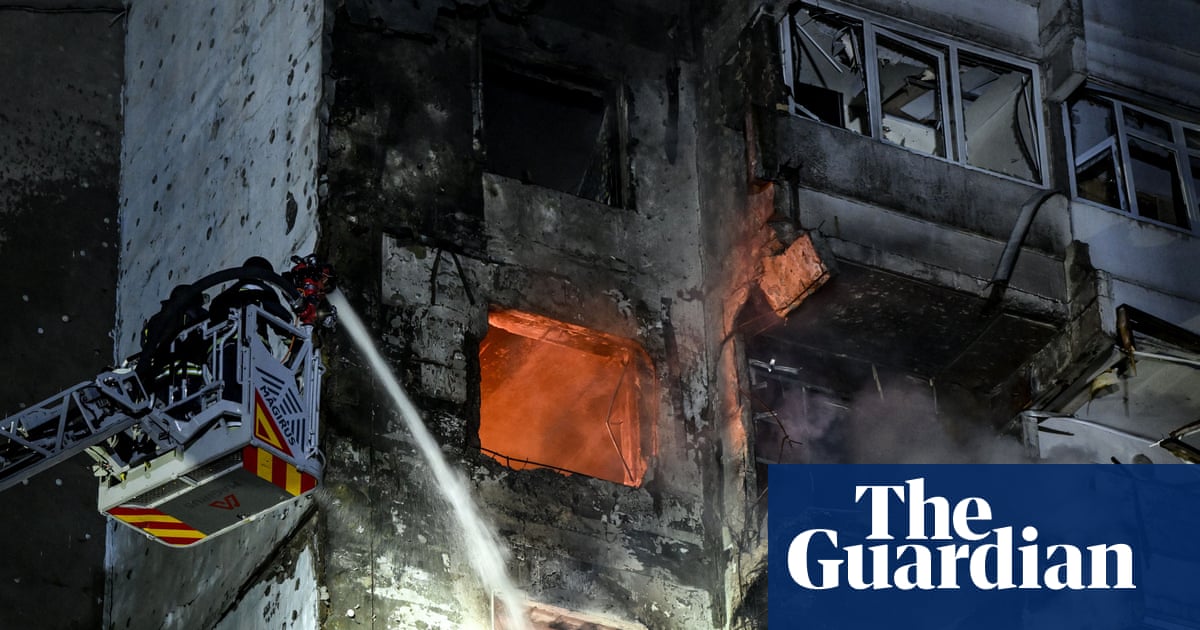
While Moldova scrambled to secure power, Ukraine was absorbing one of the most intense combined overnight‑and‑daytime air assaults of the full‑scale war. Ukrainian authorities reported that Russia launched nearly 400 long‑range Shahed‑type drones and 23 cruise missiles overnight, followed by a rare daytime wave on Tuesday that struck cities in the country’s west, including central Lviv near the Polish border. Local officials said one drone ignited a fire at St. Andrew’s Church, historically the Bernardine monastery complex-part of Lviv’s UNESCO World Heritage ensemble-while rescue workers battled blazes in surrounding streets. ([apnews.com](https://apnews.com/article/48a46d2503513c903bc3e4de31b96e00))
In his evening address, President Volodymyr Zelenskyy condemned the broad‑daylight assault and the strike on a church:
“Iranian ‘shaheds’ [attack drones], modernised by Russia, are striking a church in Lviv – this is absolute depravity, and only someone like [Vladimir] Putin could find this appealing.”
He added: “The scale of this attack makes it abundantly clear that Russia has no intention of actually ending this war,” vowing that Ukraine “will certainly respond to any attacks.” (apnews.com)
UNESCO lists Lviv’s historic center-an ensemble of Renaissance and Baroque landmarks, including the Bernardine complex-on its World Heritage in Danger register, heightening the legal and moral implications of attacks near protected sites. Under the 1954 Hague Convention, to which both Ukraine and Russia are parties, states must refrain from targeting cultural property except under narrowly defined military necessity. Damage to sites on the World Heritage list is routinely raised in diplomatic forums, adding pressure on states accused of violating those obligations.
Drone war intensifies across borders
The latest barrage underlined how the drone war is now firmly transnational. Russia’s Defense Ministry said on Wednesday it had shot down 389 Ukrainian drones overnight across regions bordering Ukraine, as well as over Moscow and the Leningrad region-one of the largest claimed aerial intrusions on its territory to date. The figure could not be independently verified; Moscow has issued similarly high tallies during previous waves, including claims of intercepting 162-337 drones in single nights over the past year. ([english.news.cn](https://english.news.cn/europe/20250311/c26c5fa0a65a4162b8bf2ed167817887/c.html?utm_source=openai))
For Ukraine, Tuesday’s overnight‑plus‑daylight barrage ranked among the biggest of the full‑scale invasion, reflecting what officials described as a stepped‑up Russian spring offensive designed to exhaust air defenses and destabilize the rear. Civilian casualties were reported in multiple regions. (apnews.com)
International humanitarian law protects civilian objects and “objects indispensable to the survival of the civilian population,” a category that can encompass essential energy systems and urban lifelines. Legal experts note that deliberate or indiscriminate strikes that place civilians or protected heritage at risk may breach proportionality and distinction rules under Additional Protocol I. (blogs.icrc.org) The debate over how those standards apply to long‑range drone campaigns has become a growing focus for European capitals considering new air‑defense and sanctions packages.
Pyongyang reaffirms alignment with Moscow as arms flows deepen
Against the backdrop of intensifying strikes, North Korea’s leader, Kim Jong‑un, sent a message of thanks to President Vladimir Putin, writing: “I express my sincere thanks to you for sending warm and sincere congratulations first on my reassumption of the heavy duty as president of the state affairs.” Kim added: “Today the DPRK and Russia are closely cooperating to defend the sovereignty of the two countries,” and: “Pyongyang will always be with Moscow. This is our choice and unshakable will.” ([tass.com](https://tass.com/world/2034457?utm_source=openai))
The vow follows the June 2024 North Korea-Russia Comprehensive Strategic Partnership treaty and a year of documented munitions transfers to Russia-including artillery shells, long‑range rocket systems and short‑range ballistic missiles-reported by Western governments and independent researchers. South Korea’s military has publicly assessed that thousands of North Korean personnel have been deployed to Russia since late 2024 in support roles, with additional rotations in early 2025. (tbsnews.net)
Western officials say that deepening supply relationship is helping Moscow sustain its firepower in Ukraine, and they are weighing additional export controls and sanctions aimed at constraining the flow of North Korean components into Russia’s defense industrial base.
Key developments in the past 48 hours
- Overnight into Tuesday, March 24, Ukraine reported nearly 400 drones and 23 cruise missiles launched by Russia; daytime raids struck multiple cities, including central Lviv. ([apnews.com](https://apnews.com/article/48a46d2503513c903bc3e4de31b96e00))
- In Lviv’s UNESCO‑listed old town, St. Andrew’s (Bernardine) Church and nearby buildings sustained damage from a drone‑sparked fire. ([apnews.com](https://apnews.com/article/48a46d2503513c903bc3e4de31b96e00))
- Moldova’s Parliament approved a 60‑day energy emergency beginning Wednesday, March 25, after the Isaccea-Vulcănești line to Romania was severed; repairs are expected to take up to seven days. ([apnews.com](https://apnews.com/article/6eab12eb279528f7b5277fc1e175a01d))
- Russia’s Defense Ministry claimed to have downed 389 Ukrainian drones overnight across multiple regions; the claim remains unverified. ([themoscowtimes.com](https://www.themoscowtimes.com/2026/03/09/russia-dorussia-downs-163-ukrainian-drones-over-dozen-regionswns-163-ukrainian-drones-over-dozen-regions-a92159?utm_source=openai))
- Kim Jong‑un told Putin that “Pyongyang will always be with Moscow,” reinforcing DPRK‑Russia alignment amid ongoing arms transfers documented by U.S. and South Korean officials. ([tass.com](https://tass.com/world/2034457?utm_source=openai))
Moldova’s state of emergency in the energy sector is now in force through May 24, 2026, while repair crews await demining clearance in Ukraine to begin work on the Isaccea-Vulcănești line. (apnews.com) Officials in Chisinau say the coming week-until the interconnector is restored-will be the first major test of the country’s wartime energy reforms and of how far European partners are prepared to go to keep Moldova’s lights on.
Keep reading
- Global Food Security Alliances: How Climate-Resilient Agricultural Corridors Are Stabilizing Wheat and Rice Supplies
- Cross-Border Renewable Energy Grids: North Sea and Mediterranean Subsea Cable Networks Enter Phase Two
- G7 to release up to 100m barrels of emergency oil and diesel reserves (globallypulse.com)
