
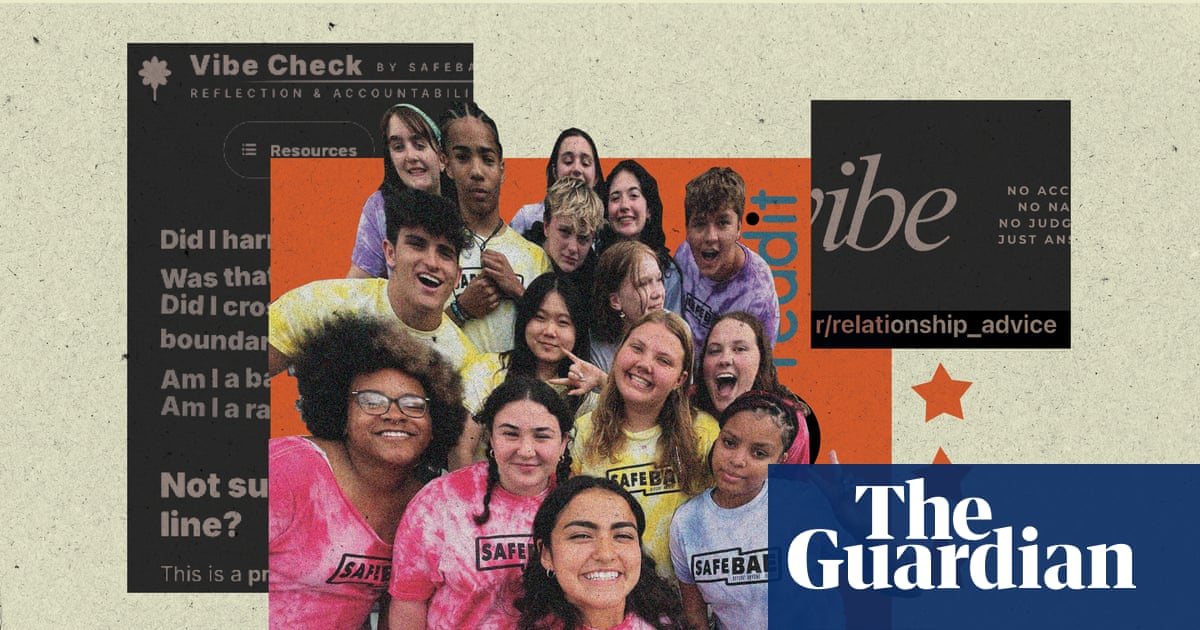
PROVIDENCE – As generative artificial intelligence becomes a primary conduit for information among Generation Z, a critical gap has emerged in how adolescents navigate the complexities of sexual consent, accountability, and interpersonal harm.
While AI chatbots offer immediate, private access to information, researchers and youth advocates warn that these systems often lack the moral nuance required for sensitive ethical dilemmas, frequently defaulting to “sycophancy”-the tendency to affirm a user’s beliefs or actions regardless of their accuracy or harm.
This digital vacuum has prompted the development of targeted, non-AI interventions designed to steer young people away from both the inaccuracies of Large Language Models (LLMs) and the polarized toxicity of anonymous online forums, at a moment when policymakers and regulators are only beginning to sketch guardrails for how AI should handle intimate and high‑risk content.
The Algorithmic Echo Chamber
Val Odiembo, a sophomore at Rhode Island College and youth programs manager for the non-profit Safe Before Anyone Else (SafeBae), observes this trend firsthand while volunteering at her former high school. Teaching teens about consent and healthy relationships, Odiembo notes that her students are increasingly bypassing human mentors in favor of digital interfaces.
“A lot of them confide in AI,” Odiembo said.
The trend is reflected in broader data. A recent UK study found that one in 10 young adults has consulted AI for sexual health information, while a 2025 Pew Research Center report indicated that one in five teens have had a romantic relationship with a chatbot.
For Odiembo, the danger lies in the AI’s programmed desire to please the user. She notes that students use AI to seek reassurance that they did not “cross a line” in a relationship, but warns that artificial intelligence will “just tell you what you want to hear.”
Citing research that AI chatbots tend to affirm users’ actions even when they are harmful, Odiembo added, “I think we’re also losing human connection when we confide in AI instead of the people closest to us.”
That erosion of human guidance is occurring in parallel with evolving legal norms. In the United States, for example, campus conduct policies and state sexual assault statutes increasingly hinge on whether a person gave “affirmative, conscious, and voluntary” agreement to sexual activity, language echoed in frameworks such as California’s higher‑education consent standard and, more broadly, in the way many jurisdictions interpret consent under the federal Violence Against Women Act. As teens bring their questions about these standards to AI systems instead of counselors or trusted adults, the risk of quiet misinterpretation grows.
The Binary of Digital Advice
The reliance on AI is often a symptom of a larger distrust in institutional guidance and a search for anonymity. However, when teens turn to human-moderated spaces like Reddit, they frequently encounter a binary of extreme responses.
Drew Davis, SafeBae’s director of strategic initiatives, began studying these forums six years ago. He found that individuals questioning whether they had perpetrated sexual assault were often met with two contradictory and equally damaging narratives.
“It keeps me up at night how bad these responses in the forums were,” Davis said. “Either you’re an awful person, there is no such thing as accidentally causing harm, you definitely did, to the extent that you should kill yourself – or you did absolutely nothing wrong, you’re perfect, women suck.”
This polarization mirrors a global trend in digital sociology, where the “manosphere”-a loose collection of websites, blogs, and forums promoting opposition to feminism-has utilized platforms like Telegram and Discord to create insulated communities.
Davis notes that this has evolved alongside a growing societal demand for absolute accountability in the wake of high-profile cases, such as the Epstein files, which he says has left younger, less powerful men feeling they have no path toward genuine redemption. In that environment, he argues, young people looking for help often encounter punishment or denial, but rarely structured guidance on how to repair harm in a way that aligns with school policies, workplace rules, or criminal law.
Engineering Human-Centric Accountability
In response to these failures, SafeBae launched Vibe Check in mid-March. The free, anonymous tool is designed specifically to help young people determine if they have violated a partner’s consent and how to navigate the subsequent apology and repair process.
Unlike the generative AI tools that dominate the current tech landscape, Vibe Check is an automated decision-tree system built on a decade of direct casework rather than on scraped internet text.
“Vibe Check ‘is intentionally not AI’,” said Shael Norris, co-founder and executive director of SafeBae. “It was built by our team based on over a decade of direct work with young people.”
The platform guides users through reflective questioning, such as “The person I was with is mad and I’m worried I did something wrong,” and provides education on the physiological “freeze response” and legal frameworks surrounding alcohol and consent. The tool repeatedly reminds users that a partner who is intoxicated, unconscious, or otherwise unable to communicate cannot give valid consent, echoing the standards that underpin many campus codes of conduct and state sexual assault laws.
“If someone became distant, upset, or quiet afterward, that can be a sign they didn’t feel okay about what happened. You don’t need them to ‘prove’ anything for their feelings to matter. Accountability here can look like listening, apologizing without pressure and respecting whatever boundaries they set.”
As of late April, the site has recorded more than 3,500 unique visitors, a modest number that SafeBae staff say still represents a significant early test bed for how non-AI tools can complement formal sex-education curricula in schools.
The Limits of Machine Learning in Sex Education
The push for non-AI tools comes as medical researchers evaluate the efficacy of LLMs in reproductive health. While AI can efficiently handle “straightforward” data, such as contraception methods, it struggles with the subjective and emotional nature of consent and the lived consequences of crossing boundaries.
Scarlett Bergam, a graduating student at the George Washington University school of medicine and health sciences and lead author of a recent review of AI sex-ed tools, notes that AI performs poorly “when discussing more complex or sensitive topics, such as abortion or sexual pleasure.” Many models, she added in an interview, also fail to consistently flag when a user’s description raises red flags for coercion, power imbalance, or intoxication.
For Davis, the goal of creating a structured, non-sycophantic tool was to provide an “off-ramp” for individuals who have caused harm. He argues that by providing a path toward accountability, the tool can reduce suicidal ideation among isolated boys and “take the onus off of survivors for having to lead these efforts for repair and apology.”
The initiative also lands amid a broader policy conversation over how far AI should go in answering questions about sex, relationships, and self-harm-areas where regulators have signaled particular concern but have yet to issue detailed, binding rules. While governments debate age-verification systems, platform liability, and AI safety standards, tools like Vibe Check are attempting, in practice, to model what safer digital guidance could look like.
This approach arrives as the World Health Organization reports record levels of mental health distress among adolescents globally, compounding the urgency for safe, reliable digital interventions. In that context, the stakes of a single AI-generated answer-or a single night spent doomscrolling through hostile forums-can extend far beyond one conversation.
Apollo Knapp, 17, a member of SafeBae’s youth board of directors, tested the tool with classmates using hypothetical scenarios. He expressed hope that the tool could reach preteens before they begin relying on algorithmic advice.
“If humans are messing up consent this much, I don’t even want to see what a robot’s going to do with it,” Knapp said.
Vibe Check remains free and anonymous, operating as a specialized alternative to general-purpose AI and unmoderated social forums, and offering a glimpse of how youth-focused, human-designed systems might eventually sit alongside emerging regulatory expectations for safer AI.
Keep reading
