
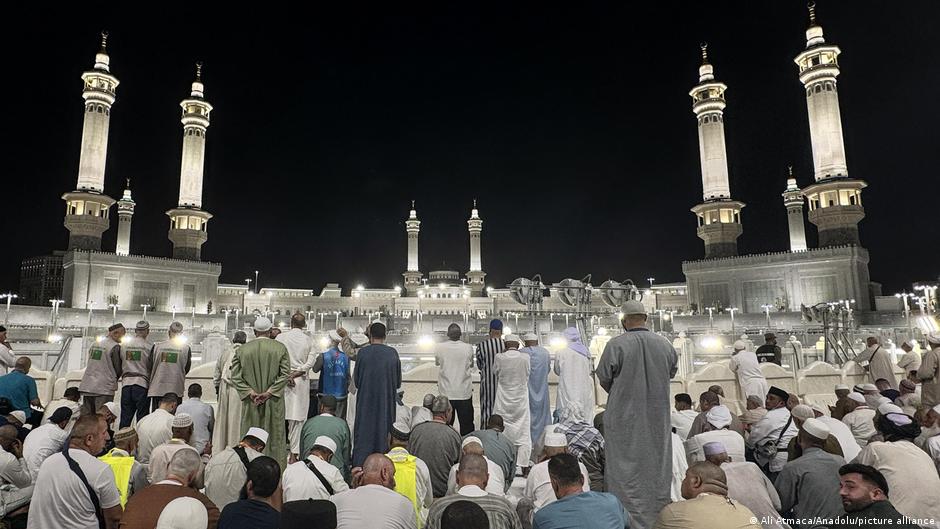
MECCA – The 2026 Hajj pilgrimage is proceeding under the shadow of active warfare, marking the first time the Kingdom of Saudi Arabia has hosted the mass gathering while facing direct kinetic strikes on its own territory.
The intersection of deep religious obligation and high-stakes geopolitics tests the Saudi state’s ability to maintain its identity as the “Custodian of the Two Holy Mosques” while managing a volatile conflict with Iran. As millions of believers descend upon Mecca, the event has become a critical barometer for regional stability and the efficacy of modern air defense systems in one of the world’s most densely crowded civilian environments.
The Hajj, one of the five pillars of Islam, requires every able-bodied Muslim to visit the Kaaba in Mecca at least once in their lifetime. For the 2026 cycle, running from May 25 to May 29, Saudi authorities expect approximately 1.5 million pilgrims. This represents a slight decline from the 1.7 to 1.8 million attendees seen over the previous three years.
Historically, the pilgrimage is rarely interrupted. Over 14 centuries, the Hajj has been canceled or significantly restricted only about 40 times, the most recent instance being the global COVID-19 pandemic in 2020.
The current security environment is defined by a conflict that escalated in late February 2026, following U.S. and Israeli strikes on Iran. Tehran has since responded by targeting Israel and several Gulf states, including Saudi Arabia. While a fragile ceasefire is currently in effect, the volatility remains high; last weekend, Saudi defenses intercepted three drones believed to have been launched by pro-Iranian militias in Iraq.
The stakes for Riyadh are not only political but also institutional. Under the country’s Basic Law and its role as host nation, Saudi Arabia bears ultimate responsibility for the safety and orderly conduct of Hajj, which is overseen within the framework of the General Presidency for the Affairs of the Two Holy Mosques and a multi-ministry security and civil defense apparatus.
Diplomatic Warnings and Religious Resolve
The geopolitical tension has triggered unprecedented warnings from Western governments. For the first time, the United States has urged its citizens to reconsider participating in the pilgrimage, a caution that follows the evacuation of non-emergency U.S. government employees from the Kingdom in early March.
Similarly, the United Kingdom, Germany, and other European nations have issued travel advisories, strongly recommending that citizens avoid the region or maintain strict vigilance. These advisories, while formally nonbinding, carry significant weight for national travel insurers, tour operators, and diaspora organizations that typically coordinate Hajj packages.
Despite these warnings, the impetus of faith continues to outweigh the perception of risk for many. The Central Council of Muslims in Germany reports that the commitment to the pilgrimage is often impervious to current events.
“They are motivated by fulfilling a religious duty,” a spokesperson for the council told GlobalHeadlinez. “For them, this is much more than a normal trip. And since planning for the journey usually takes over a year and is often associated with considerable financial commitment, made well before the outbreak of this conflict, the hurdle to canceling is very high.”
The spokesperson added that the council has not seen a wave of cancellations from German pilgrims, noting that while there was uncertainty, most stuck to their plans.
Other Muslim-majority nations have navigated the crisis with more institutional caution. Indonesia, which is deploying 221,000 pilgrims this year under a nationally administered quota system, initially advised citizens to delay departure in March until the war’s outlook became clearer. However, the Indonesian government eventually gave the go-ahead, deploying state officials to Saudi Arabia to facilitate services and establishing emergency evacuation and medical contingency protocols.
Saudi officials, for their part, have emphasized that Hajj remains open to all accredited pilgrims and that no formal cap has been introduced beyond the existing visa quota system administered under Saudi regulations for each sending country.
The Kinetic Risk to Holy Sites
Military analysts suggest that a deliberate Iranian strike on the Hajj sites is unlikely. As a theocracy, Iran would face immense blowback from the global Muslim community if it targeted locations sacred to all believers. Furthermore, approximately 30,000 Iranian pilgrims are currently in Saudi Arabia-a significant reduction from the usual quota of 87,000, but a presence that serves as a deterrent.
The primary concern is not intent, but collateral damage and systemic failure in an already stressed regional battlespace.
To mitigate these risks, the Saudi government has deployed batteries of Patriot missiles around the holy sites and publicized its layered air defense strategy, which incorporates high-altitude intercepts, short-range anti-drone systems, and directed-energy weaponry. These measures sit alongside more traditional crowd-control and emergency-response planning, including designated shelter areas and rapid medical deployment units.
However, the physics of missile defense present their own dangers. Analysts at the House of Saud media outlet highlight the risk of “intercept debris.”
“A successful Patriot intercept scatters debris across an area of several square kilometers,” the outlet noted in April. “During Hajj, every square kilometer within 20 kilometers of the Grand Mosque will contain pilgrims.”
Beyond missile debris, analysts point to other unpredictable variables:
- Navigation Errors: The potential for drones or cruise missiles to drift off course into crowded pilgrimage zones despite being aimed at military or infrastructure targets.
- Nuclear Fallout: The risk that an accident or strike at Iran’s Bushehr nuclear reactor could send radioactive plumes across the Persian Gulf toward the Hejaz region, complicating not only public health but also cross-border emergency coordination.
Saudi officials say the Hajj security plan now includes dedicated liaison cells with foreign embassies and civil aviation authorities to manage any rapid airspace closures or mass-casualty scenarios linked to the wider conflict.
The Economics of Wartime Pilgrimage
The conflict has also disrupted the financial frameworks that make the Hajj accessible to the global poor. Rising jet fuel prices and the closure of certain airspaces have forced airlines to increase fares and reroute flights, adding hours to already long journeys.
While some governments have stepped in to subsidize these costs through national Hajj funds or capped-price packages, others have not. In India, the Hajj organizing committee passed a price increase of approximately $100 per person onto the pilgrims. In contrast, the Indonesian government has agreed to absorb the additional expenses in order to preserve existing contractual commitments to lower-income pilgrims.
The logistical burden extends to travel insurance, a mandatory requirement for international pilgrims under Saudi entry rules. Most standard insurance packages exclude “acts of war” or military conflict. Pilgrims without specialized, and more expensive, wartime clauses remain personally liable for costs associated with injuries or sudden flight cancellations caused by fighting, a gap that leaves many exposed despite formal compliance with documentation requirements.
For those not utilizing state-organized airlifts, the journey has become longer and more costly as commercial carriers avoid contested air corridors in the Middle East. Smaller tour operators, especially in Africa and South Asia, report squeezed margins and, in some cases, last-minute consolidation of packages to remain viable.
Against this backdrop, Saudi Arabia has sought to project continuity. Officials stress that the core religious rites remain unchanged, that emergency plans have been rehearsed with partner states, and that the Kingdom’s stewardship of Hajj is designed to withstand precisely the kind of external shock that now shadows the pilgrimage. As the final groups of pilgrims complete the rites and prepare to depart, the government continues to monitor airspace and ground security, betting that institutional planning and layered defenses will be enough to carry the Hajj safely through a uniquely dangerous season.
Keep reading
