
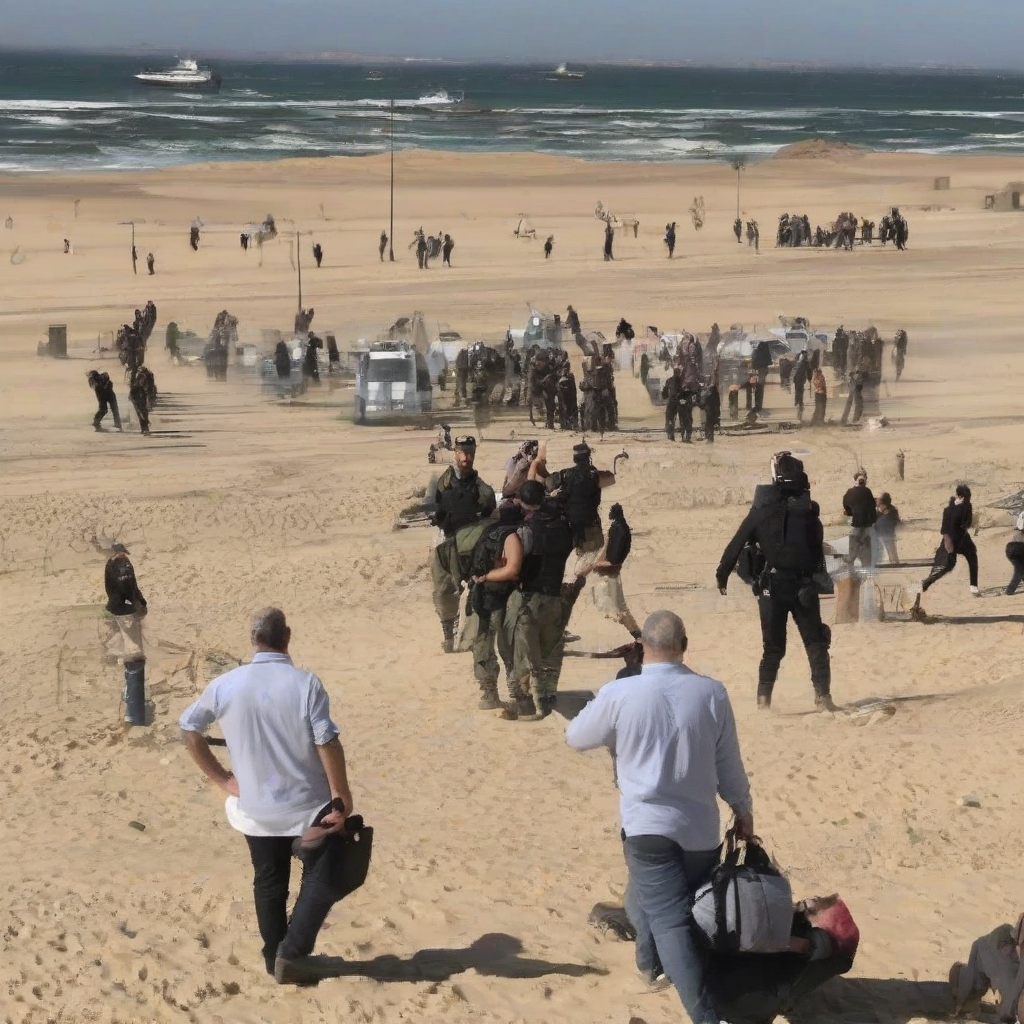
JERUSALEM – Eleven Australian nationals detained by Israeli forces during a humanitarian aid mission to Gaza have been deported following an international diplomatic backlash.
The release of the activists, part of the Global Sumud flotilla, comes after a global outcry regarding their treatment in custody, which prompted several nations to summon Israeli diplomats for formal reprimands.
The deported Australians were transported by bus to Ramon airport in southern Israel. From there, they were scheduled for a charter flight to Istanbul, Turkey, where Australian consular officials were arranged to meet them to provide further assistance.
The group had been held since their vessels were intercepted by the Israel Defense Forces (IDF) on Monday.
The detained Australians include:
- Neve O’Connor
- Sam Woripa Watson
- Anny Mokotow
- Isla Lamont
- Juliet Lamont
- Surya McEwen
- Zack Schofield
- Dr Bianca Pullman-Webb
- Gemma O’Toole
- Violet Coco
- Helen O’Sullivan
Diplomatic Crisis Over Detainee Treatment
The decision to deport the activists followed the circulation of a video posted by Israel’s national security minister, Itamar Ben-Gvir. The footage showed dozens of bound men and women kneeling in rows with their foreheads to the ground and hands zip-tied behind their backs.
In the recording, Ben-Gvir is seen waving an Israeli flag and shouting, “Welcome to Israel, we are the landlords.”
He further addressed Prime Minister Benjamin Netanyahu in the video, stating, “I tell prime minister Netanhyahu give them to me for much more time. Give them to us for the terrorists’ prisons.”
Australian Foreign Minister Penny Wong described the images as “shocking and unacceptable.” Wong confirmed she instructed Australia’s ambassador to Israel to make formal representations to the Israeli government to secure the release of the detained citizens, noting that Australia expects its nationals to be treated in line with international human rights standards and the protections afforded under the Geneva Conventions.
Israeli Official Response
Israeli Ambassador Hillel Newman addressed reporters at Parliament House in Canberra, distancing the state’s leadership from the National Security Minister’s behavior.
“There can be ministers in Australia, politicians in Australia, even part of a party that is ruling, that can do things that are disgraceful,” Newman said. “In this case, Ben-Gvir was condemned by the leadership of the state of Israel.”
Newman characterized the humiliation of the activists as “disgraceful and harmful to the state,” adding that such actions do not reflect Israeli values.
However, Newman maintained that the initial IDF operation was conducted with “great sensitivity,” asserting that none of the 400-plus people on the flotilla were harmed during the interception and that Israeli authorities were acting under domestic security legislation governing the naval blockade of Gaza.
He also stressed that decisions on detention, deportation and access to consular support ultimately rested with Israeli police, prison authorities and the interior ministry, rather than with Ben-Gvir personally.
Scale of the Flotilla Interception
The Global Sumud operation involved a massive coordinated effort to deliver aid to the Gaza Strip, challenging tight restrictions on access to the enclave. On Wednesday, a spokesperson for the flotilla reported that a total of 428 activists sailing on 50 vessels had been intercepted and detained by the IDF.
A spokesperson for Adalah, the Israeli human rights lawyers representing the activists, confirmed that the Israeli prison service and state officials had processed the release of all detainees from the Ktzi’ot detention facility, a desert complex frequently used to hold security detainees.
Legal representatives said they were examining potential violations of due process and treatment standards, while foreign governments continued to press Israel for assurances that future maritime interdictions involving their nationals would comply with international law and established consular protocols under the Vienna Convention on Consular Relations.
Canberra-Jerusalem Tensions
The saga has sharpened scrutiny of Australia’s handling of consular cases involving citizens detained in conflict zones. Wong’s public condemnation of the images, coupled with the decision to summon the Israeli ambassador, underscores the strain on bilateral ties and the expectation that allies will be consulted when operations risk detaining foreign nationals engaged in humanitarian work.
Australian officials have also privately raised concerns about the lack of early notification when the flotilla was intercepted, according to diplomatic sources briefed on the exchanges, arguing that timely contact can reduce the risk of mistreatment and accelerate verification of detainees’ identities and status.
Family Reactions
Families of the detainees expressed a mixture of relief and anger over the conditions of the activists’ captivity.
Joanne Jaworowski, mother of Zack Schofield, stated she had not yet received information regarding her son’s welfare.
“It is almost unbearable for me to think about what he has gone through over the more than three days at the hands of the brutal Israeli forces, and I shudder to think about the even worse treatment that the 11,000 Palestinian prisoners suffer every single day,” she said. “My heart will not be calm until I have heard directly from Zack that he is safe and unharmed.”
Jacinta McEwen, mother of Surya McEwen, said her family was “overcome with relief that our kids are coming home,” while noting her anger over the circumstances of their detention. She added that the images from the detention facility “will stay with us for a long time” and called for an independent review of how the flotilla was handled.
Australian consular officials are currently awaiting the arrival of the charter flight in Istanbul to conduct welfare checks, document any allegations of mistreatment and coordinate the return of the citizens. The Department of Foreign Affairs and Trade is expected to provide a formal briefing to parliament on the case, as lawmakers in Canberra weigh whether existing travel advisories and consular policies are adequate for Australians taking part in politically sensitive humanitarian missions.
For campaigners involved in Global Sumud, the deportations have become a rallying point in a wider debate over the legality and morality of enforcing tight maritime controls on aid routes into Gaza, and over how democratic governments should respond when their citizens are caught up in those confrontations. As the activists make their way home, pressure is mounting on both Israel and Australia to clarify how future operations will balance security imperatives with the rights and safety of foreign nationals.
Worth a look
