
ALEPPO –
Syria’s army clashed with fighters from the Kurdish-led Syrian Democratic Forces (SDF) in several Aleppo districts on Thursday, ordered civilians to evacuate, and imposed an afternoon curfew after accusing the SDF of using Kurdish‑majority areas to launch attacks, according to state media. Military authorities circulated multiple strike maps and said operations would focus on Sheikh Maqsoud and Ashrafieh, where a curfew took effect from 3pm. The SDF said its units were engaged in intense fighting with Damascus‑aligned factions near the Syriac quarter and claimed to have inflicted heavy losses. The army described the Aleppo push as a “counter-terrorism” operation.
The violence, now in its third day, is the most serious confrontation inside Aleppo between Damascus-aligned forces and Kurdish-led units in months and underscores a fraught effort to fold the SDF into Syria’s national command structure after years of de facto self‑administration in the northeast. It also risks a wider escalation involving Turkey, a central player in northern Syria, and jeopardizes U.S.-backed counter‑ISIS arrangements built around the SDF.
Mapped strikes, curfew and flight of civilians
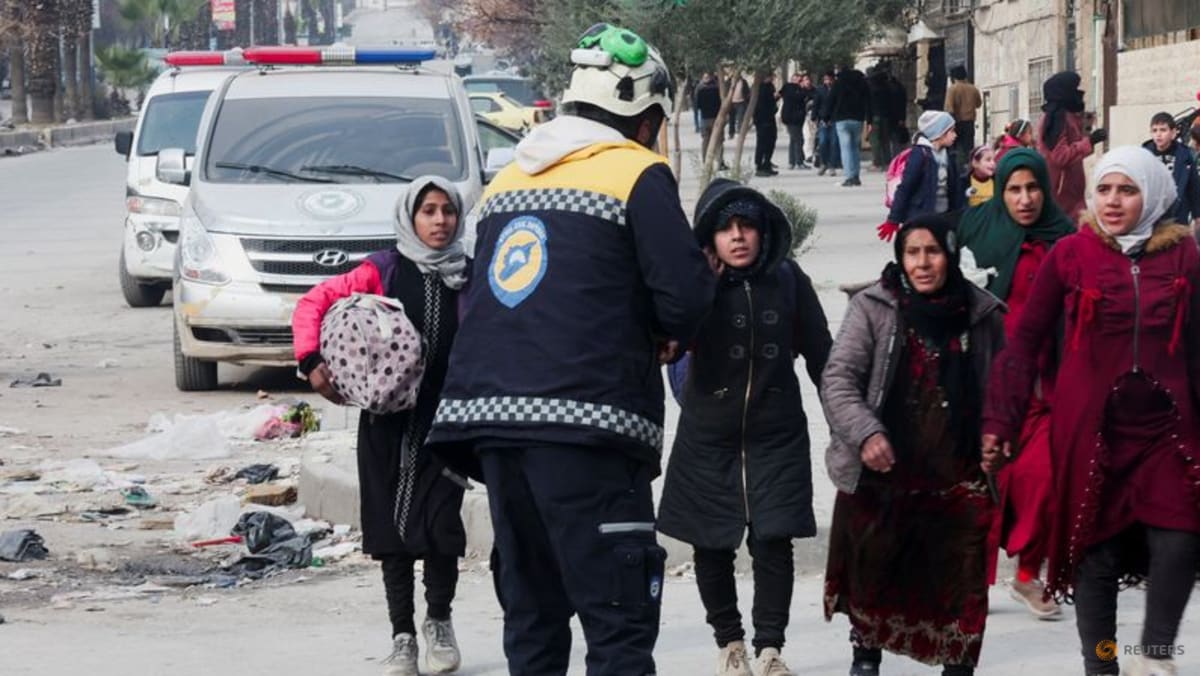
Commanders in Aleppo released more than seven maps delineating blocks they said would be targeted and urged residents to leave immediately via designated corridors. Civil defense volunteers reported steady convoys of families moving out of Sheikh Maqsoud and Ashrafieh through two “safe” exits announced by local authorities, as fuel shortages and damaged roads slowed some evacuations. The SDF accused Damascus‑aligned auxiliaries of threatening unlawful attacks on civilian areas and warned that public notices of shelling could amount to forced displacement and war crimes under international humanitarian law.
Under that body of law, parties to the conflict must issue effective advance warnings of attacks that may affect civilians unless circumstances do not permit; unlawful forced displacement is prohibited except for imperative military reasons or the security of civilians. These rules apply to non‑international armed conflicts like Syria’s and are reflected in the International Committee of the Red Cross’s customary IHL study and in the Rome Statute of the International Criminal Court, which criminalizes the deportation or forcible transfer of population when carried out without lawful grounds. (ICRC customary IHL study)
Competing narratives and a charge of ‘ethnic cleansing’
Kurdistan Regional Government Prime Minister Masrour Barzani said he was “deeply concerned” by strikes on Kurdish neighborhoods in Aleppo and warned that targeting civilians and attempts to alter the area’s demography amounted to what he described as ethnic cleansing. He urged restraint and dialogue and called on outside powers with forces in Syria to use their leverage to prevent further escalation. Damascus media, meanwhile, accused SDF fighters of staging attacks from densely populated areas-allegations the SDF denies, saying its units are operating from established defensive positions and that government forces are using “collective punishment” tactics.
International legal experts note that even when warnings are issued, the attacking force must choose means and methods that minimize incidental harm and cancel or suspend attacks if expected civilian losses would be excessive relative to the concrete and direct military advantage anticipated. They stress that the legality of operations in dense urban districts turns on continuous, attack‑by‑attack assessments by commanders rather than on a single pre‑announced evacuation order.
An integration plan under strain
Kurdish‑led authorities established a semi‑autonomous administration across parts of the northeast and pockets of Aleppo during Syria’s 14‑year war and have resisted full integration into the central government. A deal announced last year envisioned bringing SDF structures under national command by the end of 2025, but officials on both sides accuse each other of stalling on security portfolios, revenue sharing and control of key border crossings. U.S. officials, whose partnership with the SDF underpins the enduring defeat‑ISIS mission, have tried to mediate; talks as recently as Sunday ended without tangible results, according to people familiar with the contacts.
The SDF‑U.S. military relationship-built on a “by, with and through” model-has been credited by the Pentagon with enabling ISIS’s territorial defeat and supporting hundreds of partnered operations each year against insurgent remnants. Any rupture between the SDF and Damascus that fragments frontline security arrangements raises the risk that ISIS cells exploit the vacuum, a concern Western diplomats say is already informing internal policy debates over force posture and stabilization funding.
Aleppo’s Kurdish districts, long in the crosshairs
Sheikh Maqsoud and adjacent Ashrafieh are Kurdish‑majority neighborhoods that came under YPG/SDF influence early in the conflict and endured years of shelling and sieges by various factions before front lines shifted in 2016. Local administration and security structures tied to the SDF’s Asayish have periodically coexisted uneasily with Damascus‑aligned forces across a patchwork of checkpoints and supply routes, leaving civilians vulnerable to renewed flare‑ups like this week’s fighting. Residents say intermittent closures of access roads by government forces have repeatedly been used to exert pressure on local authorities over tax collection, conscription and service provision.
Regional stakes: Turkey’s red lines, U.S. equities
Turkey, which considers the YPG-the SDF’s main component-inseparable from the PKK, has repeatedly threatened cross‑border action and said Thursday it is ready to assist Syria “if asked.” Ankara has pressed for the SDF’s full integration into state structures, arguing that only a unified army can stabilize the border and remove what it calls terrorist threats. Turkish officials also frame the issue in terms of domestic security policy, citing long‑running insurgency inside Turkey and warning against any “terror corridor” along its southern frontier.
The United States, while sharing Turkey’s designation of the PKK as a terrorist organization, has maintained an operational partnership with the SDF against ISIS, a balancing act that grows more precarious as street‑to‑street clashes erupt inside major Syrian cities. U.S. officials say privately that they expect both Damascus and the SDF to avoid actions that could endanger coalition troops or unravel existing deconfliction arrangements but acknowledge that neither side answers directly to Washington.
Law, civilians and the conduct of hostilities
The army’s citywide warnings, curfew, and mapped strike zones reflect obligations to take feasible precautions, including issuing advance warnings. But such measures do not in themselves legalize attacks: commanders remain bound to target only military objectives, avoid indiscriminate fire in densely populated areas, and take all feasible precautions to protect civilians under their control. Ordering or causing displacement for reasons related to the conflict-without imperative military necessity or the safety of civilians-can constitute a war crime under the framework of the Rome Statute of the International Criminal Court, and senior officers on all sides are expected to factor those obligations into operational planning.
Diplomacy’s narrow path
Beyond immediate de‑escalation, diplomats say the Aleppo crisis tests whether Syria’s competing armed structures can be consolidated without triggering wider communal violence. The UN‑backed framework in Security Council Resolution 2254 reaffirms a Syrian‑led political process tied to a nationwide ceasefire-principles that international mediators continue to cite as the only durable off‑ramp from recurring urban battles. Envoys involved in those talks say the current fighting in Aleppo will likely feature in upcoming briefings to the Security Council as a case study in the risks of delayed security sector reform.
As of Thursday evening, the curfew in Sheikh Maqsoud and Ashrafieh remained in force, safe‑corridor evacuations continued, and no ceasefire had been announced by either side.
Worth a look
