
From field to table: How careful post-harvest habits are shaping hunters’ seasons
In warm Southern seasons where daytime temperatures can linger well above refrigerator levels, the difference between memorable table fare and wasted effort often comes down to what happens in the hours and days after a successful hunt. That is where Grider’s methodical approach-built around a simple cooler, patience, and precise cooking-has real sporting consequences. Good meat care sustains participation across long seasons, supports family tradition, and turns a hard-earned tag into confidence the next time out. It also increasingly reflects what state wildlife agencies and food-safety regulators expect from hunters who are effectively acting as their own meat processors once an animal is down.
Warm conditions, cool-headed process
Without access to a walk-in cooler, Grider immediately quarters the deer and moves the meat into large ice chests. Metal trays keep the venison elevated above the ice, and the drain stays open so meltwater doesn’t soak the cuts. He prefers to age the quarters in those coolers for seven to 10 days, topping up ice daily or every other day when Alabama temperatures hover in the 50s Fahrenheit (10s Celsius) or higher. The goal is to keep the meat cold, dry, and under the bacterial “danger zone” that food-safety agencies define as roughly 40°F to 140°F.
For context, he notes that a side of beef in cattle operations might hang for three weeks or more in tightly controlled refrigerated facilities, underscoring why he extends venison aging when possible. Wild game, by contrast, is typically handled outside formal inspection systems if it is consumed in a hunter’s home, which puts more of the burden for safe cooling and storage directly on individuals. National food-safety bodies and state agencies have reinforced that responsibility by publishing wild game handling guidance and stressing rapid chilling and strict temperature control, particularly when hunters are aging meat themselves rather than relying on a commercial processor.
From quarters to cuts
Once aging is complete, Grider breaks the deer down into backstraps, tenderloins, roasts, and ground venison, taking care to package everything tightly to prevent freezer burn and to label cuts clearly for later use. Ground venison is his workhorse for multiple dishes, while undamaged shoulders are kept whole rather than trimmed for grind-both to save time and to preserve a favorite preparation that can anchor several family meals.
His approach mirrors advice from extension services and food-safety educators, who emphasize clean work surfaces, sharp knives, and prompt freezing of any cuts that will not be eaten within a few days. While U.S. rules generally do not require inspection of wild game destined for a hunter’s own table, regulators have built a detailed framework for processing, inspection exemptions, and retail sale of game meat to the public. The Association of Food and Drug Officials, which helps harmonize state and federal practice, maintains a consolidated overview of those wild game laws and guidance that state agencies draw on when updating their own hunter education materials and meat-handling advisories (Association of Food and Drug Officials).
Low-and-slow: a shoulder built to shred
That shoulder recipe-shared with Grider by Swanny Evans of Pheasants Forever-starts with an overnight salting in the refrigerator. The next day, a barbecue rub coats the shoulder before it goes into a smoker at 220°F (about 104°C) for up to four hours, depending on size. From there, the meat is transferred to a roasting pan lined with onions, celery, carrots, bell peppers, and jalapeños. Two cups of apple cider vinegar are added, the pan is covered with foil, and the shoulder finishes in the oven at 240°F (about 116°C) for seven hours. Vegetable broth can substitute for the vinegar.
The result is shoulder meat that pulls apart easily and adapts to the same roles as shredded beef or pork-sandwiches, soups, and stews. It is also a practical way to turn a large, often-overlooked cut into several freezer-ready portions, stretching a single tag into weeks of meals and encouraging hunters to use as much of the animal as possible rather than defaulting to a few favored steaks.
When recovery is prolonged
Not every track job is straightforward. If an animal is recovered after a gut shot, Grider fully cleans the cavity to remove any intestinal content and trims away tissue that shows clear signs of contamination. He also factors in stress: an animal under stress produces cortisol, which he believes can affect meat quality and flavor. In such cases, he opts to grind the entire deer for robust dishes like spaghetti, lasagna, or chili, where slow cooking and strong sauces reward careful trimming but do not depend on pristine texture.
He draws a firm line on temperature and time, saying he is not comfortable eating an animal if it has been above 50°F (10°C) for more than four hours since the shot. That threshold roughly tracks the wider food-safety principle that meat should spend as little time as possible in the 40°F-140°F range where bacteria grow fastest. While specific recommendations vary by state and species, wildlife and public health agencies consistently advise hunters to field dress animals quickly, cool the carcass below refrigeration temperatures as soon as feasible, and avoid “pushing” the clock once warm-weather recoveries become uncertain.
Two disciplined takes on the backstrap
Backstrap remains the cut most hunters rush to reward themselves with, and Grider uses two approaches. One, refined over roughly 15 years, relies on a holiday leftover: Martinelli’s sparkling cider. He soaks the whole backstrap in the cider for a few days, slices it into 2-3 inch sections, wraps each in bacon, and grills hot and fast on both sides before finishing with a quick skillet sear to crisp the bacon. The interplay of sweet and salty is the point, and he refuses to cook venison past medium rare, relying on the high heat to sear the exterior while keeping the interior tender.
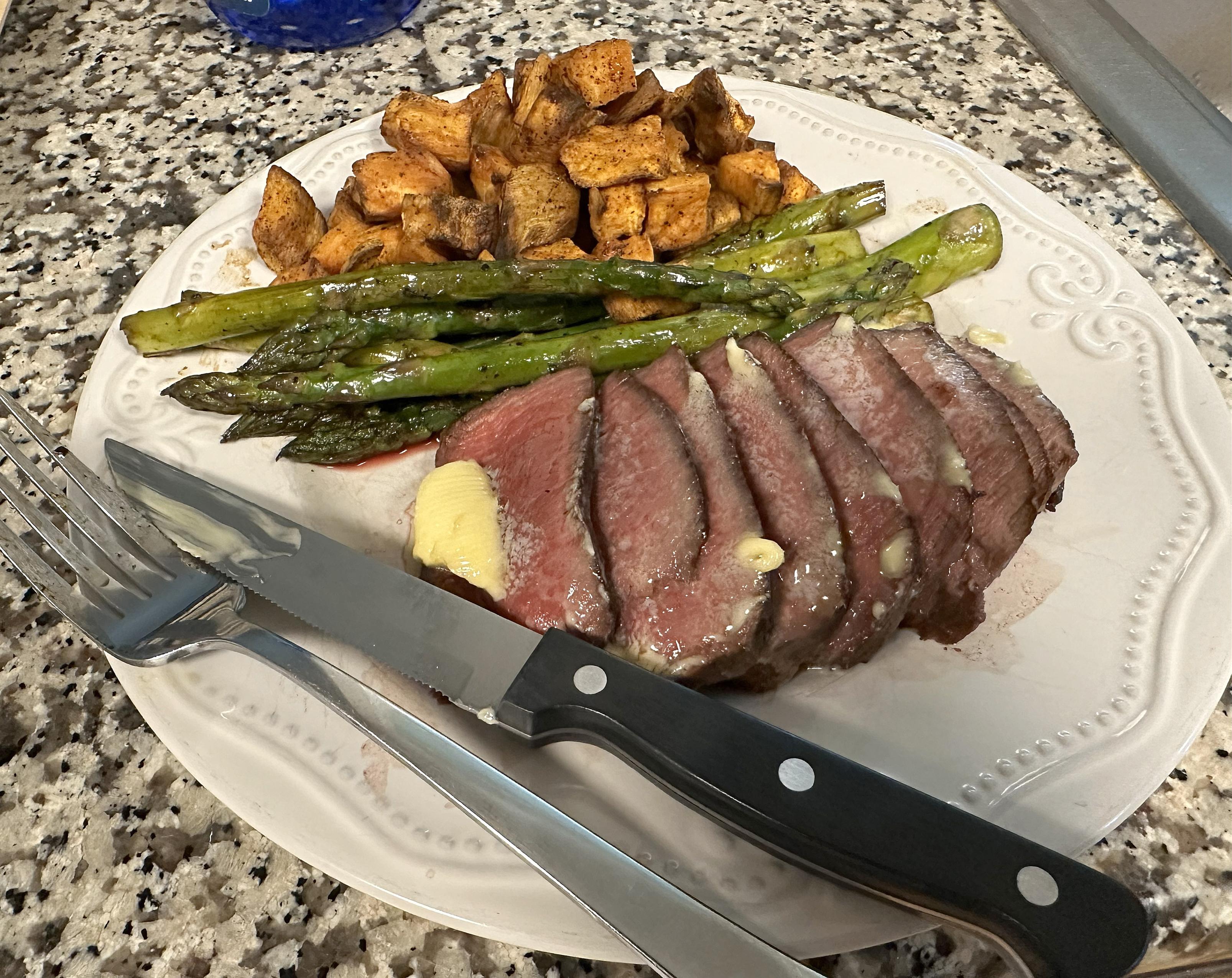
His minimalist version strips the method to its essentials: bring the backstrap to room temperature, season with salt and pepper, and sear in a very hot cast-iron skillet on both sides for a crisp exterior while keeping the interior medium rare. Thin slices and a pour of melted butter finish the plate. In both cases, he emphasizes resting the meat briefly before serving so juices redistribute-a small step that many professional chefs and nutrition advisers now treat as standard for wild game as well as domestic cuts.
Why it matters beyond the kitchen
For many participants, the “result” of the hunting season is measured less in a grip-and-grin photo than in a winter’s worth of reliable meals. Consistent field care and aging help stabilize outcomes regardless of whether a hunter is packing out in late autumn cold or early-season warmth. That reliability carries sporting implications: it protects the reward cycle that keeps license holders engaged through the grind of scouting, early alarms, and tough tracking jobs. It also supports ethical use of harvested game and aligns with the standards promoted by state wildlife managers, who lean on hunter education requirements and food-safety partnerships to reduce waste and prevent illness.
Those expectations increasingly sit within a broader web of public policy. State departments of natural resources and public health agencies treat wild game handling as part of their mandate to safeguard both wildlife populations and the people who rely on them for food. While most hunters will never see the inside of a regulatory codebook, the field-care steps they take-cooling meat quickly, avoiding cross-contamination, and following tested cooking temperatures-are effectively the household application of the same science-based framework that governs commercial meat processing. For policymakers weighing future seasons, participation targets, and rural nutrition programs that sometimes rely on donated venison, how hunters handle an animal between the shot and the skillet is no longer viewed as a purely private matter.
Key steps at a glance
- Quarter immediately; place cuts in large ice chests on metal trays above the ice with the drain open, keeping meat as close as possible to standard refrigeration temperatures.
- Age in the cooler for 7-10 days in controlled cold conditions, adding ice daily or every other day in warm weather and discarding any cuts that show clear signs of spoilage.
- Process into backstraps, tenderloins, roasts, and ground; package and label tightly to avoid freezer burn and to track how each cut will be used.
- Keep clean, whole shoulders for low-and-slow cooking if there’s no trauma; use methodical trimming and long cook times to turn them into multiple meals.
- For compromised or stressed recoveries, clean the cavity thoroughly, trim aggressively around damage, and consider grinding for hearty dishes where texture is less critical.
- Backstrap options: cider-soaked, bacon-wrapped and grilled with a skillet finish, or a high-heat cast-iron sear with butter-both served at medium rare after a brief rest.
For additional wild game preparation resources from the state wildlife agency, visit Outdoor Alabama’s Wild Eats, and for a wider overview of how state and federal regulators structure wild game rules-from field handling guidance to retail sale-see the wild game laws and guidance assembled by the Association of Food and Drug Officials (AFDO wild game guidance).
