
MotoGP Returns to Brno: Analyzing the Legacy of the Grand Prix of Czechia
The MotoGP circuit returns to Brno for the Monster Energy Grand Prix of Czechia, marking Round 9 of the 2026 season. After returning to the official calendar in 2025, the venue continues to serve as a critical juncture in the championship, often defined by high-precision riding and narrow victory margins. The event takes place at the Masaryk Circuit on the outskirts of Brno, a city that also promotes the race as one of its flagship summer attractions alongside broader tourism campaigns for the region.
Brno has historically been a circuit that rewards tactical patience and late-race aggression. The venue’s sweeping elevation changes and long-radius corners have frequently produced some of the closest finishes in the history of the premier class, placing immense pressure on riders to execute perfect final laps and on teams to make precise tyre and fuel calls under changing track conditions.
A History of Narrow Margins
The circuit is perhaps best known for its “photo finish” outcomes, where championships and individual prestige were decided by fractions of a second. This reputation is partly why the race remains a mainstay on national and regional sporting calendars, with local authorities in Brno marketing the Grand Prix as the city’s largest annual sporting event and a magnet for international visitors.[1] The following table outlines the tightest finishes recorded at the venue:
| Year | Winner | Runner-Up | Margin |
|---|---|---|---|
| 1996 | Alex Criville | Mick Doohan | 0.002s |
| 2003 | Valentino Rossi | Sete Gibernau | 0.042s |
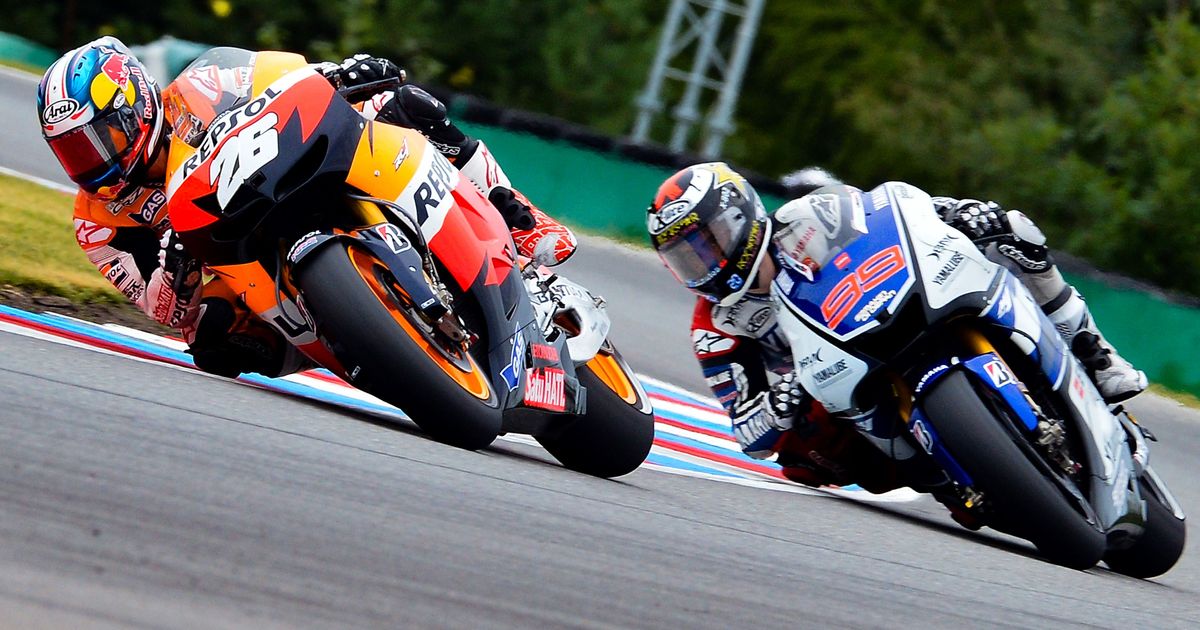
| 2012 | Dani Pedrosa | Jorge Lorenzo | 0.178s |
| 2018 | Andrea Dovizioso | Jorge Lorenzo | 0.178s |
The 1996 encounter between teammates Alex Criville and Mick Doohan remains one of the most cited finishes in the sport’s history. The duel saw the pair break away from Scott Russell to fight for the win until the finish line, where Criville secured the victory by a mere two-thousandths of a second, underlining Brno’s capacity to turn long, tactical races into sprint-style conclusions.
Similarly, the 2003 race highlighted the intense rivalry between Valentino Rossi and Sete Gibernau. After Troy Bayliss led the early stages, Rossi and Gibernau engaged in a series of position swaps that culminated in a 0.042s victory for Rossi. For series promoters and local organisers, races like 2003 have become part of the venue’s commercial identity, used in negotiations over hosting rights and public investment in motorsport infrastructure.
Tactical Shifts and Manufacturer Milestones
Beyond the narrow margins, Brno has been a site for significant shifts in competitive momentum. In 2012, the battle between Dani Pedrosa and Jorge Lorenzo demonstrated the importance of late-lap positioning. Despite a bold final-lap move by Lorenzo, Pedrosa responded with decisive maneuvers at Turns 13 and 14 to win by 0.178s, with Cal Crutchlow finishing third. The outcome reinforced Honda’s reputation for late-race strength at a time when technical regulations were tightening around electronics and engine use.
By 2018, the competitive dynamic shifted toward a manufacturer battle between Ducati and Honda. Andrea Dovizioso, Jorge Lorenzo, and Marc Marquez separated themselves from a larger group that included Valentino Rossi, Cal Crutchlow, and Danilo Petrucci. Dovizioso eventually secured the win following a strong performance in the final two laps, leaving Lorenzo in second by 0.178s and Marquez in third. The podium underscored Brno’s role as a proving ground for factory projects and as a reference track for decisions on future development under the technical framework supervised by the Fédération Internationale de Motocyclisme, whose Grand Prix regulations formally govern the series.[2]
The 2020 event marked a systemic change in the premier class hierarchy. Brad Binder achieved a landmark victory, becoming the first South African rider to win a MotoGP race. This result was also the first premier class victory for KTM, signaling the manufacturer’s arrival as a consistent threat to the established Japanese brands. Binder won by a commanding 5.266s, with Franco Morbidelli and Johann Zarco completing the podium. For policymakers and regional authorities weighing long-term motorsport investments, the race provided a clear illustration of how regulatory stability and cost controls can open space for new manufacturers to challenge historic incumbents.
Current Season Implications
As the MotoGP World Championship enters its ninth round of 2026, the Czech Grand Prix offers a pivotal opportunity for riders to adjust their standings before the season moves into its final phases. With team budgets, sponsor commitments, and factory development plans often tied to mid-season performance targets, results at Brno can influence not just the riders’ title race but also strategic decisions in boardrooms and ministries that help underwrite the event.
Given the circuit’s tendency to produce unpredictable, close-quarters racing, the results at Brno often dictate the momentum for the subsequent flyaway races. A strong weekend in Czechia can reset a faltering campaign; a mistake in Brno, under the gaze of international broadcasters and local officials, can accelerate pressure for technical updates or even contract talks. As MotoGP returns to Brno, the Grand Prix of Czechia once again sits at the intersection of elite sport, regulatory oversight, and the civic ambition of a city that has built a global identity around hosting world-class events.
