
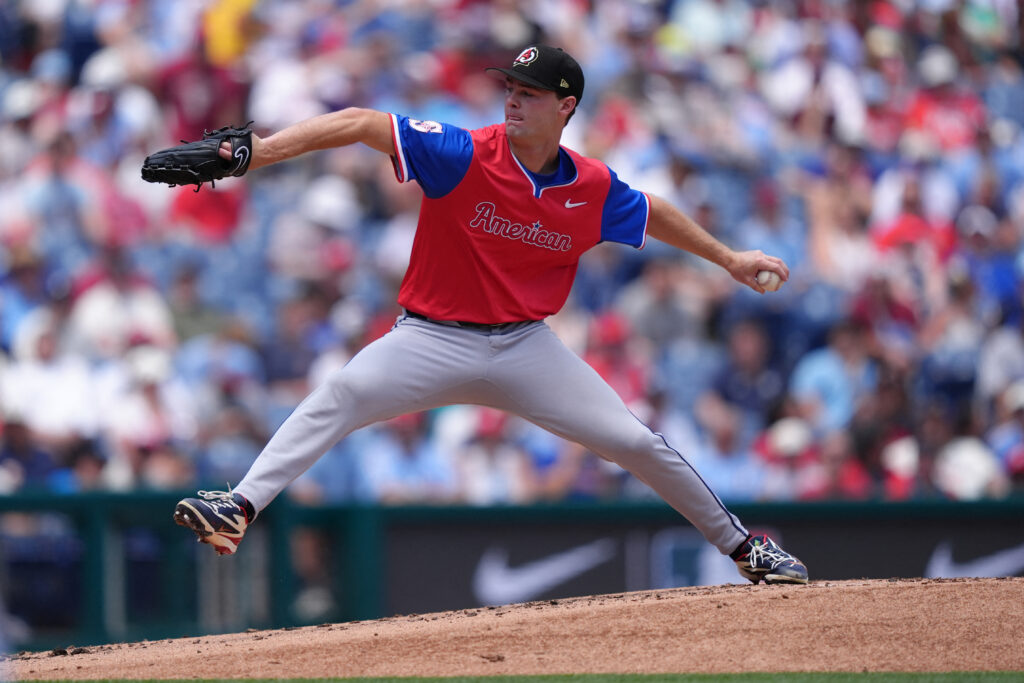
Mariners Turn to Top Prospect Kade Anderson as Rotation Strategy Shifts
Elite Left-Hander to Debut in Pivotal Stretch of AL Playoff Race
The Seattle Mariners are calling up left-handed pitching prospect Kade Anderson to make his Major League Baseball debut on Saturday against the Chicago Cubs. Right-hander Bryan Woo, who had been scheduled to start that game, is now expected to be pushed back to Sunday.
To accommodate Anderson, Seattle will need to clear both an active roster spot and a place on the 40-man roster. The latter can be achieved by transferring right-hander Matt Brash to the 60-day injured list; Brash has already been sidelined for more than 60 days with a lat strain, so that procedural move would not alter his current timetable.
Rotation Management and Organizational Bet
President of baseball operations Jerry Dipoto signalled earlier in August that Anderson’s promotion would only come when a true rotation opening emerged, making clear the club viewed him strictly as a starter and not a short-term bullpen option. He described Anderson as “the next starter up” behind Seattle’s established front five after the club traded Luis Castillo to the Chicago White Sox.
Anderson’s arrival points strongly toward Seattle moving back into a six-man rotation, a structure the franchise has used at times in recent seasons to manage workloads and maintain velocity and command deeper into the year. The Mariners are not currently dealing with injuries in their primary starting group, which includes George Kirby and Bryce Miller. Both right-handers have struggled this month, but shifting either to the bullpen would represent a significant tactical change given their broader track records as rotation anchors.
Within the framework of Major League Baseball’s roster and service-time rules, committing a 40-man spot to Anderson at this stage of the season underlines the front office’s belief that his impact can be immediate rather than purely developmental.
From LSU Ace to Fast-Tracked Professional

Anderson, a 6’2″ southpaw, has rapidly become one of the most closely watched young pitchers in the sport. He was selected third overall by Seattle in the 2025 MLB Draft after a heavy-workload sophomore season at LSU, where he threw 119 innings. In line with how many clubs now manage high-end college arms, the Mariners did not use him in professional games last year, instead allowing him to recover and build through controlled settings before assigning him to Double-A Arkansas this season.
At that level, Anderson has been dominant. In 18 starts, he owns a 1.06 earned run average with a 41% strikeout rate, leading all minor league pitchers with at least 80 innings in both ERA and strikeout percentage. He enters the majors on the back of four consecutive scoreless outings, during which opposing hitters managed only a .147/.183/.216 slash line in 333 plate appearances.
The profile behind those numbers is built on command and depth rather than a single overpowering pitch. Anderson works with a four-pitch mix – fastball, changeup, curveball and slider – with all four offerings graded as above-average to plus by evaluators. That breadth of weapons has led many within professional scouting to project him as a potential top-of-the-rotation starter rather than merely a mid-rotation contributor.
Bypassing Triple-A and Testing MLB Readiness
Seattle’s decision to promote Anderson directly from Double-A, rather than route him through the hitter-friendly Pacific Coast League at Triple-A, is significant. It reflects both his level of dominance and the organization’s belief that the quality of his stuff and command can withstand an immediate jump to major league line-ups.
Skipping Triple-A also alters how quickly the club can gauge his readiness against the standard of opposing hitters at the highest level. For a franchise currently trying to stabilise its season, it is a calculated move: if Anderson’s performance translates, Seattle gains a high-impact starter at a crucial moment; if there is an adjustment period, that process begins now rather than in a future season.
Mariners’ Pitching Development Model Under the Spotlight
The call-up reinforces Seattle’s broader identity as a pitching-driven organization. The current rotation is almost entirely homegrown through the draft-and-development path. Woo and Miller were selected in the middle rounds, while Anderson now joins first-round arms Kirby, Logan Gilbert and Emerson Hancock as part of a rotation core built internally.
On paper, it is one of the more talent-rich groups in the majors. In practice, it has underperformed in recent weeks alongside a misfiring offence and inconsistent bullpen. Mariners starters entered Thursday’s game with a 4.46 ERA since the All-Star break, the eighth-worst figure in MLB over that span. Kirby’s outing in Milwaukee – six runs conceded in 3 1/3 innings – pushed that trend further in the wrong direction and left the club eight games under .500 at 60-68.
Against that backdrop, introducing a top prospect is both a baseball decision and an institutional statement: Seattle is willing to lean harder into the strength it has invested in most heavily – starting pitching – rather than retreat to a longer-term rebuild posture.
Season Context and Playoff Mathematics
Seattle’s recent slide has reshaped the context for Anderson’s debut. The club was one win away from its first World Series appearance in franchise history only a year ago, yet now finds itself battling simply to remain in the postseason picture.
In the American League West, the Mariners sit third, 4.5 games behind the division-leading Houston Astros and 2.5 games behind the Texas Rangers, with those margins subject to change based on Thursday’s results. In the Wild Card race, they trail a 63-65 Minnesota Twins team that currently holds the final AL Wild Card place, with five clubs positioned between Seattle and Minnesota in the standings.
That combination – negative run of form, crowded Wild Card field, but relatively modest games-back totals – explains why the club has stayed aggressive. In a league environment where several contenders are hovering around .500, the general mediocrity of the American League has kept the Mariners’ season alive. Anderson’s entrance is therefore not a low-pressure audition; it is part of a targeted effort to secure incremental gains in run prevention over the final weeks in order to convert narrow deficits into a viable late-season push.
Roster Rules, Rookie Status and Long-Term Control
The timing of Anderson’s arrival is shaped not only by competitive urgency but by MLB’s service-time and incentive structures. By waiting until this point in the campaign, Seattle has ensured that Anderson will retain his rookie eligibility for the 2027 season, keeping him eligible for the league’s Prospect Promotion Incentive (PPI) scheme. Under that framework, if a rookie begins a season on the Opening Day roster – or is called up early enough in April – and subsequently wins Rookie of the Year or finishes in the top three in Cy Young Award voting within his first three full seasons, his club can receive a future draft pick.
The Mariners have also foregone the option of delaying Anderson’s addition to the 40-man roster. He was not yet eligible for the Rule 5 draft, so Seattle could have kept him out of the majors this year, held his 40-man spot in reserve and guaranteed his availability for minor league play in 2027 if a lockout were to lead to cancelled MLB games. Instead, they have committed a roster place now, accepting that trade-off in the expectation that his performance can meaningfully influence the current season.
On the contractual side, Anderson’s debut on this timetable means he is not projected to reach salary arbitration until the 2029-30 offseason, with club control extending through the 2032 campaign, assuming no change to the existing service-time structure in the next collective bargaining agreement.
Risk, Reward and a Franchise at a Crossroads
Promoting a top pitching prospect into a rotation that has struggled for stability carries inherent risk. The Mariners are exposing one of their most valuable long-term assets to the full physical and mental demands of the major leagues at a time when the team is under pressure to reverse its slide in the standings.
Yet that is also what gives the decision its broader importance. For a franchise that has invested heavily in identifying and developing college pitching, Anderson’s debut is a test of both the player and the system that produced him. If he can bring even a portion of his Double-A dominance to the major league stage, Seattle’s rotation could quickly again become the foundation of a contender – this year and for much of the next decade.
Image courtesy of Steven Branscombe, Imagn Images.
Worth a look
