
The Genomic Architecture of Extreme Longevity
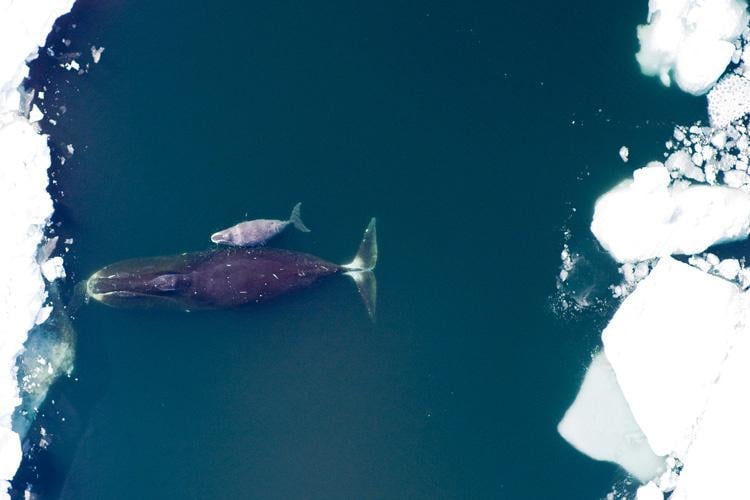
The bowhead whale represents a biological anomaly that challenges the fundamental assumptions of oncology and cellular aging. Weighing tens of tonnes and surviving for over two centuries, these mammals possess a cellular infrastructure capable of managing a volume of DNA replication that would, in almost any other species, lead to systemic oncogenic failure. For researchers and regulators who increasingly frame aging as a modifiable risk factor rather than an inevitability, the bowhead is a natural experiment in how far mammalian biology can push the limits of healthy lifespan.
The core of this resilience lies in a sophisticated system of genome maintenance. In most mammals, the accumulation of DNA copying errors over time creates a roughly linear increase in cancer risk. The bowhead whale, however, appears to operate on a different biological logic, utilizing enhanced repair mechanisms to suppress the mutations that typically accompany massive body size and extreme age. That shift in logic is what makes the species so compelling to policymakers now grappling with how to evaluate next-generation longevity drugs: the animal demonstrates that cancer risk and lifespan are not mechanically linked, even in very large bodies.
Solving the Scale Problem of Peto’s Paradox
The disparity between body size and cancer incidence is known as Peto’s paradox. Standard biological arithmetic suggests that an organism with more cells and a longer lifespan should experience a proportional increase in tumor development. If cancer were a simple game of probability, the bowhead whale would be a “cancer factory.”
Instead, evolution has implemented diverse strategies across large mammals to decouple size from disease risk. While elephants rely on multiple copies of tumor-suppressor genes, the bowhead whale emphasizes the integrity of the genome itself, appearing to invest disproportionately in the quality and oversight of DNA maintenance.
In comparative terms, the bowhead’s strategy sits alongside other mammalian models that have become informal reference points for both basic research and early-stage therapeutic design:
| Mammalian Model | Primary Longevity/Cancer Strategy | Biological Mechanism |
|---|---|---|
| Mouse | Rapid lifecycle, high mutation tolerance | Short-term survival priority; early reproduction over long-term maintenance |
| Elephant | Redundant tumor suppression | TP53 gene duplication and expanded apoptosis sensitivity |
| Naked Mole-Rat | High-molecular-weight hyaluronan | Physical inhibition of cell crowding and aberrant proliferation |
| Bowhead Whale | Hyper-efficient DNA repair | Enhanced double-strand break detection and recovery |
For regulators, these models collectively underscore a critical point: attempts to engineer human longevity will likely require multi-pronged strategies rather than a single “anti-aging” intervention. Different mammals demonstrate that evolution solves Peto’s paradox by rewiring entire systems, not by flipping a solitary genetic switch.
Molecular Maintenance and the CIRBP Mechanism
Recent genomic analysis identifies a critical shift in how bowhead cells handle double-strand breaks-the most lethal form of DNA damage, in which both strands of the helix are severed. When these breaks are repaired inaccurately, the resulting genomic instability often triggers malignant transformation or cellular senescence.
A pivotal component of this defense is the cold-inducible RNA-binding protein (CIRBP). Bowhead whales produce significantly higher levels of this protein than humans. In experimental settings, increasing CIRBP levels has been shown to improve the repair of double-strand breaks in human cells and extend the lifespan of fruit flies, suggesting that at least part of the bowhead’s strategy can be modeled in more tractable systems.
This indicates that the whale’s adaptation to Arctic waters is not merely an environmental necessity but is integrated into its molecular survival strategy. The protein associated with cold response serves a dual purpose, acting as a safeguard for the genome. That dual use is what makes CIRBP and related pathways attractive, but also potentially risky, as levers for future human interventions: pushing on a system that evolved under extreme cold may have unanticipated consequences in the far warmer and more metabolically diverse human environment.
Translating Marine Biology into Therapeutic Systems
The transition from observing whale biology to developing human therapies requires a shift toward synthetic biology and precision gene editing. The goal is not to replicate a whale’s physiology but to identify specific pathways-such as those involving the ERCC1 and PCNA genes-that can be modulated in human tissue without destabilizing existing cancer defenses.
Integrating these findings into medical technology involves several high-risk technical layers that are already shaping strategic decisions in pharma pipelines and early regulatory discussions:
- mRNA Delivery Systems: Using lipid nanoparticles to transiently increase the expression of repair proteins like CIRBP without permanently altering the human genome, borrowing platforms first scaled during the COVID-19 vaccine rollout.
- CRISPR-Cas9 Modulation: Precision editing of promoter regions to upregulate endogenous DNA repair genes, with strict control over off-target edits that could themselves seed malignancy.
- Senolytic Integration: Combining enhanced repair with the selective removal of cells that have already bypassed repair checkpoints, to avoid merely extending the lifespan of damaged cells.
- Proteomic Monitoring: Developing real-time biomarkers to ensure that increased repair activity does not inadvertently shield pre-cancerous cells from apoptosis, a concern that is already influencing trial design for early longevity-focused therapeutics.
For health systems, the practical implication is that bowhead-inspired interventions will not arrive as a single “longevity pill” but as layered therapeutic systems that must be assessed for safety, cost-effectiveness, and impact on existing standards of cancer care.
The Regulatory and Ethical Infrastructure of Life Extension
As biotechnology moves toward “maintenance-based” medicine, the regulatory landscape must evolve. Current pharmaceutical frameworks are designed to treat acute diseases or manage chronic conditions. However, enhancing DNA repair mechanisms targets the fundamental process of aging itself, which is not currently classified as a disease by most global health authorities. In the United States, for example, the Federal Food, Drug, and Cosmetic Act still anchors drug approval to the treatment, mitigation, or prevention of recognized diseases and conditions, creating a structural mismatch for therapies pitched primarily as lifespan or “healthspan” enhancers.
The pursuit of bowhead-inspired longevity triggers significant governance concerns that extend beyond the lab bench and into cabinet rooms, ethics boards, and budget offices:
- Therapeutic Equity: The risk that genomic enhancements become exclusive to high-net-worth individuals, creating a biological divide in life expectancy and pressuring public insurers to decide whether age-extension counts as a reimbursable medical necessity.
- Regulatory Classification: Whether DNA-repair enhancers should be regulated as traditional drugs, advanced biologics, or a new class of “biologic enhancements,” each of which would carry different safety, efficacy, and post-market surveillance benchmarks.
- Unintended Pleiotropy: The danger that increasing cellular resilience may inadvertently protect mutated cells, potentially making some cancers more resistant to chemotherapy and forcing oncology guidelines to adapt to patients with artificially altered repair baselines.
The NOAA Fisheries data on bowhead whales highlights that these animals are Arctic specialists, reminding us that their biology is a product of a specific, high-stress environment shaped by ice, seasonal light extremes, and intense selection pressure. For human application, this means that any derived technology must be stress-tested against the diverse metabolic, social, and environmental pressures of human life-from urban pollution to radically different diets-before regulators can reasonably judge risk.
The bowhead whale serves as a living proof of concept that mammalian DNA repair is not fixed at a ceiling. By analyzing the genome patterns of these giants, researchers are discovering that the secret to longevity is not the absence of damage, but the mastery of maintenance. For policymakers, that insight is starting to define a new frontier: one in which the key decision is not whether extreme lifespan extension is scientifically plausible, but under what rules, and for whom, a bowhead-inspired future of human aging should be allowed to unfold.
Worth a look
- Quantum Networking Milestones: How Quantum Key Distribution (QKD) Testbeds Are Moving to Financial Hubs in 2026
- The Rise of Specialized Small Language Models (SLMs) in Enterprise On-Premise Deployments
- New Clitoral Reconstruction Technique Restores Sexual Function After Vulvar Cancer Surgery (archyde.com)
