
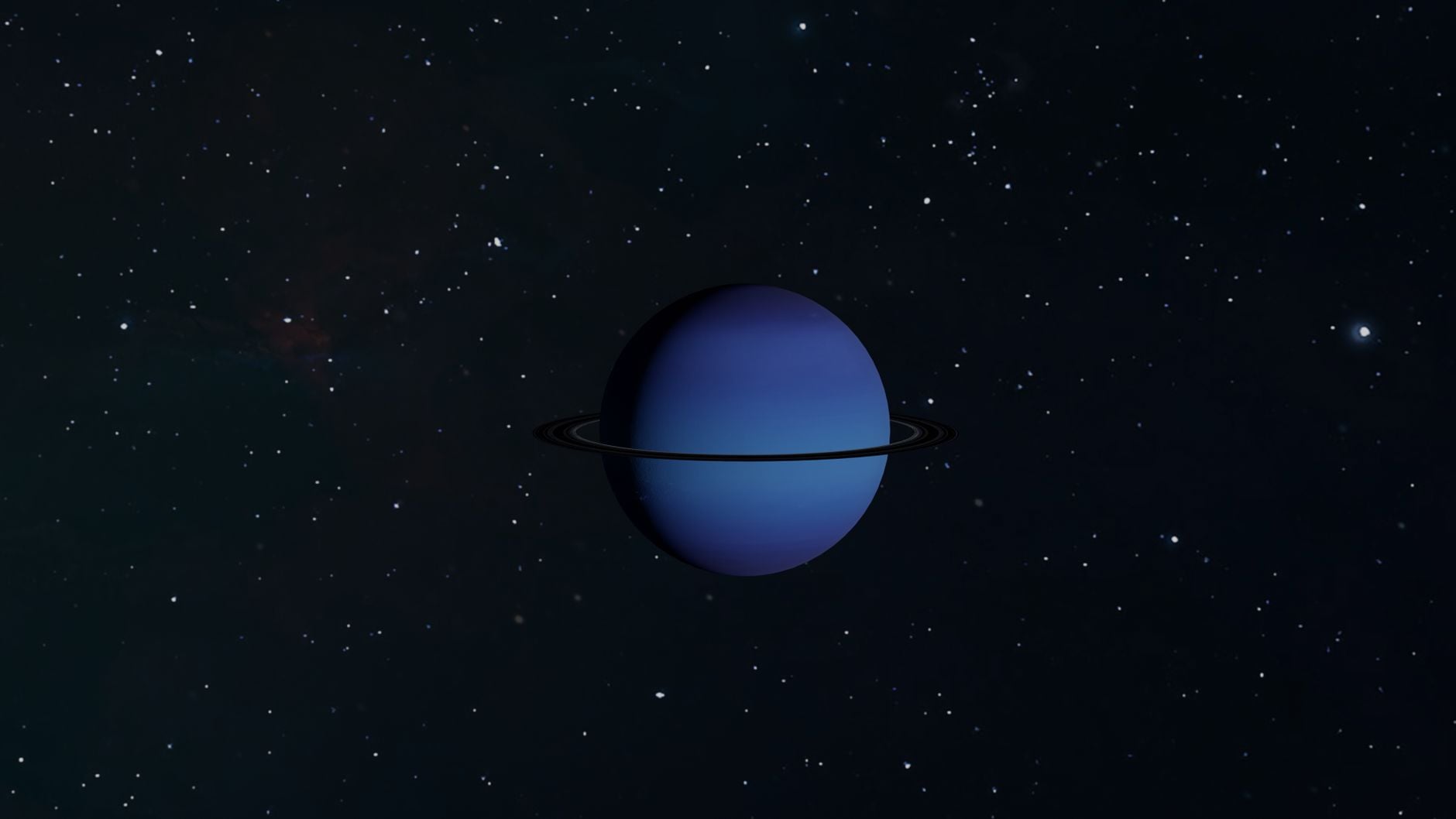
The current state of outer solar system exploration is defined by a profound data stagnation. Despite the evolution of orbital mechanics and sensor technology, the scientific community’s understanding of Uranus and Neptune remains tethered to a single trajectory mapped out in the 1970s. The “Voyager gap” is not merely a distance problem; it is a temporal and architectural limitation in how humanity gathers interplanetary data. For policymakers, that gap translates into a long-term blind spot in the very part of the solar system whose planets most closely resemble the exoplanets now driving billion-dollar investments in space science.
The Engineering Constraints of Flyby Architecture
The fundamental limitation of the 1980s encounters was the mission architecture. Voyager 2 was designed for a series of high-velocity flybys, a method that provides a high-resolution snapshot but lacks the temporal depth required to understand dynamic planetary systems. A flyby allows for a momentary glimpse of atmospheric weather and surface features, but it cannot observe seasonal transitions or conduct the repeated gravity measurements essential for mapping a planet’s internal mass distribution.
To move beyond these snapshots, a shift to orbiter-class missions is required. In budget and governance terms, that means moving from opportunistic “grand tour” trajectories to purpose-built flagship programs with dedicated launch windows and long-duration operations. The difference in data yield between a flyby and an orbiter is categorical:
| Metric | Flyby Mission (Voyager 2) | Orbiter/Probe Mission (Proposed) |
|---|---|---|
| Observation Window | Hours to days per target | Multiple years of continuous coverage |
| Gravity Mapping | Single-pass trajectory constraints | High-precision mapping of mass distribution |
| Magnetic Analysis | One-dimensional slice of the field | Full 3D mapping of the magnetosphere |
| Atmospheric Data | Remote sensing and fast transit | In-situ sampling via atmospheric probes |
For Congress and space agencies, this architectural shift is not just an engineering choice; it is a commitment to multi-decade missions whose costs, risk tolerance, and industrial supply chains must be sustained across multiple budget cycles.
Decoding the Ice Giant Paradox
The designation “ice giant” is a convenient shorthand that masks a complex geochemical reality. The interiors of Uranus and Neptune are composed of volatile compounds-water, ammonia, and methane-compressed into supercritical states where the distinction between liquid and gas vanishes. The central mystery remains the thermal discrepancy between the two: Neptune radiates significantly more internal heat than Uranus, a fact that challenges current models of planetary cooling and formation.
These interiors are not simple layers. The possibility of gradual compositional transitions suggests a fluid, mixed interior that complicates our understanding of how these worlds formed. Because many exoplanets discovered in other star systems mirror the mass and radius of these two planets, solving the ice giant paradox is a prerequisite for understanding the broader architecture of the galaxy. The stakes are not academic: governments are now justifying large strategic investments in space on the promise of exoplanet science, while still lacking ground-truth models from the only ice giants we can study up close.
Non-Dipole Magnetospheres and Plasma Dynamics
One of the most disruptive findings from the initial visits was the discovery that Uranus and Neptune do not possess standard bar-magnet-like fields. Instead, their magnetic fields are tilted and offset from the planetary centers. This geometry indicates that the dynamos generating these fields are not located in a deep metallic core, as seen in Earth or Jupiter, but likely in shallower, electrically conducting shells of ionic water.
The interaction between these offset fields and the planets’ rotation-particularly Uranus, which rotates on its side-creates a chaotic magnetic environment. This has direct implications for the surrounding infrastructure of the system:
- Ring Erosion: Charged particles trapped in the magnetosphere weather the surfaces of rings and small moons.
- Atmospheric Stripping: The asymmetric fields alter how the solar wind interacts with the upper atmospheres.
- Plasma Mapping: Only a persistent orbiter can track how these fields shift and warp over a full planetary rotation.
Understanding these magnetospheres is also a space-weather question. As commercial actors push farther from Earth orbit, national regulators will increasingly rely on models of radiation and plasma environments that are still, for the ice giants, largely extrapolated from a single pass of a single spacecraft.
The Geologic Potential of Triton and the Uranian Moons
The moons of the outer giants represent some of the most significant untapped assets in planetary science. Uranus possesses five major moons, including Miranda, which exhibits some of the most extreme tectonic fractures in the solar system. The potential for internal oceans beneath these frozen crusts remains a high-priority hypothesis that can only be verified through magnetic induction studies and precise gravity measurements.
Triton, Neptune’s largest moon, is an even greater anomaly. Its retrograde orbit confirms it was a captured Kuiper Belt object, effectively a Pluto-class world brought into the inner influence of a gas giant. With its active nitrogen plumes and young surface, Triton serves as a local laboratory for studying the chemistry of the far outer solar system without the need for a multi-decade journey to the Kuiper Belt.
For space agencies, these moons are not just scientific curiosities. They are test beds for the technologies-cryogenic landers, subsurface ocean detection, plume sampling-that will underpin future exploration of potentially habitable worlds from Europa to Enceladus and beyond, shaping long-range exploration roadmaps and the industrial base that supports them.
Governance, Budgetary Frameworks, and Mission Logistics
The transition from theoretical interest to actual hardware is governed by the National Academies’ decadal survey, the primary policy mechanism for prioritizing NASA’s planetary science expenditures. In 2022, this framework identified the Uranus Orbiter and Probe as the top-tier priority for new large-scale missions.
Formally, those priorities are implemented through the United States’ civil space policy and budget process, anchored in the authorizations and appropriations that flow from the NASA Authorization Act. Within that framework, NASA must reconcile decadal science goals with constraints on launch vehicle availability, radioisotope fuel production, and the long-term health of the Deep Space Network.
However, the gap between policy priority and launch is widened by immense infrastructure and engineering hurdles. A mission to the outer giants requires specific technological milestones:
- Power Generation: Solar arrays are non-viable at these distances; missions depend on next-generation Radioisotope Thermoelectric Generators (RTGs) to provide steady power for decades.
- Communication Latency: Deep Space Network scheduling must account for signal travel times that make real-time control impossible, necessitating advanced autonomous navigation and fault-management systems.
- Thermal Management: Hardware must survive extreme cold while maintaining the operational temperature of sensitive scientific instruments.
Uranus has been prioritized over Neptune not due to a lack of interest in Triton, but because of the pragmatics of trajectory and launch windows. A feasible flight path to Uranus in the early 2030s aligns better with available heavy-lift rockets and RTG supply. As one senior mission architect put it, “This is not a case of one planet being interesting and the other not. It is a case of choosing where a feasible flagship mission can do the most.”
That calculus also carries diplomatic weight. Large flagship missions often involve international partners sharing instruments, launch services, or tracking assets, and those agreements must be locked in years before hardware ever leaves the ground.
The Persistence of the Voyager Gap
The achievements of Voyager 2 are unparalleled, but they represent a beginning rather than a conclusion. The data currently available is “thin in time,” providing a snapshot of systems that are constantly evolving. Until a dedicated orbiter returns to the ice giants, our maps of these worlds remain sketches.
The unresolved questions-the internal heat of Neptune, the tilted fields of Uranus, and the subterranean oceans of their moons-persist because the evidence is limited. “A flyby can transform ignorance into a first map. It cannot turn an ice-giant system into a fully observed world.” For governments deciding how to allocate finite space budgets between the Moon, Mars, planetary defense, and deep-space science, that thin evidence base is now a strategic factor, not just a scientific frustration.
Until the next generation of probes departs, Uranus and Neptune remain the solar system’s most significant unfinished encounters-scientific frontiers that also test whether long-horizon public institutions can sustain curiosity-driven exploration over the decades required to reach them.
Related reading
