
The Regulatory Pivot in Asia
The arrival of the Epic Games Store on iPhones in Japan marks a significant shift in the iOS ecosystem, driven by the enactment of the Mobile Software Competition Act (MSCA) in December 2025. This legislation targets the entrenched “walled garden” model of mobile operating systems, mirroring the structural goals of the European Union’s Digital Markets Act (DMA) by forcing a transition toward an open-platform architecture.
Under these new mandates, Apple must permit the installation of third-party app marketplaces and the use of alternative payment processing systems. This changes the fundamental trust model of iOS, shifting the responsibility for app verification and payment security from a single centralized authority to a multi-provider environment. In Japan, enforcement responsibility sits with the Japan Fair Trade Commission (JFTC), which now has explicit powers under the MSCA to police conduct by designated smartphone “gatekeepers” and issue guidance on acceptable technical and commercial terms.
| Regulation | Region | Primary Objective | Key Mandate |
|---|---|---|---|
| DMA | European Union | Ensure contestability and fairness | Support for alternative app stores and payment systems |
| MSCA | Japan | Foster mobile software competition | Mandated support for third-party marketplaces |
Architectural Friction and Commission Barriers
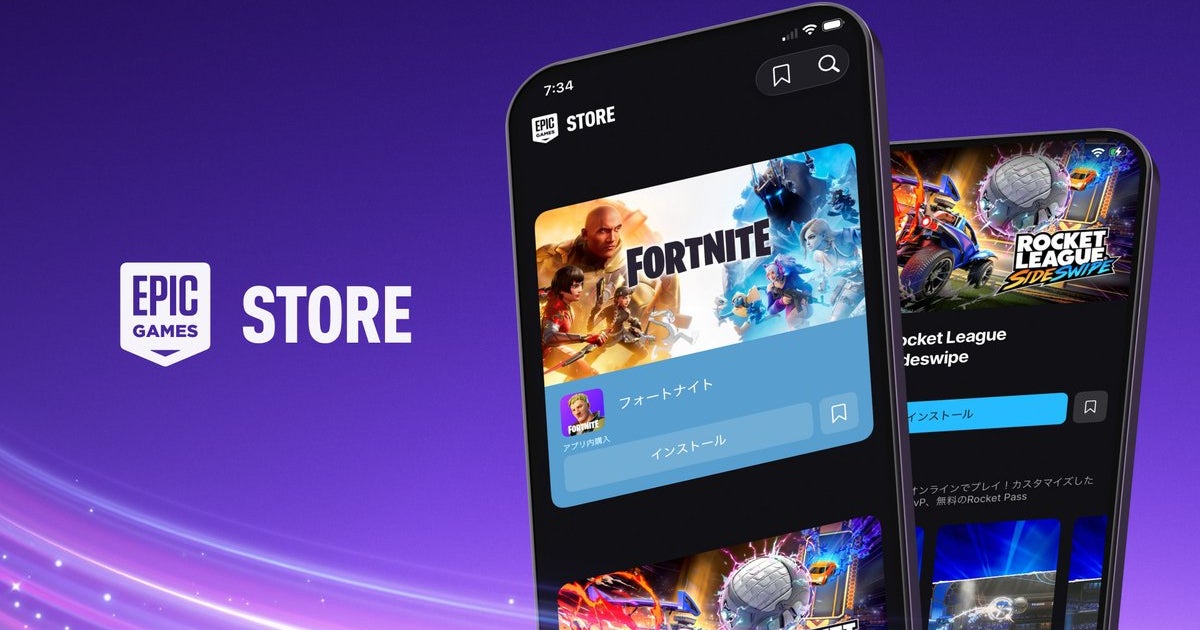
Despite the legal requirements, the rollout of the Epic Games Store in Japan has been tightly constrained by Apple’s interpretation and implementation of the new rules. Epic has limited its initial launch to its own catalog, featuring titles such as Fortnite and Rocket League Sideswipe, rather than acting as a full-scale distributor for other developers.
This strategic limitation is a direct response to Apple’s financial and administrative requirements for third-party stores. Specifically, Apple has implemented a 5% Core Technology Commission fee on apps distributed through these alternative channels, alongside a requirement for developers to track and report every transaction manually and reconcile them against Apple’s reporting formats.
“This creates confusion and costs that deter developers from launching on competing app stores,” the firm said. “As a result, we are not launching with apps from other developers on the Store.” Epic’s position effectively turns the Japanese launch into a live test case for how far platform owners can stretch compliance with pro-competition statutes while still claiming to respect the letter of the law.
Installation Hurdles and User Experience
Beyond financial costs, Epic has highlighted significant technical friction designed to discourage users from leaving the official App Store. In Japan, the installation process for a third-party store involves a nine-step sequence of prompts, warnings, and confirmations that repeatedly steer users back toward Apple’s default settings.
This “friction” is a known variable in user acquisition and has rapidly become a regulatory issue in its own right. When the store launched in Europe, a 15-step process was initially utilized; once regulatory pressure under the DMA reduced this to six steps, player drop-off rates plummeted by 60%. The current Japanese requirements are viewed by Epic and rival developers as a continuation of this strategy to impede competition through interface design, raising questions about how the JFTC will interpret “practical” access to rival app stores under the MSCA guidelines.
Epic stated it is “continuing to work with regulators in Japan to end these anticompetitive practices so developers and consumers can benefit from the law.” For policymakers, the case underscores that statutory access rights can be blunted not only by headline commission rates but also by the micro-design of every tap, toggle, and consent dialogue on a user’s screen.
The Global Legal Trajectory
The expansion into Japan is part of a broader, multi-year global conflict over platform governance and digital taxation. The tension began in 2020 when Apple removed Fortnite from its App Store following Epic’s attempt to bypass platform fees, triggering litigation in the United States and sharpening legislative debates in other jurisdictions over how to regulate gatekeeper platforms.
Since then, the legal landscape has shifted across several major markets:
- European Union: The store launched for iOS users in May 2025 following DMA implementation, which codified obligations for designated gatekeepers to allow alternative app stores and in-app payment systems.
- United States: The store relaunched after a district court ruling prohibiting Apple from collecting fees on purchases made outside the App Store, creating a more permissive-though still contested-environment shaped primarily by case law rather than ex-ante legislation.
- Japan: Deployment was facilitated by the MSCA, a sector-specific statute that came fully into force on December 18, 2025 and empowers the JFTC to oversee compliance by Apple and Google with respect to app stores, mobile operating systems, browsers, and search services.
“We urge the Japan Fair Trade Commission to rigorously enforce the law and prohibit Apple from imposing illegal fees and friction that harm consumers and competition,” Epic stated, as it continues to push for a fully open ecosystem in the region. For regulators in Tokyo, Brussels, and Washington, the Japanese iOS rollout is emerging as an early indicator of whether newer competition laws can translate from legal text into genuinely contestable mobile markets-or whether platform design choices will continue to outpace the rulebook.
Related reading
