
A cellular‑level window into dinosaur skin changes the tools—and rules—of paleotech
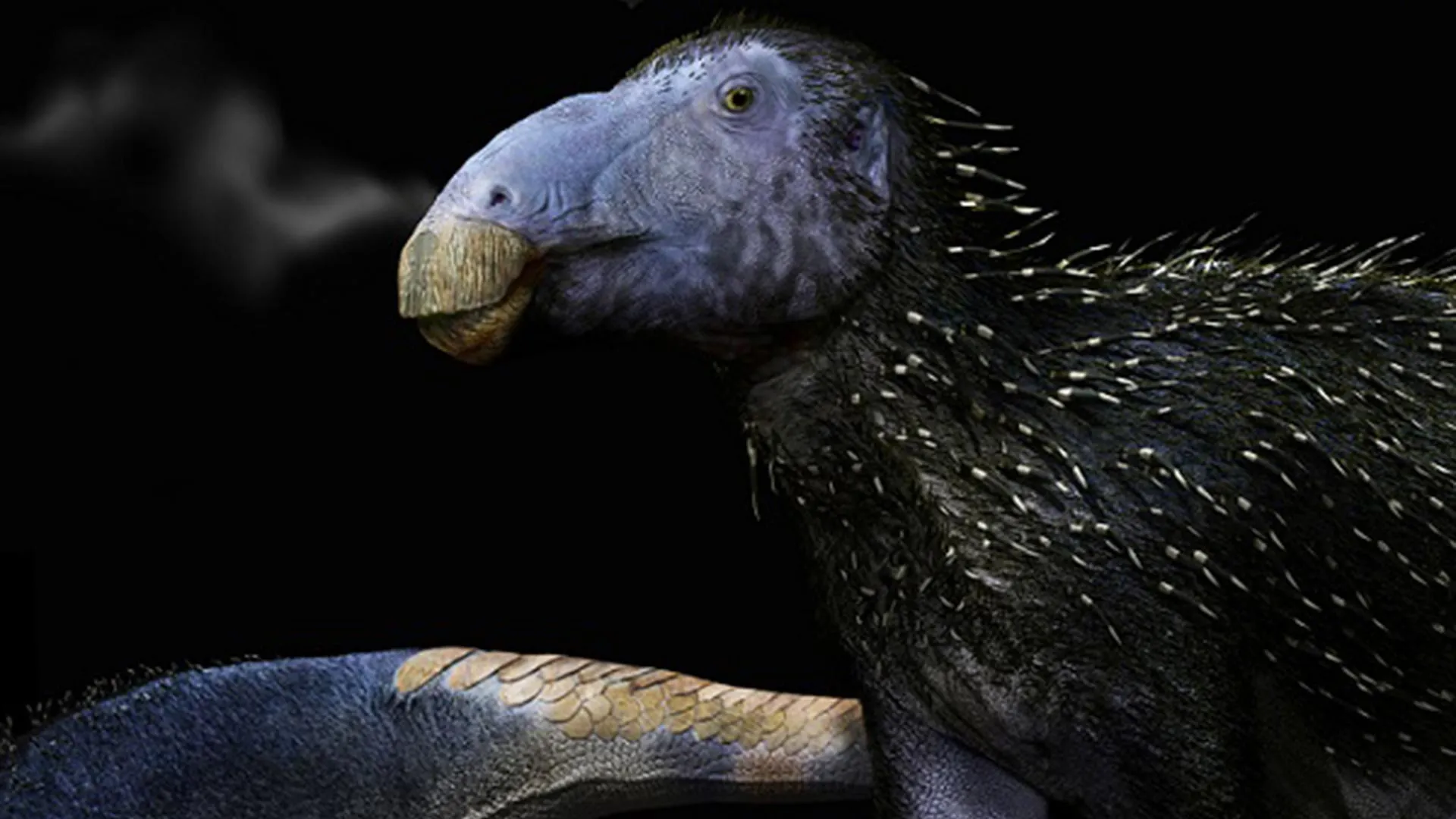
A newly identified iguanodontian from Early Cretaceous China, Haolong dongi, brings an anatomical first to the dinosaur record: a body covering of hollow, skin‑derived spikes. The specimen’s skeleton and soft tissue are preserved at a resolution fine enough to resolve individual cells that endured for roughly 125 million years. The study, published February 6, 2026, in Nature Ecology & Evolution, pushes fossil analysis into a domain where imaging, data governance, and lab‑grade cybersecurity matter as much as field discovery. For museums, national heritage agencies, and research institutions, the find is an early test case for how “paleotech” will be regulated, funded, and audited when fossils begin to look, analytically speaking, more like medical scans than rocks.
What the fossil shows—and why “hollow” matters
The team examined a remarkably well‑preserved juvenile iguanodontian from China and documented soft tissue rarely seen in the dinosaur record. The skin hosted unusual cutaneous spikes—structures rooted in the skin rather than grown from bone—and crucially, they were hollow rather than solid. That architecture suggests distinct mechanical and thermodynamic properties when compared with bony horns or plates, and it broadens the catalog of integumentary strategies that policymakers rely on when assessing which specimens warrant special conservation status or export controls.
Functional hypotheses remain open. The spikes may have deterred predators much like porcupine quills. They may have aided heat exchange by increasing surface area. A sensory role is also plausible if the spikes interacted with underlying nerves or vasculature. Because the specimen is a juvenile, whether adult Haolong dongi retained the same covering awaits additional finds. Until then, the working assumption in fieldwork and curation planning is that similar hollow structures in other fossils cannot be dismissed as artifacts or curiosities: they may encode behavioral, ecological, and even climate‑relevant information.
From quarry to cell: the tech stack behind deep‑time soft tissue
Soft tissue at cellular fidelity raises the bar for methodology, reproducibility, and chain of custody. The study explicitly reports:
- X‑ray scanning to visualize internal structures non‑destructively.
- High‑resolution histological analysis using ultra‑thin sections to examine skin microarchitecture.
Across the field, comparable fossils are now routinely interrogated with a broader, standards‑aware toolkit that balances analytical power with conservation risk and regulatory scrutiny over sample handling:
- Micro‑CT or synchrotron tomography for sub‑micron volumetric imaging with minimal dose.
- Scanning electron microscopy for surface ultrastructure and cell‑scale textures.
- Raman and FTIR spectroscopies for molecular fingerprints of keratin, collagen, or pigment‑bearing organelles.
- X‑ray fluorescence mapping to visualize elemental patterns linked to tissue chemistry.
- Photogrammetry and structured‑light scanning to generate metrically accurate 3D meshes for open dissemination.
That stack now sits alongside cybersecurity controls—access‑managed servers, tamper‑evident logs, and export‑compliant cloud storage—as institutions seek to protect not just physical fossils but the high‑value datasets that can be reconstructed from them.
Data integrity now determines scientific value
Once fossils preserve cells, the line between paleontology and biomedical imaging blurs, and the data lifecycle must meet modern research‑integrity expectations. Labs working with high‑value fossils increasingly treat raw and processed datasets like regulated research assets that could be audited by funders, national academies, or heritage authorities.
| Layer | Standard / Format | Purpose | Risk if missing |
|---|---|---|---|
| Raw volumetric scans | DICOM, TIFF stacks | Preserve original measurement for re‑analysis | Irreproducible findings; loss of provenance |
| Derived geometry | PLY, OBJ, STL | Shareable 3D models for morphometrics and education | Inaccessible results; repeated destructive sampling |
| Metadata | Dublin Core, DataCite, ORCID | Trace authorship, instrument settings, and context | Ambiguous custody; diminished trust |
| Persistent identifiers | DOI, ARK | Stable citation and linking across repositories | Link rot; unverifiable references |
| Integrity checks | SHA‑256 checksums; signed manifests | Tamper‑evidence and transfer validation | Silent corruption; version drift |
| Version control | Git LFS, semantic versioning | Track segmentation and analysis pipelines | Opaque processing; reproducibility gaps |
Adopting the FAIR data principles—findable, accessible, interoperable, reusable—helps ensure that cellular‑scale claims remain testable years after publication and gives institutions a defensible framework when they are asked to justify access policies, embargo periods, or long‑term preservation budgets.
Regulatory and stewardship checkpoints for fossils with living‑systems detail
Work on nationally significant fossils intersects with cultural‑heritage and research‑compliance frameworks. For specimens with cellular‑level information, those frameworks increasingly extend to the digital layer as well. Common checkpoints include:
- Provenance documentation from initial discovery through all transfers and analyses, with museum catalog numbers and field coordinates secured but protected if sites are sensitive.
- Excavation and export controls that require permits for collection, study, and any cross‑border movement of specimens or subsamples, operating under national heritage laws and international instruments such as the UNESCO 1970 Convention on cultural property.
- Institutional repository requirements to house holotypes and primary materials within accredited collections under climate and access controls.
- Data‑sharing policies that separate open 3D surrogates from restricted‑access raw scans where site protection, cultural sensitivity, or biosafety concerns apply.
- Ethical review for destructive sampling of rare soft tissues, using minimal‑invasion protocols and pre‑registered analysis plans.
For ministries of culture and science agencies, these checkpoints are rapidly becoming budget and staffing questions: how to expand digital curation, compliance, and security capacity at the same pace as the imaging capabilities coming out of synchrotron beamlines and AI‑enabled labs.
Why hollow spikes recalibrate evolutionary and engineering models
Hollow, skin‑based spikes expand the design space for dinosaur integument beyond scales, feathers, and bony armor. The architecture points to lightweight, potentially flexible structures that could dissipate heat rapidly and deter predation at low metabolic cost. In engineering terms, hollow quill‑like elements suggest high stiffness‑to‑mass ratios and tunable buckling thresholds, a combination relevant to bioinspired protective textiles and compliant robotic skins.
- Bioinspired materials: fiber‑reinforced, hollow filaments that deflect on contact but resist penetration.
- Thermal management: passive radiators using thin‑wall geometry and high surface‑area density.
- Sensing: soft, hollow whisker analogs coupled to strain gauges for environmental feedback.
These are not short‑term product pipelines, but they influence where public research agencies and defense laboratories choose to place early‑stage bets in biomimetics, soft robotics, and advanced textiles—fields where deep‑time biology is increasingly treated as a design library.
Automation is now part of the fossil lab
At cellular resolution, manual segmentation becomes a bottleneck. Teams increasingly deploy machine‑learning models for voxel classification, denoising, and artifact removal, with human‑in‑the‑loop validation. The operational goal is a documented pipeline that can be re‑run on the original scans, producing the same figures and measurements bit‑for‑bit and standing up to external scrutiny if results underpin high‑profile exhibits, funding decisions, or contested claims about dinosaur biology.
- Preprocessing: flat‑field correction, ring‑artifact suppression, and dose‑aware filtering.
- Segmentation: supervised models trained on expert‑labeled patches; uncertainty maps guide human review.
- Quantification: morphometrics and wall‑thickness analyses with unit tests against synthetic phantoms.
- Audit trail: parameter files stored with checksums; containerized environments to lock dependencies.
As automation spreads, institutional policies on AI use in research—still nascent in many universities and museums—will increasingly determine which labs are trusted partners on irreplaceable fossils.
A landmark find that widens the search image
Haolong dongi adds a new species to Iguanodontia and inserts a novel integumentary solution into dinosaur evolution. The fossil’s combination of juvenile status, exceptional skin preservation, and hollow spikes gives field teams a new “search image” for future excavations and gives lab teams a sharper mandate: treat deep‑time soft tissue datasets with the same rigor, security, and transparency expected in today’s biomedical sciences.
For governments, funding bodies, and museum boards, the message is similar. As fossils cross the threshold into cellular‑scale records, their scientific and cultural value will depend less on what can be seen in a display case and more on how well institutions govern the invisible: raw scans, analysis pipelines, and the rules that decide who, anywhere in the world, gets to ask new questions of an animal that died 125 million years ago.
Keep reading
