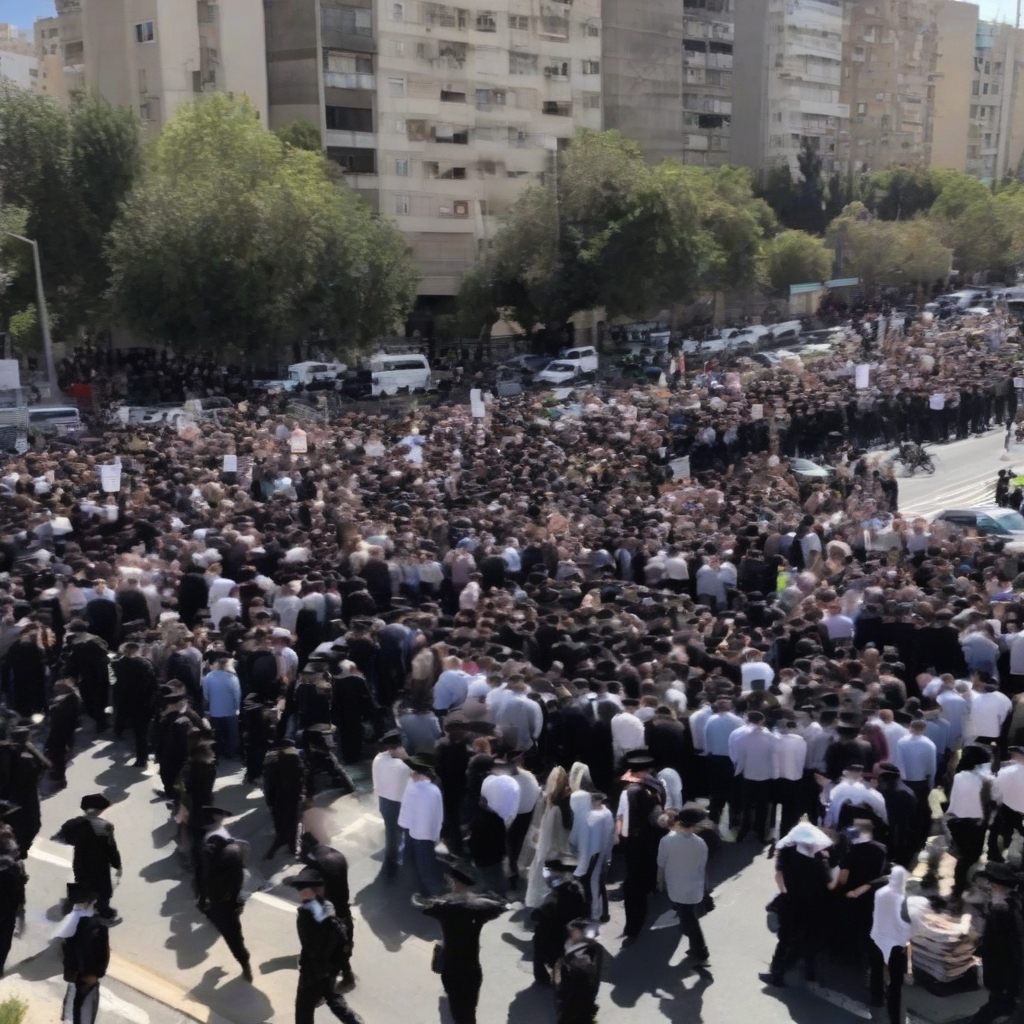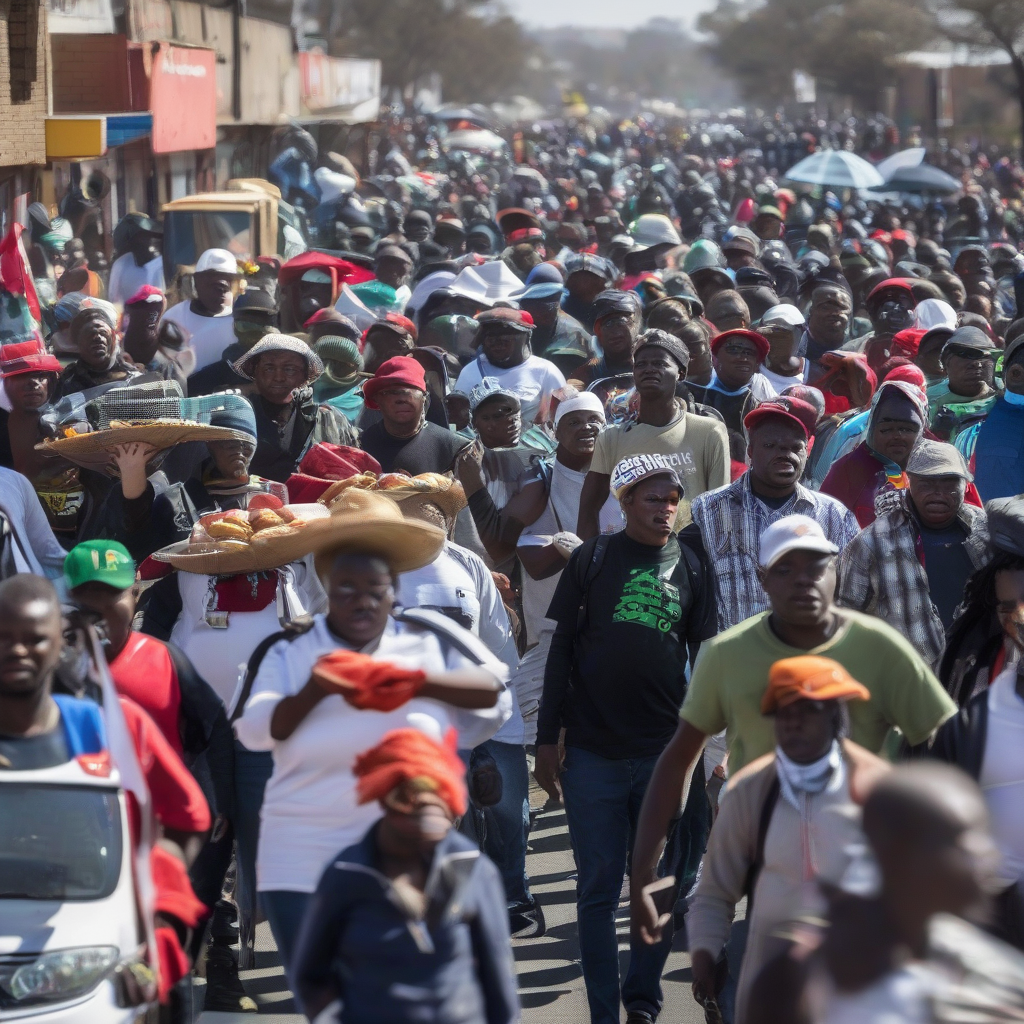
SOWETO – Soweto residents marched from Walter Sisulu Square to the Moroka police station on Sunday to protest the presence of undocumented migrant traders in Kliptown.
The demonstrations centered on demands for stricter regulation of the informal trading sector and calls for small business opportunities to be reserved for South African citizens.
The protest caused significant disruption in Kliptown, where most shops remained closed during the march, with the exception of U-Save and Boxer supermarkets.
Dispute Over Trading Permits
Registered hawkers in Kliptown claim that the current volume of street vendors far exceeds official authorizations. According to local traders, only 26 vendors are permitted to operate in the area, yet more than 50 unregistered traders are currently active within the same limited space.
The Kliptown market sits on the edge of Walter Sisulu Square, a national heritage site and focal point of Soweto’s tourism economy, which the City of Johannesburg has earmarked as a key node for regulated informal trade and township development. This has heightened tensions over who is allowed to occupy scarce trading bays and pavement space.
Nhlanhla Magwaza, a vendor with over 20 years of experience, described the resulting congestion as “mayhem,” noting that unregistered hawkers often sell in the middle of the road.
“We must be professional because we trade in food. Our customers must trust us,” Magwaza said. “This is a sign of a problem coming that one day we will fight for this space in Kliptown.”
Other long-term traders expressed concerns regarding safety and legal compliance. Khanyisile Shamase, also a vendor for more than two decades, stated that some traders have been asked to register their stalls with the City of Johannesburg but have remained non-compliant.
“We feel unsafe working with people we don’t know, or who we don’t know where they came from,” Shamase said. “We have asked them to register their stalls with the City of Johannesburg. They are non-compliant with the law. We even force them to tidy after themselves.”
Under the City’s informal trading by-laws, municipal officials are empowered to demarcate trading areas, issue permits and remove traders who operate without authorization. In practice, enforcement has been uneven across Johannesburg, with recent court rulings compelling the City to verify and register traders before taking punitive action in the inner city.
Historical Context of Street Trading
For some protesters, the struggle for the right to trade is rooted in the era of apartheid. Sophie Mbengwa, 76, has sold vegetables in Kliptown since 1975. She recounted a history of systemic harassment and violence under National Party rule.
Mbengwa described how vendors were frequently humiliated, arrested, and assaulted for street trading. She recalled the necessity of asking a relative to manage her stall in 1975 while she gave birth to her first child.
In 1985, Mbengwa said she gave birth to her lastborn child in the Kliptown police holding cells after being arrested for selling on the streets.
“When I got to the police station, my water broke, and I immediately went into labour. Things were tough. We don’t want to go back to those painful days.”
While Mbengwa noted that traders should protect one another regardless of origin, she argued that registration and compliance are essential. She observed a significant increase in undocumented immigrants selling on the streets, claiming they occupy spaces intended for registered hawkers.
Her memories are intertwined with the wider history of Kliptown, where the Freedom Charter was adopted in 1955, and where Walter Sisulu Square has since been declared a national heritage site. For older residents, the current fight over permits and documentation is layered onto a longer struggle for the right of township residents to earn a living in public spaces.
Economic Tensions and Governance
The protesters linked the presence of undocumented migrants to high youth unemployment rates in Soweto.
“We can’t fight for opportunities with undocumented migrants. Everyone who trades in South Africa must be legal, and their place of business and residence must be known to authorities in case there are problems in future,” one protester stated.
Community leader Lumkile Mkhaliphi urged the government to prioritize South Africans in economic opportunities, stating that the government has failed to address the high number of undocumented migrants in the country. Nationally, immigration is regulated by the Immigration Act, which requires foreign nationals to hold valid permits to live and work in South Africa and makes it an offence to work without appropriate authorization.
However, data regarding the economic impact of migration suggests a different driver for the region’s instability. A study by the Institute for Security Studies (ISS) found that South Africa’s socio-economic challenges are rooted in corruption and poor governance rather than immigration.
Key findings from the ISS report include:
- Immigrants contribute approximately 9% of South Africa’s GDP.
- Each working immigrant is estimated to create two local jobs.
- Socio-economic problems are attributed primarily to internal governance failures, including weak service delivery, corruption and limited support for small enterprises.
Policy analysts note that these findings place the Kliptown confrontation squarely in the realm of governance: local officials must decide how strictly to enforce by-laws, how many trading sites to formalize, and how to balance public order with the constitutional right to earn a livelihood in a township grappling with deep poverty.
The protesters remained gathered outside the Moroka police station to demand immediate government intervention and the prioritization of local citizens in the informal economy, while insisting that authorities act against traders they believe to be undocumented and unregistered.