
Lede
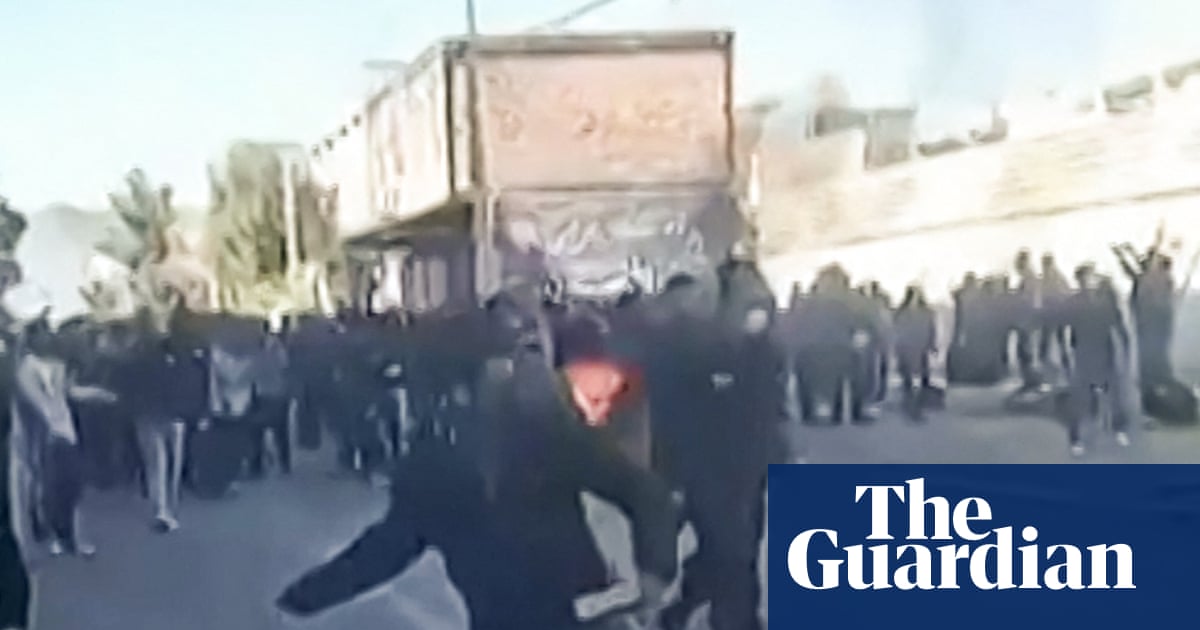
Demonstrations over economic conditions erupted across Kurdish cities in western Iran on Wednesday as shopkeepers shuttered businesses and crowds denounced corruption, with witnesses and rights groups reporting the use of teargas, pellet guns and what protesters said were live rounds by security forces seeking to disperse gatherings before an announced general strike.
Nut graph
The unrest, now in its 11th day, underscores the fragility of Iran’s economy and the combustible role of the country’s Kurdish regions in nationwide protest cycles. It comes amid a record collapse of the rial, renewed debate over price controls and subsidies, and fresh warnings from Tehran’s security establishment, drawing international scrutiny informed by United Nations findings that Iran’s crackdown on the 2022 “Woman, Life, Freedom” uprising involved crimes against humanity. The protests also test President Masoud Pezeshkian’s pledge to ease economic pressure without provoking the powerful security apparatus.
“They are killing us. They’re showing no mercy. In Kermanshah, we’ve all come out, we’re all under pressure. At noon in the square they beat a woman so badly she couldn’t stand up. I’m begging all the people of Iran, let’s all rise up together,”
Across Kermanshah, Ilam and other Kurdish population centers, shop closures accompanied marches that stretched into the evening, while videos from Kermanshah University showed students chanting for the return of Reza Pahlavi, the exiled son of Iran’s former shah. Seven Iranian Kurdish opposition parties urged a nationwide stoppage on Thursday, a call also echoed by Pahlavi and amplified by diaspora networks. Local residents described a heavy security presence outside universities, bazaars and key road junctions as authorities sought to pre-empt the strike.
Two protesters from Kermanshah said they saw security forces open fire on crowds. The Norway-based Hengaw Organization for Human Rights said it documented the use of Kalashnikov rifles on Wednesday; the US-based Human Rights Activists News Agency (HRANA) reported at least 36 people killed, including four children and two members of the security forces, and more than 2,100 arrests since the protests began. Rights advocates warned that casualty figures are likely to rise if the strike call is widely observed and security deployments continue to thicken.
Economic shock drives a widening protest map
The current wave-sparked by a sudden nosedive in the Iranian rial and initially led by traders-has spread beyond Tehran’s Grand Bazaar to provincial cities, including in Iran’s west, without yet reaching the scale of the 2022 uprising after the death in custody of Mahsa (Jina) Amini. UN investigators later concluded that Iran’s response to those 2022 protests involved murder, torture and other acts amounting to crimes against humanity, with a “credible” death toll exceeding 500.
Iran’s currency deterioration has accelerated over the past year, with the free-market rate breaching psychological thresholds and hitting successive lows in late 2025, prompting leadership changes at the central bank and emergency signals from Pezeshkian’s cabinet. Traders warn fresh price spikes will follow the government’s plan to cancel a preferential foreign-exchange window used by importers of key goods-a sensitive policy area since parliament began phasing out the former 42,000‑rial rate for essentials in 2022. Economists say the combination of subsidy reform, sanctions and mismanagement has eroded real wages and pushed many households in peripheral regions, including Kurdish provinces, deeper into poverty.
Amid the turmoil, Pezeshkian ordered an inquiry into widely shared footage of riot‑gear‑clad forces raiding a hospital in Ilam and announced the doubling of a monthly stipend for household breadwinners-an echo of Iran’s long‑running cash‑transfer system created in 2010 to offset subsidy cuts, which economists say has repeatedly been overwhelmed by inflation. The government has framed the stipend move as targeted relief; protesters interviewed by GlobalHeadlinez dismissed it as too little, too late.
Kurdish regions at the core of Tehran’s domestic risk
Kurdish‑inhabited provinces-Kurdistan, Kermanshah, Ilam and parts of West Azerbaijan-have often been early flashpoints in Iran’s protest cycles and targets of extraordinary force. During the 2022 unrest, Iran launched cross‑border missile and drone strikes against Iranian Kurdish opposition bases in Iraq’s Kurdistan Region, killing and injuring scores and drawing US condemnation-illustrating how domestic protest management in Kurdish areas can rapidly spill across borders and into Iran’s already strained regional diplomacy.
Seven Iranian Kurdish parties called for a general strike on Thursday to signal resolve. “[The strike] will send an important signal to the entire country: that the resistance in Kurdistan is standing strong and that people are ready to continue. This is a peaceful action, and we sincerely hope that people will not be attacked,” said Hiwa Bahrami, head of foreign relations for the Democratic Party of Iranian Kurdistan. Kurdish activists described the strike as both a protest against economic hardship and a show of defiance against what they see as decades of political marginalization.
Security doctrine, and the law on paper
Iran’s security architecture-anchored by the Islamic Revolutionary Guard Corps and Basij auxiliaries, alongside the Law Enforcement Command-has a mandate and the tools to quash street unrest, including specialized riot battalions and intelligence units. International monitors have documented patterns of excessive force in past crackdowns, including widespread use of metal pellets and shotgun fire that left hundreds with blinding eye injuries in 2022. On paper, Iran is a state party to the International Covenant on Civil and Political Rights, whose Article 21 protects peaceful assembly and requires any restrictions to be necessary and proportionate.
UN experts and independent groups also detail Iran’s routine resort to internet restrictions to manage protest visibility and coordination-tactics deployed extensively in 2019 and 2022, especially in Kurdistan province and minority regions. Digital rights monitors reported fresh slowdowns and localized outages on Wednesday in parts of western Iran, raising concerns that documentation of any further crackdown could again be sharply curtailed.
Official warnings, external glare
Iran’s government has paired talk of dialogue and incremental economic relief with escalating warnings. “The Islamic Republic considers the intensification of such rhetoric against the Iranian nation as a threat and will not leave its continuation without a response,” said Maj Gen Amir Hatami, after the army cautioned it would not “sit idly by” amid foreign threats and suggested pre‑emptive action. State officials have frequently framed protests as foreign‑instigated-language also used during past rounds of unrest-to justify tighter security measures and to deflect domestic accountability.
The White House has entered the frame. US President Donald Trump said last week that Washington would “come to the rescue” of protesters if security forces shot and killed them-a message amplified by exiled opposition figure Reza Pahlavi, who has urged coordinated nationwide action. Diplomats and analysts say such statements risk feeding Tehran’s narrative of foreign orchestration even as they increase pressure on Iran’s leadership over its obligations under international law.
What past uprisings suggest
- 2017-2018: Nationwide protests over prices and corruption sweep dozens of cities; Kurdish areas see organized strikes and arrests, foreshadowing the role those provinces are playing again in 2026.
- November 2019: Fuel‑price protests prompt one of the world’s largest internet blackouts; security forces kill hundreds, according to credible rights groups, signaling the state’s willingness to absorb international criticism in order to restore control.
- September-December 2022: The death of Mahsa Amini ignites the “Woman, Life, Freedom” movement; UN investigators later assess crimes against humanity in the response, with minority regions among the worst‑hit and Kurdish towns facing particularly heavy deployments.
On the ground on Wednesday
Despite warnings, protesters said they intend to respond to calls for fresh rallies and work stoppages. Families of those killed in 2022 told GlobalHeadlinez they had been instructed by intelligence services not to join public gatherings on Thursday and warned that benefits could be cut if they disobeyed.
“They are shooting at anyone and everyone. We are united with the rest of the people across [Iran]. They stood by us in 2022 and will stand by them this time. Tomorrow is the day all the Kurdish people will be on the streets,” said Soran, a protester in Kermanshah, giving only a first name for security reasons.
As of late Wednesday, demonstrations were ongoing in multiple Kurdish cities, with rights groups reporting new arrests and local authorities signaling additional deployments while the general strike call remained in effect for Thursday, 8 January 2026. Protest organizers said the scale of participation-and the authorities’ response-would determine whether the movement remains focused on economic grievances or hardens into a broader challenge to Iran’s political order.
Worth a look
- Global Food Security Alliances: How Climate-Resilient Agricultural Corridors Are Stabilizing Wheat and Rice Supplies
- Cross-Border Renewable Energy Grids: North Sea and Mediterranean Subsea Cable Networks Enter Phase Two
- Tens of thousands expected in Paris for student protests – RTE.ie (archyde.com)
- Spanish election: Pedro Sanchez calls snap election for 29 November after housing protests (globallypulse.com)
