
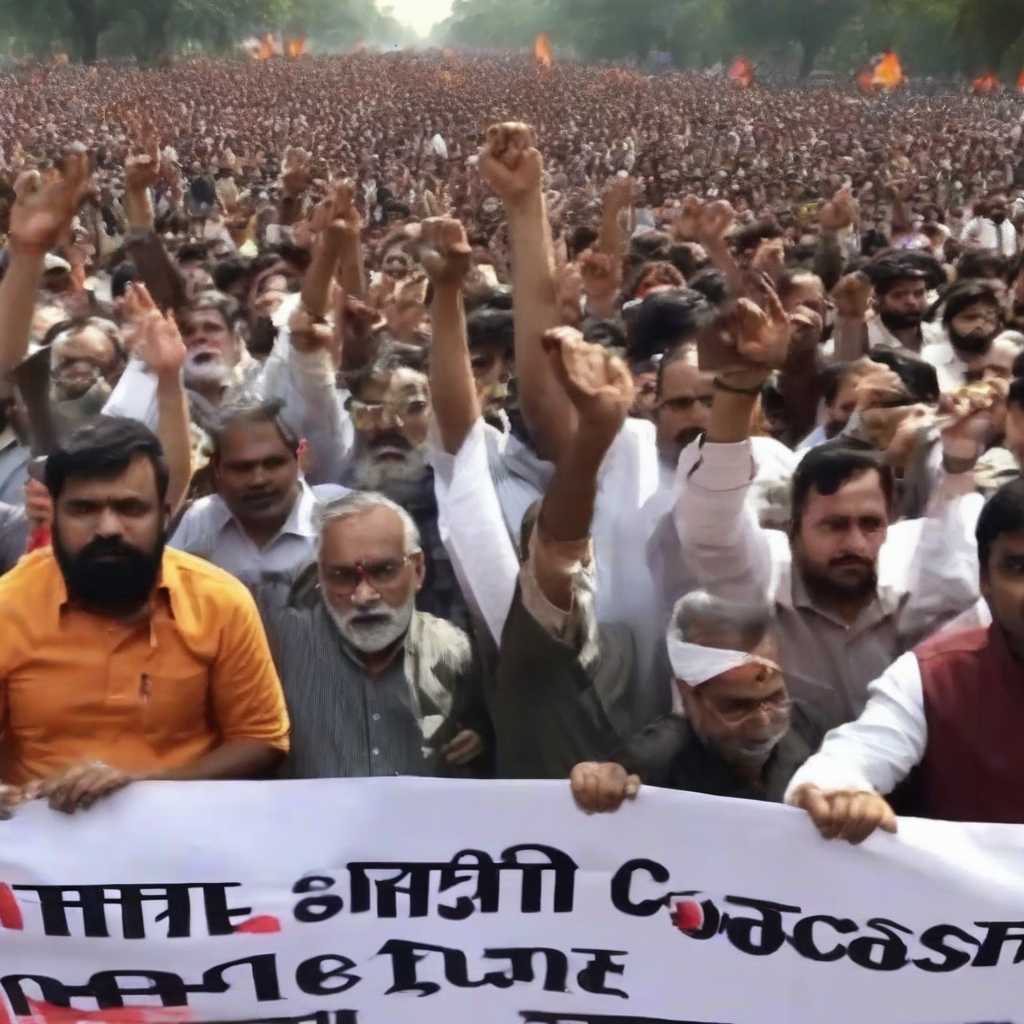
NEW DELHI – Hundreds of supporters of the Cockroach Janta Party (CJP) gathered in the capital’s protest zone near parliament to demand the resignation of Education Minister Dharmendra Pradhan.
The movement, a satirical social media phenomenon that mirrors the name of Prime Minister Narendra Modi’s Bharatiya Janata Party (BJP), has transitioned from online viral content to street-level mobilization. The protests highlight systemic frustrations regarding India’s education system and a lack of professional opportunities for the country’s young population.
Judicial Remarks and the Satirical Response
The CJP was established as a parody following a court hearing in which India’s Chief Justice Surya Kant likened young people who criticized the government to “cockroaches” and “parasites.” While Chief Justice Kant subsequently stated his comments were taken out of context, the remarks served as the catalyst for the movement and have since been widely shared and debated on social media.
Abhijeet Dipke, a political communications strategist and student at Boston University, utilized the insult as the foundation for the party, framing it as a way to reclaim a slur aimed at dissenting youth. The movement has adopted the cockroach as a symbol of endurance, arguing that, like the insect, young Indians will persist despite repeated attempts to marginalize them in public debate.
Digital Mobilization and Scale
The movement achieved rapid growth through a coordinated digital strategy, launching a dedicated website and social media presence focused on exam reform, accountability in education policy, and youth representation in governance. Within one week of its inception, the CJP Instagram page attracted millions of followers, with memes, explainer videos and satirical posts helping to translate anger over exam controversies into a recognizable brand.
By the time of the New Delhi rallies, the movement’s digital footprint included:
- Total Instagram followers: Over 22.2 million
- Primary slogan: “A political front for the youth, by the youth, for the youth.”
Despite the massive online following, observers noted a disparity between digital metrics and physical attendance. Reporter Rebecca Bundhun, among others on the ground, said that while the total number of people at the protest site – including media, security personnel and bystanders – reached into the thousands, the turnout did not fully mirror the scale of the online support. For analysts, the gap underscores a broader question facing internet-first political initiatives: whether digital enthusiasm can be converted into sustained, organized pressure on institutions.
Education System and Ministerial Demands
The primary objective of the rally was the removal of Education Minister Dharmendra Pradhan. This demand follows a controversy in May involving reported exam irregularities in high-stakes national tests, which protesters say revealed broader failures within the national education infrastructure, from paper leaks to delays and opaque grievance mechanisms.
Students and activists argue that the credibility of these examinations is critical because performance in them determines access to scarce university seats and public-sector jobs at a time of intense competition. The protests have also drawn attention to the role of the Union education ministry in supervising national testing bodies and implementing reforms under the country’s flagship school policy framework, the National Education Policy 2020, which the government says is aimed at modernizing curricula and expanding access.
Demonstrators carried books and the Indian national flag to symbolize equal opportunity and the right to education. Chants included the slogan: “Cockroaches are coming, Dharmendra Pradhan is going!”
Satya Prakash Yadav, a student and protester, described the effort as a “Youth first movement,” stating, “Youth is the future and we will ensure that our future is secure.” Organizers say they intend to keep the focus on exam integrity, transparent investigations into alleged irregularities, and time-bound redressal for affected candidates.
Regional Youth Movements and Economic Pressure
The rise of the CJP aligns with a broader trend across South Asia, where social media-driven youth movements have played pivotal roles in anti-government protests in Bangladesh, Sri Lanka and Nepal. In each case, students and young professionals have used humor, parody and viral content to question entrenched political elites and demand accountability for economic and governance failures.
In India, where young people constitute more than a quarter of the population and millions enter the labour market every year, the movement reflects growing disillusionment with traditional politics and recruitment processes. Supporters of the CJP have jokingly identified themselves as “unemployed and perpetually online,” pointing to rising unemployment, repeated delays in government recruitment exams and a perceived lack of representation in parliament and senior bureaucratic posts.
Political observers say the CJP’s satirical framing allows it to channel frustration without immediately confronting the formidable machinery of established parties, but the campaign’s explicit targeting of an incumbent cabinet minister places it squarely in the arena of public policy and ministerial accountability.
Security Measures and Political Pushback
In anticipation of the demonstrations, Indian police deployed steel barricades at key locations, including the airport and the Jantar Mantar protest site, and restricted vehicle movement on some routes leading to the central administrative district. Authorities cited the need to maintain public order near parliament and key government offices, in line with long-standing rules governing assemblies and protests in the capital under the Delhi Police Act, 1978.
Organisers urged participants to remain peaceful to avoid confrontations with law enforcement, circulating graphics on social media with instructions on how to respond to detention, navigate designated protest zones and document any alleged misconduct by officials.
Supporters of the ruling BJP have dismissed the CJP as a “social media gimmick.” These critics argue that the movement’s digital success is unlikely to translate into sustained political mobilization and characterize the rise of the parody party as fleeting. Party leaders have also pointed out that formal political change requires contesting elections and building organization at the booth level, something the CJP has not yet attempted.
For now, the Cockroach Janta Party remains a pointed symbol of youth anger at the intersection of education policy, employment anxiety and digital culture – a reminder, its backers insist, that even a joke party can force senior officials to answer uncomfortable questions about how India’s institutions are serving its youngest citizens.
Keep reading
- Urban Infrastructure Resilience: How European and Asian Megacities Are Adapting to Extreme Climate Oscillations in 2026
- UN General Assembly 2026 Framework on Autonomous Systems: International Diplomacy Faces Algorithmic Governance
- PM Modi Marks 25 Years in Public Office with Delhi Temple Visit (globallypulse.com)
