
JOHANNESBURG – A bitter internal dispute erupted within the uMkhonto weSizwe Party (MKP) surrounding the funeral and memorial services of Member of Parliament Edward Mzikayise Ntshingila, involving allegations of threats, political exclusion, and family division.
The conflict centered on claims that Duduzile Zuma-Sambudla and suspended former party spokesperson Nhlamulo Ndhlela were barred from attending the commemorations for Ntshingila, who died on June 4 following an illness.
While the dispute over attendance was reportedly resolved before the services, the episode has exposed deep factional rifts within the MKP and a split between the deceased’s maternal and paternal relatives.
Ntshingila, 43, held a high-profile role within the party as the former national elections manager. He also served as a member of Parliament’s Joint Standing Committee on Intelligence (JSCI), a body tasked with the oversight of the state’s intelligence services under South Africa’s Intelligence Services Oversight Act.
Allegations of Forced Exclusion
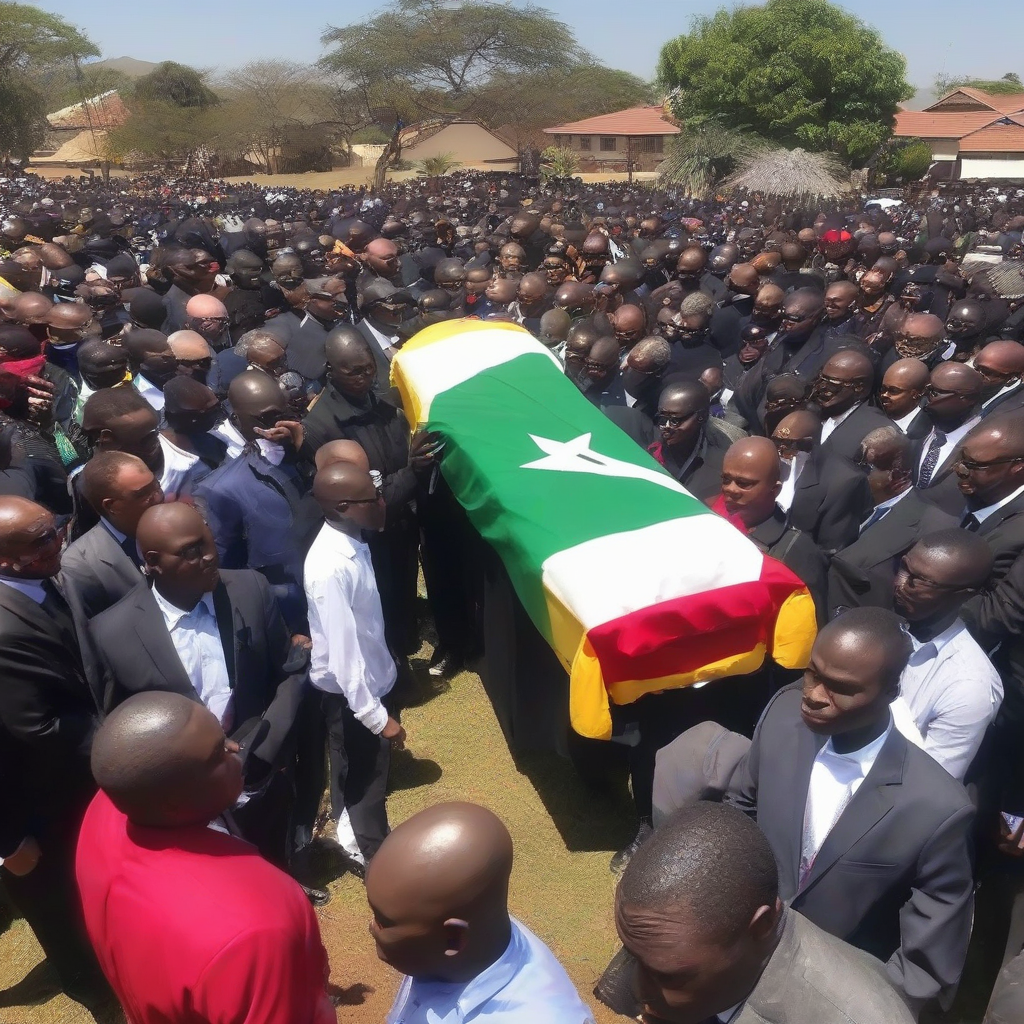
The controversy surfaced ahead of Ntshingila’s funeral, held at Johannesburg’s Westpark Cemetery, and quickly spilled into the public domain via social media and competing statements from party figures. Ndhlela alleged that he and Zuma-Sambudla were explicitly told their presence was unwelcome and were warned of potential violence if they attended.
“We received a call. The party spokesperson called the head of communications, who then called Dudu and said we must not attend because they don’t want us there and that we would be removed violently,” Ndhlela said.
Ndhlela claimed that the instruction originated from recently appointed MKP spokesperson Sifiso Mahlangu and was conveyed through the head of communications, Sipho Tyira. He attributed the hostility to internal political tensions, stating:
“The problem is that there are people who have recently come on board who are not happy with the relationship between Dudu and myself. They are fighting us, which is expected in a political environment.”
The dispute unfolded as the MKP, one of the newer entrants to South Africa’s opposition benches, seeks to consolidate its position in Parliament and shape its internal hierarchy ahead of critical legislative negotiations and committee assignments.
Disputed Claims and Personal Accusations
The friction was compounded by a series of unsubstantiated personal allegations aimed at Zuma-Sambudla and Ndhlela, raising questions about how far internal party battles would intrude into private grief. Sources close to the matter indicated that Zuma-Sambudla had been accused of interfering with Ntshingila’s personal belongings and bank cards.
Simultaneously, Ndhlela faced accusations that he had spread rumors suggesting Ntshingila’s illness was the result of poisoning.
Ndhlela strongly denied those claims, questioning how he could have made such allegations given his lack of relationship with the immediate family. “I never met the father, mother, wife, sisters or anyone else in the family. How could I have made those allegations?” he said.
Sipho Tyira flatly denied issuing any orders to bar the two individuals from the services.
“There is no story here. You must ask him which day I called and how I communicated such a message,” Tyira said. “Generally, in matters involving funerals and death, because they are sensitive and involve families and children, I do not involve myself in sensationalism.”
The competing versions underscore the absence of a unified communications line inside the MKP, a vulnerability for a party that has rapidly gained visibility and now operates within the formal structures of the National Assembly and its rules-based party-caucus system.
Family Divisions and Resolution
The dispute revealed a divide within Ntshingila’s family that mirrored, and in some instances was amplified by, MKP’s internal contestations. His maternal relatives, who use the surname Kubheka, publicly supported the attendance of Zuma-Sambudla and Ndhlela.
Pule Kubheka, a cousin of the deceased acting as spokesperson for the maternal family, issued a statement defending the pair.
“Some Leaders Have Made It Their Full Time Job To Try And Deal With @NhlamuloNdhlela And I, Even In Our Time Of Grief.”
Kubheka stated that the family was disturbed by reports that the two had been sidelined or discouraged from participating in the events. He described Zuma-Sambudla and Ndhlela as individuals who “stood with the family during our darkest hours.”
Speaking telephonically, Kubheka confirmed that the matter had been resolved and both individuals attended the memorial service at the Johannesburg City Hall. However, he criticized the use of family dynamics for political gain.
“Sometimes politicians take advantage of family dynamics and disagreements to advance their own agendas,” Kubheka said. “I felt compelled to issue a statement because I could see some people trying to politicise the circumstances and use Duduzile Zuma and Nhlamulo against Muzi.”
The episode has raised broader concerns about how the MKP manages internal conflict and public accountability at a time when its representatives, including members serving on sensitive oversight bodies, are expected to operate within South Africa’s constitutional democratic framework, anchored by the Constitution of the Republic of South Africa.
Neither Zuma-Sambudla nor Sifiso Mahlangu responded to requests for comment. Attempts to obtain statements from members of Ntshingila’s paternal family were unsuccessful.
