
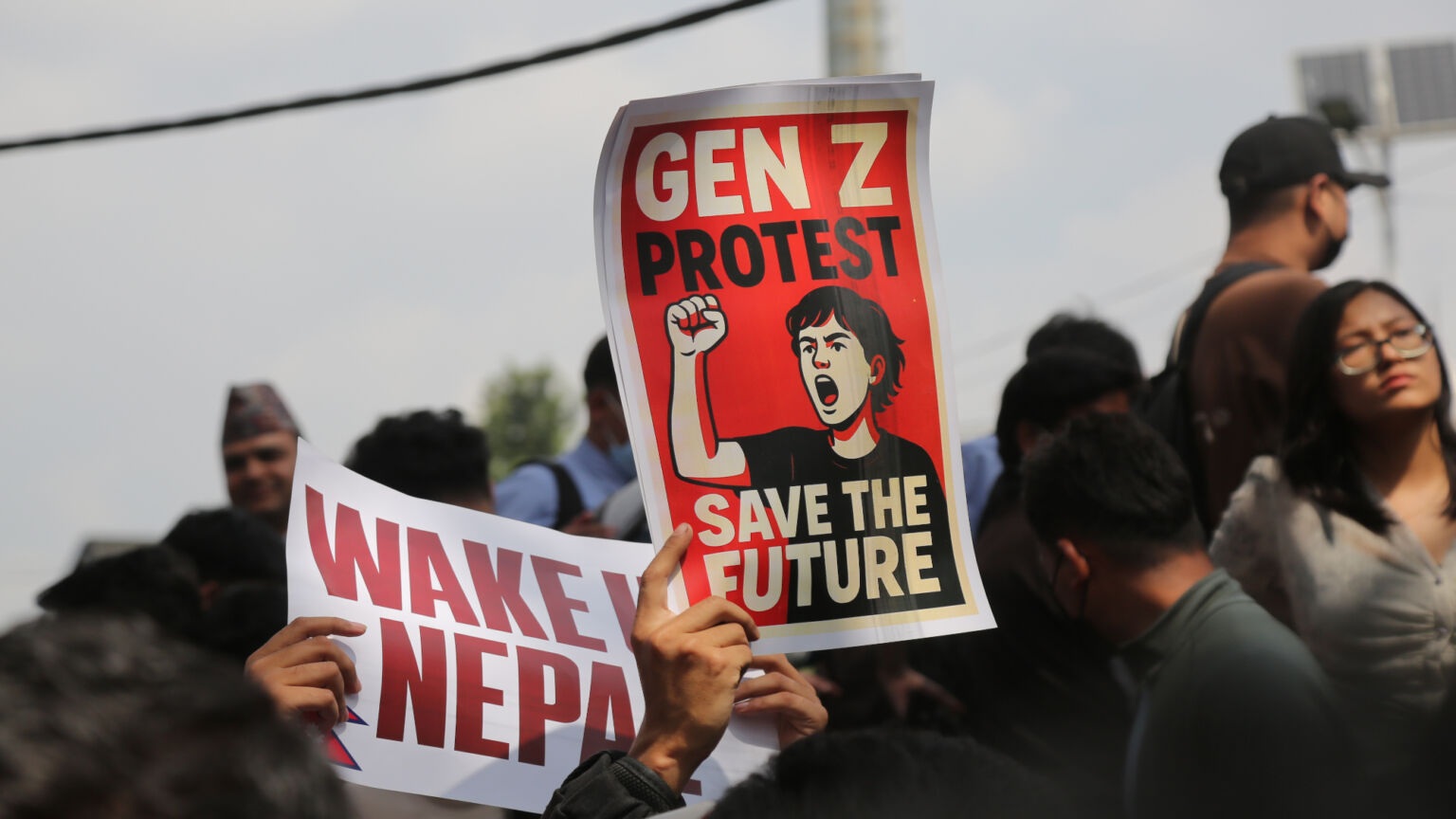
JAKARTA – A coordinated surge of youth-led uprisings has swept across South Asia, Africa, and Latin America since the autumn of 2025, signaling a global shift in how Generation Z organizes against state authority. While the triggers vary by nation, the movements are unified by a consistent set of grievances: systemic political corruption, economic exclusion, and escalating police repression.
This emerging “Gen Z populism” represents a departure from traditional ideological conflicts, replacing party-line politics with a digitally coordinated rebellion against what protesters describe as an unaccountable global political class. The volatility is increasingly linked to a “youth bulge” in developing nations-where a disproportionately large young population faces a shrinking job market-creating a combustible demographic environment. For governments already struggling to deliver on constitutional promises of equal opportunity and social protection, the uprisings amount to a rolling, youth-led stress test of national political systems.
The Iconography of Liberation
In South Asia and Latin America, these protests have adopted a surprising and unified visual language: the pirate flag from the manga and anime series One Piece. Created by Eiichiro Oda, the series depicts a world where pirates fight a corrupt and oppressive “World Government” to secure freedom, offering a ready-made narrative of resistance against distant, self-serving authority.
Protesters have repurposed this fictional symbol to mirror their own reality. In Manila, 23-year-old Eugero Vincent Liberato stated: “Even though we have different languages and cultures, we speak the same language of oppression… that we should always fight for the future we deserve.” The flag functions as a portable manifesto for a generation that grew up online: instantly recognizable across borders, detached from any formal party brand, and easily reproduced on banners, shirts, and profile pictures.
The movement gained significant momentum in Indonesia in late August 2025. The catalyst was the revelation that Indonesian Members of Parliament were slated to receive a monthly housing allowance of approximately $3,000-roughly ten times the minimum wage in Jakarta.
This luxury came at a moment of acute crisis for the government’s flagship free-school-meals programme, designed to combat childhood stunting. By 2025, the programme had collapsed into chaos, with contaminated meals poisoning more than 9,000 children and resulting in at least one death. For many young Indonesians, the juxtaposition of lavish allowances for lawmakers and failing basic services crystallized a wider perception: that state resources are being captured by elites while constitutional social rights remain undelivered.
Collapse of Governance in Nepal and the Philippines
The instability spread rapidly to Nepal, where protests erupted on September 4, 2025. Initially triggered by the government’s decision to block several social media platforms to curb “misuse,” the demonstrations quickly escalated into a broader revolt against elite impunity and what protesters saw as a systematic attempt to shut down digital spaces that had become de facto public squares.
Student-led crowds stormed and set fire to government buildings in Kathmandu, including the prime minister’s office complex. The ensuing crackdown was lethal; 76 people were killed and more than 2,500 injured before the government was forced from office and Prime Minister Khadga Prasad Oli was toppled.
The underlying cause in Nepal was a chronic failure of institutional stability. The nation has seen 32 governments since 1990 and currently ranks 109 out of 182 on Transparency International’s corruption index. With youth unemployment at 21 per cent-the highest in South and Southeast Asia-approximately 1,500 people flee the country daily in search of work. That exodus has turned labor migration into a safety valve for the political class, even as it hollows out the promise of domestic development.
“Politicians are unchanged, unaccountable and corrupt,” explained 22-year-old protester Ranjana Kami.
Similar patterns emerged in the Philippines on September 21, 2025. Tens of thousands of young demonstrators flooded Manila, Cebu, and Davao, utilizing TikTok, Facebook, and Telegram to organize rallies against a multibillion-dollar flood-control embezzlement scandal. At Luneta Park and the EDSA shrine-historic touchstones of the country’s 1986 People Power Revolution-the One Piece flag was again prominent, symbolizing a youth-led rejection of elite impunity and a sense that earlier democratic gains have been quietly reversed.
Beneath the surface, the protests also challenged the state’s use of emergency powers and anti-disinformation rules to police online content. Activists argued that, in practice, these measures were blurring the line between legitimate regulation and political censorship, deepening a crisis of legitimacy for institutions charged with safeguarding the rule of law.
Continental Contagion: Latin America and Africa
The wave of unrest extended to Latin America in late September 2025. In Peru, corruption scandals sparked youth-led protests that met with state violence, including the use of rubber pellets and tear gas, leaving one dead and hundreds injured. Street organizers framed their demands not only as a call for clean government, but for a wholesale reset of the social contract, from university funding to public transport.
Tensions peaked again on January 28, 2026, when students from the National University of San Marcos and public-transport workers marched on the national congress, claiming the state had “normalised corruption and extortion.” That charge went beyond any single scandal: protesters accused legislators of using their control over public contracts and oversight bodies to entrench a culture of impunity.
In Mexico, the assassination of Uruapan mayor Carlos Manzo-linked to the Jalisco New Generation Cartel (CJNG)-served as a flashpoint. Protesters marched under One Piece flags, confronting security forces to voice anger at President Claudia Sheinbaum’s government over its failure to dismantle organized crime and protect local officeholders. For many young Mexicans, the killing exposed how deeply cartel violence has penetrated municipal governance, undermining the authority of elected officials and hollowing out the state’s monopoly on force.
Across the Indian Ocean, Madagascar saw protests in late 2025 triggered by rolling blackouts and water shortages. Activists demanded a “radical change of the system” to end the “corruption and oppression of the poorest,” adapting the One Piece flag into a localized Malagasy version. Their campaign drew attention to failures in infrastructure planning and regulatory oversight, as drought and mismanagement converged to leave entire districts without reliable electricity or clean water.
In Africa, the unrest has been driven by severe demographic pressures colliding with entrenched political systems. In Uganda, violent protests followed a disputed presidential election on January 15, 2026. Mobilized by popstar Bobi Wine, youth in their teens and early twenties clashed with police in Kampala.
Wine framed the struggle as a battle against a thief of opportunity: “Corruption is Uganda’s greatest evil… It is corruption that has stolen the future of the people of Uganda. Many of you… have seen corruption rob all your youthful and useful days.”
The Ugandan crisis is underpinned by a staggering youth unemployment rate of nearly 50 per cent, with 75 per cent of the population under 30. Following the election, 2,000 opposition supporters were detained, and army chief Muhoozi Kainerugaba reported 30 deaths during the crackdown. Human-rights lawyers warned that the government’s reliance on security legislation and public-order regulations to contain dissent was eroding confidence in courts and electoral bodies meant to arbitrate political conflict.
Similar tensions have manifested in Kenya and Morocco. In Kenya, the labor market is unable to absorb the 800,000 young people entering the workforce annually, leading to large-scale protests against tax and price rises in June 2024. Protester Zaha Indimuli noted that TikTok had become a primary tool to “educate them on the why.” Those protests tested the country’s 2010 constitution-celebrated for its devolution and bill of rights-as young Kenyans accused both national and county governments of breaching its guarantees on equitable development and public participation in budgeting.
The Western Parallel
While developed nations lack the “youth bulge” of the Global South, the economic drivers of Gen Z unrest are increasingly present in Europe and North America, raising questions for the future of liberal democracies that have long seen themselves as models of stability.
In the European Union, Eurostat recorded 2.9 million unemployed under-25s as of February 2026, a youth unemployment rate exceeding 15 per cent. A European Parliament survey found that 40 per cent of those aged 16 to 30 cite rising prices as their primary concern. Policymakers in Brussels face a delicate balance: tightening fiscal rules to reassure markets while trying to show that EU institutions can still deliver affordable housing, education, and climate action to a skeptical younger electorate.
The United Kingdom faces a similar crisis of immobility. Between December 2025 and February 2026, 713,000 young people aged 16 to 24 were unemployed. This economic strain is compounded by a housing market where the median home in England costs nearly eight times the median annual earnings, and average graduate debt has climbed to approximately £53,000. For many, the formal guarantees set out in the country’s unwritten constitutional framework and in instruments such as the Human Rights Act 1998 feel increasingly detached from day‑to‑day economic reality.
This economic marginalization has eroded trust in the UK’s political institutions. Prime Minister Keir Starmer has become one of the most unpopular leaders in British history, while Transparency International reports the UK has fallen to its lowest-ever corruption perception score. Ethics codes, ministerial standards, and parliamentary watchdogs-once cited as evidence of British exceptionalism-are now more likely to be invoked by protesters than by the government itself.
Data from Find Out Now suggests a radical shift in voting intentions among under-30s, with 41 per cent intending to vote for the Green Party and significant percentages moving toward Reform UK and Restore Britain. Furthermore, research from Channel 4 indicates that 47 per cent of Gen Z agree that society must be “radically changed through revolution.” The same generation is also experimenting with extra-parliamentary tactics-rent strikes, digital boycotts, and coordinated walkouts-that place additional pressure on already overstretched public institutions.
For global policymakers, the message is uncomfortably consistent. Whether in Jakarta, Kampala, Lima, or London, young people are using the tools of a networked age to challenge what they see as a breach of the basic social contract: that governments tax, borrow, and regulate in exchange for tangible improvements in security and opportunity. The UN Charter commits states to promote “social progress and better standards of life in larger freedom”; protesters argue that promise is being systematically broken.
Global governments currently face a widening gap between youth expectations and institutional delivery, with the economic fallout from the Iran War expected to further strain these tensions throughout the summer of 2026. How leaders respond-through repression, reform, or genuine power-sharing-will determine whether this Gen Z populism becomes a permanent new operating environment for governance, or the opening chapter of a deeper institutional reckoning.
Related reading
