
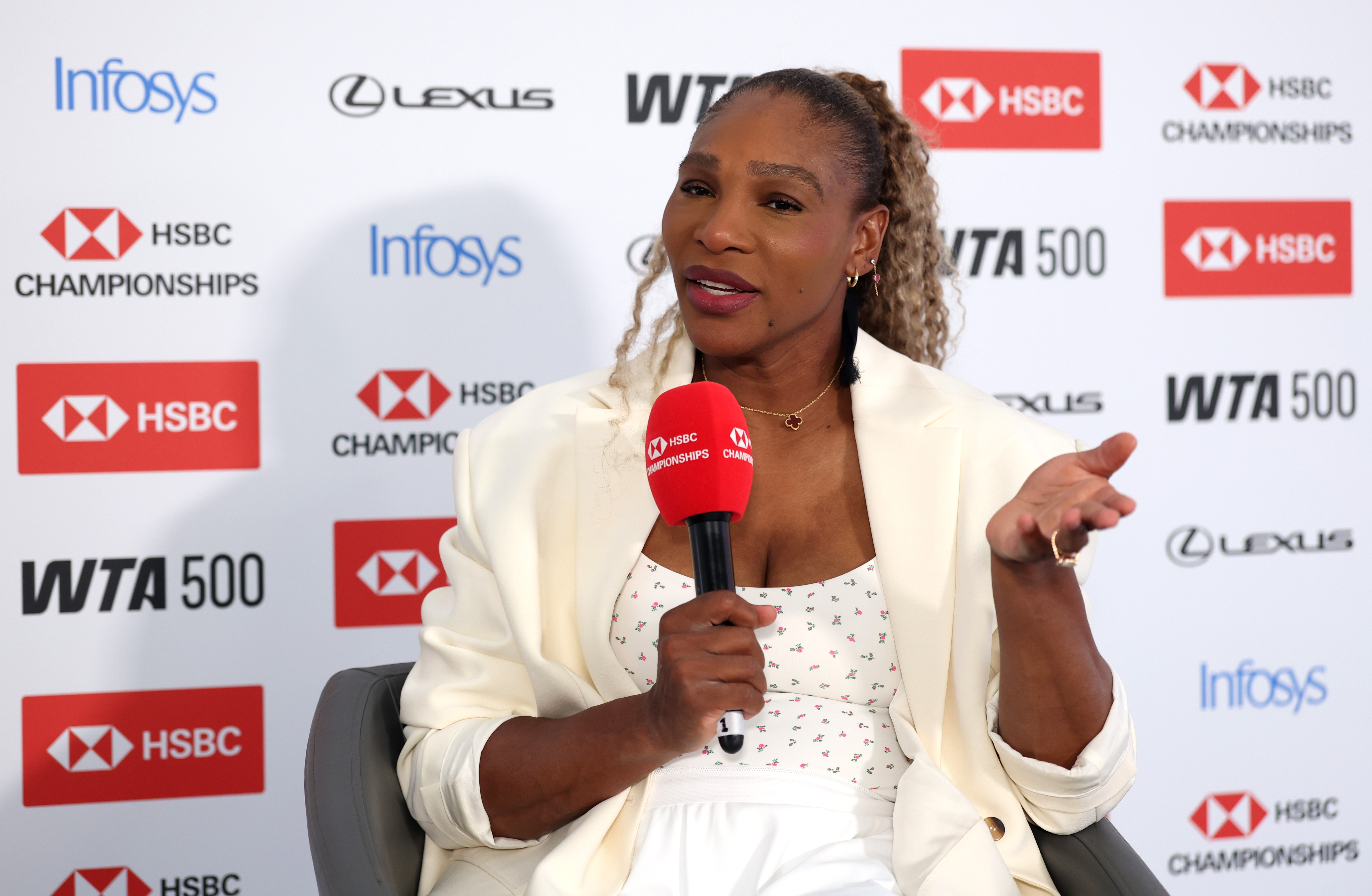
Serena Williams Returns to Competition with Youthful Partnership at Queen’s
The return of Serena Williams to professional tennis at age 44 brings a singular question to the forefront of the sporting conversation: Why? For a 23-time Grand Slam champion whose legacy is already etched in history and who has frequently stated she has “nothing to prove,” the decision to return to the rigors of the tour is unconventional.
When questioned about her motivation, Williams responded with a simple, “Why not?” She noted that while the idea was not on her mind in December, subsequent conversations about various possibilities and the prospect of having fun led her back to the court. Her reappearance also underscores how elite athletes can step away and return under the same global rules framework that governs every professional match, from grassroots to Grand Slams, through the International Tennis Federation’s governance structure.
Beyond the novelty of the return, Williams cited a desire for her daughters-8-year-old Olympia and 2-year-old Adira-to witness the rewards of perseverance and hard work in real time. For Williams, the opportunity to occupy the highest echelon of athletics one last time is an experience she describes as “cool and exciting,” and one that allows her to model resilience, preparation, and public accountability in a heavily regulated global sport.
A Strategic Pairing with Victoria Mboko
As part of her reentry, Williams has opted for a doubles partnership with Victoria Mboko, one of the most promising young talents on the WTA Tour. The 19-year-old World No. 9 and No. 3 seed at Queen’s was recruited via a surprise text message while competing in Strasbourg three weeks ago. For Mboko, the invitation is not just a career milestone but an immediate immersion into the commercial and media pressures that accompany a partnership with one of the most marketable athletes in sport.
The pairing represents a collision of eras. Mboko, who began watching Williams at age six during the 2012 US Open, grew up viewing the champion as an “easy idol” due to her consistent dominance. Conversely, Williams first took note of Mboko last August during a breakout run in Montreal. While ranked No. 85 and entering as a wild card, Mboko captured the title with victories over top-tier opponents including Coco Gauff, Elena Rybakina, and Naomi Osaka.
Williams attributed her interest in Mboko to more than just technical skill, citing the teenager’s “drive” and ability to maintain winning momentum-traits Williams noted reminded her of her own career trajectory. The partnership also offers Mboko an accelerated education in navigating locker-room politics, media scrutiny, and the commercial obligations that come with global stardom-areas where Williams has influenced institutional debates on pay equity and representation for more than two decades.
| Detail | Information |
|---|---|
| Event | Queen’s Club Championships (grass-court warm-up to Wimbledon) |
| Team | Serena Williams & Victoria Mboko |
| First Round Opponents | Nicole Melichar-Martinez & Erin Routliffe (No. 3 seeds) |
| Upcoming Schedule | Berlin (wild card accepted into the grass-court event) |
Current Form and Competitive Outlook
The use of doubles as a comeback vehicle allows Williams to regain match rhythm with less physical demand than the singles game, while still subjecting her to full tour conditions-from anti-doping oversight to broadcast commitments and sponsor appearances. While Williams described her current feeling as “riding a bike… up a hill,” her peers suggest her form remains formidable. Mboko highlighted Williams’ “clean ball striking” and fitness, suggesting her innate timing remains intact despite the hiatus.
Amanda Anisimova, the No. 2 seed and last year’s runner-up, echoed this sentiment after observing Williams during warm-ups on Sunday, noting that the champion “looks like she’s playing incredibly.” For tournament organizers, the early impressions underline the competitive credibility of the comeback, reinforcing that this is not merely a ceremonial farewell but a genuine attempt to re-enter the upper tier of competition.
Regarding a potential return to singles, Williams remained non-committal, stating that while it is currently a “no,” she may need further training to reach that level. For now, she is positioning doubles as a controlled environment in which to test her body under match stress and reacquaint herself with the week-in, week-out logistics of tour life. Whether the doubles partnership with Mboko continues beyond this week remains undecided, with Mboko noting that the decision rests with Williams and will likely turn on how the pair balance performance ambitions against their individual singles schedules.
A Shift in Competitive Philosophy
Perhaps the most significant evolution in Williams’ return is her psychological approach. Known throughout her career as one of the most ferocious competitors in sports history, Williams now claims, “I don’t need to win.”
This shift indicates a transition from a career defined by the pursuit of titles to one defined by the enjoyment of the sport and the platform it provides. Williams acknowledged that embracing this mindset is a “work in progress,” but emphasized that with her extensive list of achievements, she now views the competition as “just a game” with nothing left to prove and nothing to lose. For a generation of younger players watching from inside a system shaped in part by Williams’ advocacy on prize money, maternity protections, and athlete welfare, her late-career return is as much a commentary on longevity and institutional change as it is on the outcome of any one match at Queen’s.
Keep reading
