
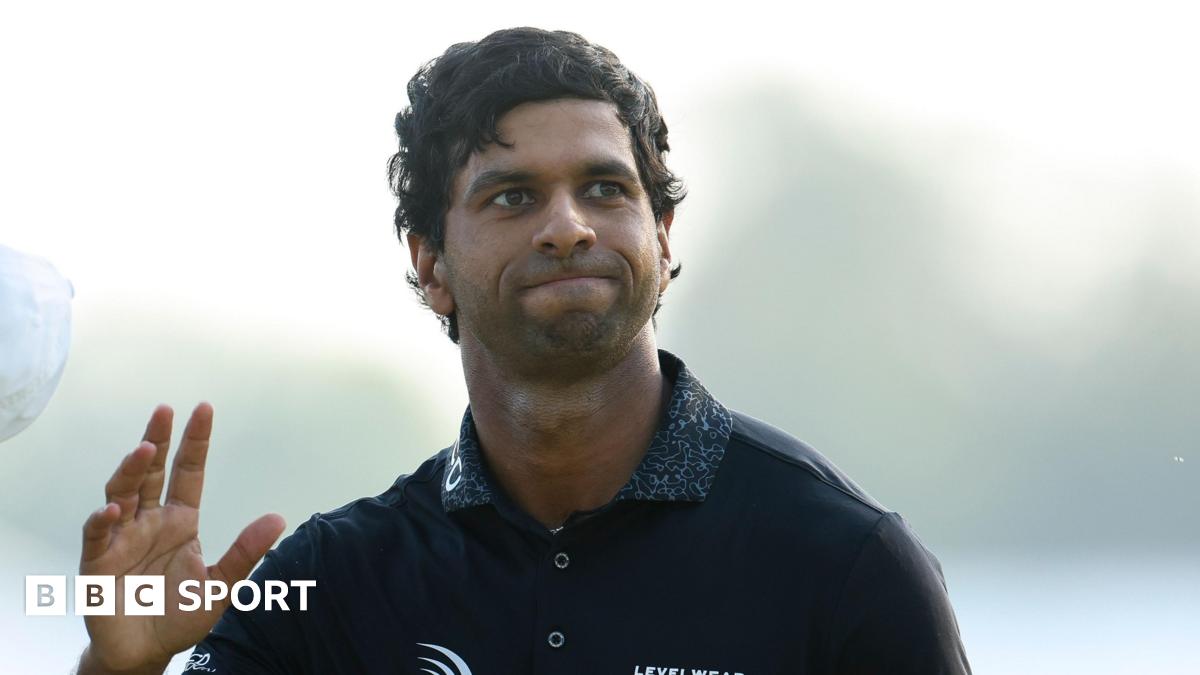
Rai Secures Major Championship with Disciplined Performance in Pennsylvania
A calculated approach and unwavering composure have propelled Aaron Rai to a career-defining victory at the PGA Championship in Pennsylvania, culminating in the lifting of the Wanamaker Trophy. In a tournament defined by penal conditions and strategic demands, Rai’s ability to maintain discipline while others struggled proved to be the decisive factor.
The victory marks a significant escalation in Rai’s professional trajectory. Having secured a win at the DP World Tour’s Abu Dhabi Championship in November, this first major title establishes the Englishman as a primary competitor on the global stage, granting him the multi-year exemptions, ranking points, and invitation status that come with being a major champion on both the PGA Tour and the European circuit.
Strategic Execution Under Pressure
While many competitors struggled with the course layout at the historic Pennsylvanian venue, Rai utilized a conservative but effective strategy rooted in patience rather than power. The course presented several challenges, including severely sloped, firm greens and thick rough that heavily penalized errant shots, placing a premium on positional play and disciplined course management.
Rai’s success was anchored in his precision off the tee. By finishing the week as the fourth-best player in fairway accuracy, he largely avoided the penal rough that hindered his rivals, allowing him to approach tucked pins from the short grass and to navigate the course with far greater consistency. That strategic edge, reinforced by sound decision-making from his caddie and coaching team, gave him the margin he needed as the pressure intensified.
The momentum shifted decisively on the back nine, where Rai translated control into separation:
- Holes 11 and 13: Birdies on these holes pushed Rai to seven under, including a critical up-and-down from a front bunker on the 13th that preserved his momentum just as the leaders were bunching.
- Hole 16: A tap-in birdie on the par five extended his lead, the product of a lay-up to his preferred yardage rather than an aggressive attempt to reach the green in two.
- Closing stretch: A long, challenging putt on the final holes eventually moved him three shots clear of the field and allowed him to play the last safely, rather than chasing additional birdies.
The Competitive Landscape
The leaderboard remained tight throughout the final stages, with established major champions and emerging contenders all within reach. Former world number one Justin Thomas posted an early target with a five-under 65, remaining in the clubhouse for a significant period in hopes that shifting weather conditions-particularly a projected late-afternoon breeze-would assist his bid for the title by making scoring tougher for the leaders.
However, the expected increase in wind did not fully materialize. While Thomas waited, a group of challengers remained within striking distance, including Jon Rahm and Alex Smalley, though none could match Rai’s late-round surge or his refusal to offer the course an easy mistake. The closing stretch evolved into a test of who could best manage risk rather than simply who could go low.
| Player | Status/Note |
|---|---|
| Aaron Rai | Champion (Wanamaker Trophy) |
| Jon Rahm / Alex Smalley | Closed ahead of the group tied at five under |
| Justin Thomas | Five under (final-round 65, early clubhouse target) |
| Ludvig Åberg | Five under, contended but stalled late |
| Matthias Schmid | Five under, part of the chasing pack |
Mental Fortitude and Technical Precision
Throughout the closing holes, Rai remained notably stoic, a temperament that allowed him to execute high-pressure shots without visible emotion. In conditions where a single misjudgment around the greens could quickly lead to double bogey, that calm was as valuable as any technical strength. This mental resilience was most evident during his final approach and the putt that followed, where he successfully negotiated a contour-laden line that appeared nearly impossible to the gallery.
Reflecting on the shot after the conclusion of the tournament, Rai noted that he was not intentionally trying to hole the putt but relied on visual cues and his rehearsed routine rather than the moment’s magnitude.
“The shadow of the pin gave a really nice line for the last 10 feet so that helped with the visual,” Rai said. “It just tracked really well – it was amazing to see it go in.”
The victory is sanctioned under the framework of the PGA of America, the governing body that owns and operates the PGA Championship and sets its qualification and exemption criteria. Beyond the immediate celebrations, Rai’s win reshapes his playing schedule and status for years to come: invitations to the other men’s majors, improved priority ranking on tour, and a strengthened voice in the wider conversation about how elite events are set up and regulated.
For golf’s institutional stakeholders-from tournament organizers to policymakers overseeing elite sport-Rai’s performance underscores the competitive value of championships that reward accuracy, patience, and decision-making as much as raw power. In Pennsylvania, under one of the sport’s most established governance structures, a disciplined game plan was enough not only to survive but to win a major.
Keep reading
