
Haaland’s late strike sends Norway into historic World Cup clash with Brazil
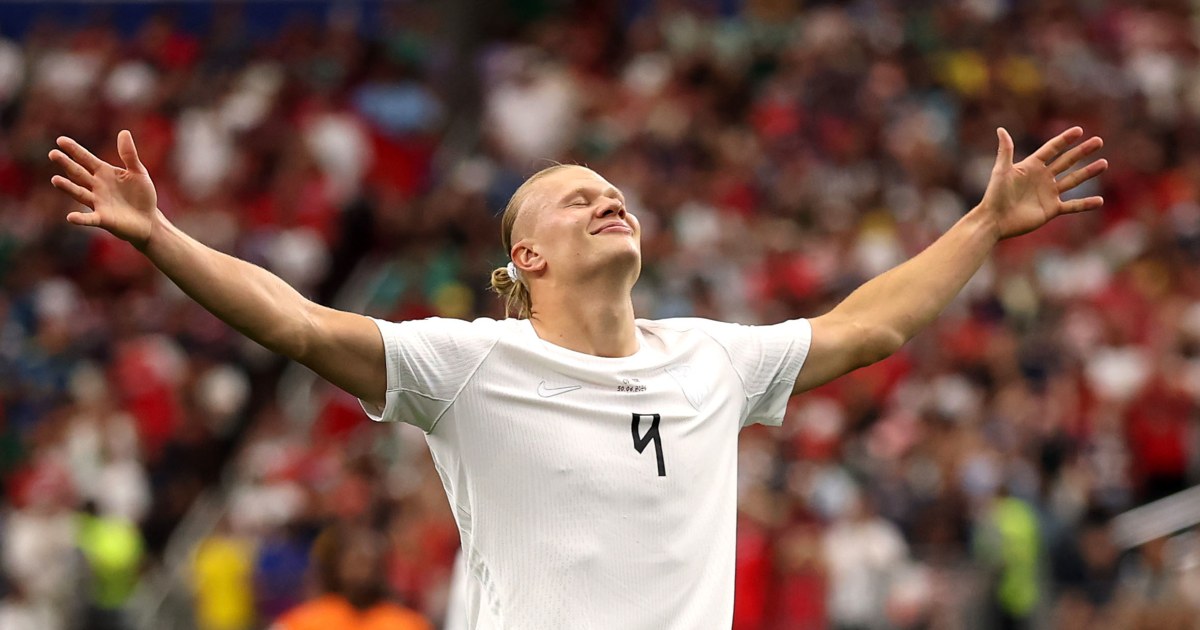
ARLINGTON, Texas – Erling Haaland savored the moment after Norway won a knockout game at the World Cup for the first time, a celebration that included a horned helmet atop his head and again sitting on the field with teammates to do the Viking Row in synch with their red-clad fans.
“This is unbelievable. This is history,” Haaland said on the field after the game.
Late winner crowns Norway’s return to the World Cup stage
A slight tap from Haaland’s left foot in the 86th minute was the difference as Norway beat Ivory Coast 2-1 on Tuesday, setting up another World Cup match against five-time champion Brazil – 28 years after a victory that many consider the greatest ever for the Norwegians.
For now, they prefer to enjoy their latest accomplishment.
“What we’re going to think about now is to enjoy the win today. We’re really happy and proud of ourselves,” said Martin Odeegaard, the team’s captain who banged the drum to set the pace for the postgame row. “Hopefully we can keep dreaming and keep believing and keep performing like we did.”
Antonio Nusa scored the opening goal in the first half with a curling kick for Norway, which in its fourth World Cup will next play in the round of 16 against Brazil on Sunday at MetLife Stadium in East Rutherford, New Jersey.

Lars Baron / Getty Images
“This is really a dream come true,” Nusa said in translated remarks.
From 1998 memories to 2026 opportunity
Norway is in its first World Cup since that 1998 appearance, when the team got to the knockout round only after scoring goals in the 83rd and 89th minutes for an incredible 2-1 comeback win over then-reigning World Cup champion Brazil in the group finale.
That result in France has long stood as a defining night for Norwegian football. The meeting with Brazil at MetLife Stadium now gives a new generation – led by Haaland and Odeegaard – a chance to write its own chapter against the same global powerhouse on a World Cup knockout stage.
How the round-of-32 tie unfolded
- Venue: Arlington, Texas
- Fixture: Norway 2, Ivory Coast 1
- Norway goals: Antonio Nusa (39th minute), Erling Haaland (86th minute)
- Ivory Coast goal: Amad Diallo (74th minute)
Amad Diallo, who had prevented Norway from taking a two-goal lead earlier in the second half, evened the match for Ivory Coast with a left-footed kick in the 74th minute.
Even after Haaland’s go-ahead goal, his Norway-record 60th in 53 matches, Ivory Coast kept pressing and had a chance to equalize with a direct free kick by Diallo in the sixth minute of stoppage time. Orjan Nyland made a leaping stop, the last of his four saves, when he deflected the ball away as he extended his left hand across his body.
“After their equalizer, it was easy to panic. But we got our players in the right position and managed to play our game again,” Norway coach Ståle Solbakken said.
Haaland decisive again in a low-touch performance
Haaland’s 27 touches were the fewest of any Norway player who played the full match, but he was open after three defenders converged when Patrick Berg moved into the penalty area with the ball before making a quick pass. It was a slow roll over the line after coming off the foot of Haaland, who lunged forward as if he might have to kick it again.
It was Haaland’s fifth goal in three games at this year’s tournament. That is one behind Lionel Messi, who has six for Argentina and scored three of those in two group games at the home of the NFL’s Dallas Cowboys.

Alex Slitz / Getty Images
Haaland, who won the Golden Boot in the Premier League last season with 27 goals for Manchester City, has scored in 13 straight competitive international games – a total of 25 goals in that span.
For Norway, that run of form from its leading striker is central to its ability to compete deep into a World Cup tournament for the first time under the current expanded format overseen by the global laws and regulations set out by FIFA. With knockout ties decided on a single match, sustained scoring from a centre-forward of Haaland’s profile significantly raises the team’s ceiling in the competition.
Ivory Coast’s youthful side falls just short
The youthful Elephants, ranked 31st by FIFA, had never before won twice in the same World Cup. This was the fourth World Cup appearance for the West African nation, the same as Norway.
“We are proud for what we achieved,” Diallo said. “But a big disappointment because we knew we have quality in the team, we have players that can make a difference anytime.”
Ivory Coast’s campaign, built around emerging talents such as Diallo and backed by experienced figures like Nicolas Pepe, underlined the depth now present in African men’s football. Pushing a European side led by one of the world’s most prolific forwards to the final seconds of stoppage time reinforces the Elephants’ case for continued investment and faith in their current generation ahead of future continental and global qualifying cycles.
Nusa’s breakthrough and Norway’s attacking balance
Nusa scored his first World Cup goal in the 39th minute when he took a few strides past the left corner of the penalty area and sent a right-footed kick between two defenders toward the far post.
Ivory Coast goalkeeper Yahia Fofana made a diving attempt at the ball that was just beyond his extended reach, and he was still in air when he turned his head back to see the ball curl into the net. It was Nusa’s ninth international goal in 28 games for Norway.
The winger’s contribution is particularly significant for a Norway side often framed around Haaland’s finishing. With Nusa providing a consistent threat from wide areas and adding end product at a World Cup, Norway gains a second focal point in attack, making it harder for defenses to commit multiple players solely to tracking Haaland’s movement in the penalty area.
Diallo’s influence and Nyland’s decisive stop
Diallo evened the score at 1-1 after a give-and-go with Nicolas Pepe, who had scored both Ivory Coast goals in its previous game and was stopped by Nyland in the 55th minute. Diallo found space for his left-footed blast.
That came only about eight minutes after Torbjorn Heggen had a shot for Norway that was deflected away by Diallo, who was right next to his keeper.
In the closing stages, with Ivory Coast chasing a second equalizer, Nyland’s leaping save from Diallo’s stoppage-time free kick effectively settled the contest. In tournament football, where goal difference no longer matters and single moments decide advancement, that intervention carries the same weight as a winning goal for a team seeking to establish itself among the last 16.
Nusa’s yellow card in stoppage time before the half set up a free kick by Pepe, but the ensuing header went left of the post.
Brazil rematch and what it means for Norway
The round-of-16 pairing with Brazil at MetLife Stadium now places Norway in one of the marquee fixtures of the knockout phase. For the South Americans, it is a chance to reassert their status against an opponent that stunned them in 1998. For Norway, it is an opportunity to test an emerging core, built around Haaland, Odeegaard and Nusa, against a nation that measures success in World Cup titles.
In a World Cup structure where each knockout round dictates both prestige and future seeding, a win over Brazil would not only extend Norway’s stay in the United States but also reshape perceptions of what this generation can achieve on the global stage, influencing expectations heading into future qualifying campaigns and major tournaments.
