
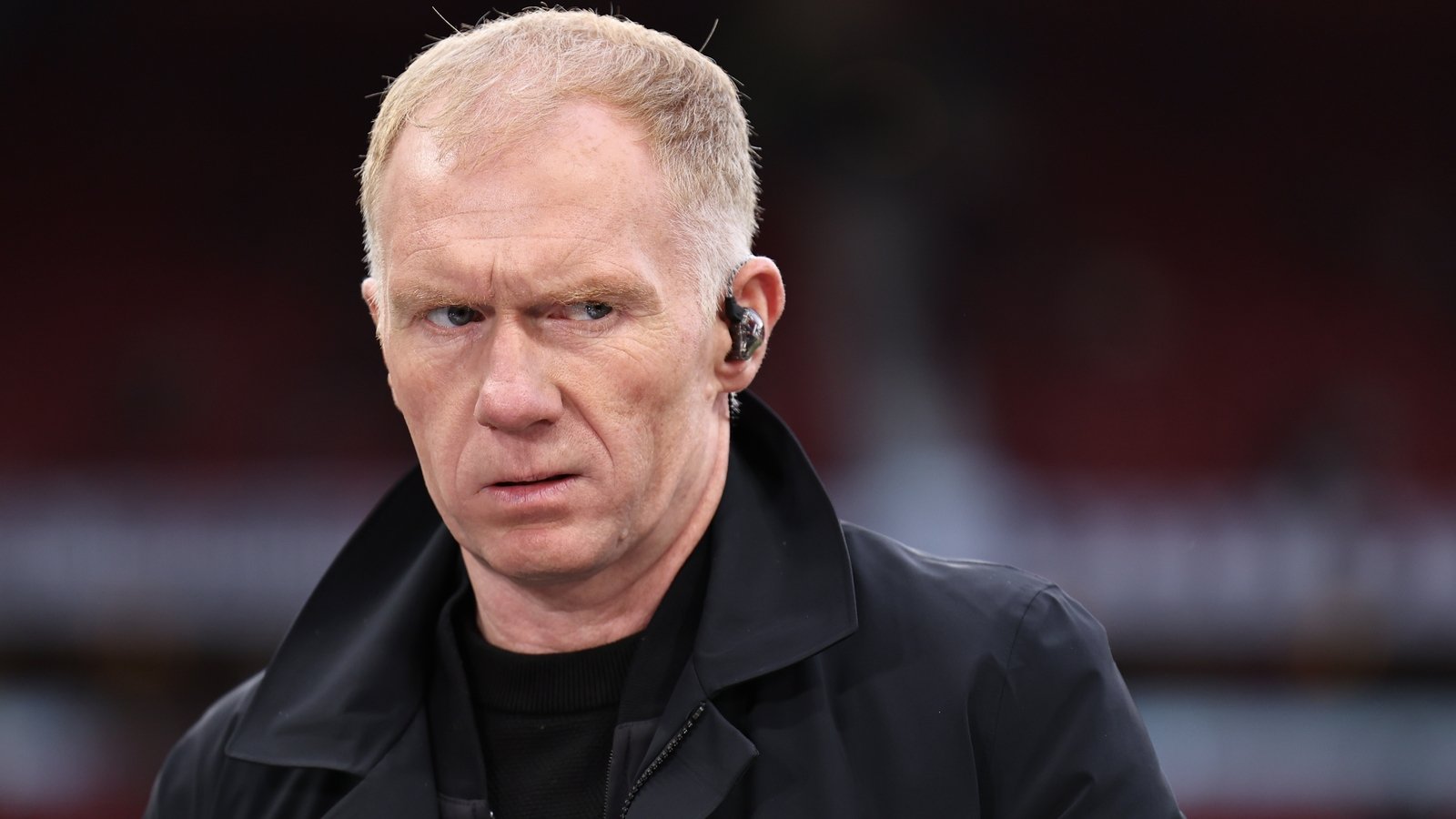
Scholes accepts poor wording but declines apology to Martinez as debate intensifies after derby
Paul Scholes says his phrasing about Lisandro Martinez “probably wasn’t great” but he will not apologise to the Manchester United defender, reiterating his view that a head‑to‑head with Erling Haaland represents a physical mismatch. The former United and England midfielder revisited the topic after the recent Manchester derby, which United won 2-0 at Old Trafford, a result that prompted a forceful response from Martinez and sharpened scrutiny on how club legends publicly assess current players.
From podcast remark to derby flashpoint
Scholes and former team‑mate Nicky Butt had suggested on The Good, The Bad and The Football podcast that Manchester City’s Haaland would “pick up and run with” Martinez because of their size difference. The comments, widely shared on social media, tapped into a long‑running debate about whether Martinez’s profile suits the physical demands of English football. Martinez pushed back following United’s 2-0 victory over City, inviting Scholes to discuss the comments face‑to‑face at his house and insisting that his performances should be judged in context of the team’s overall defensive structure. Scholes addressed the reaction again on The Overlap Fan Debate, noting the volume of feedback and the scrutiny that follows ex‑players when they go public with strong opinions on high‑visibility platforms.
Clarification without concession
Scholes acknowledged that he and Butt could have expressed themselves better: “Look, what we said probably wasn’t great when you look back… the way we described probably it wasn’t great and probably shouldn’t have done that.” He stopped short of an apology, adding that his core point about physical profiles still stands and that, in his view, Martinez will continue to face size‑related challenges against the Premier League’s most imposing forwards. He also praised Martinez’s display in the derby-“he was brilliant”-while challenging the centre‑back to reproduce that level consistently across the run‑in, rather than allowing one showcase performance to close the argument.
- “I’m not apologising for it.”
- “Physically, it’s a mismatch.”
- “He had a great game against City… we have got to see that now again for the rest of the season.”
Form, partnerships and selection pressure
Scholes cited recent outings against Brighton and Burnley to argue that one outstanding performance should be followed by a sustained run, highlighting Harry Maguire’s contribution alongside Martinez in the derby as evidence that centre‑back partnerships, rather than individuals alone, shape defensive resilience. That emphasis on consistency reflects a broader reality: centre‑backs are judged not only on single high‑profile markers like the Manchester derby but on week‑to‑week reliability in a league where aerial duels, transitions and tempo are unforgiving.
In England, the derby sits inside a campaign where top‑end results and defensive records directly shape positioning in the Premier League, the competition whose rules and governance are set out in its own Handbook and by the wider framework of the game under the Football Association’s Laws and regulations. Within that structure, defensive statistics feed into strategic decisions on recruitment, contract renewals and the manager’s authority over selection.
Carrick comment points to United’s bigger equation
Looking beyond the Martinez debate, Scholes said former team‑mate Michael Carrick would come into contention for the job on a longer‑term basis if he can deliver a top‑four finish, a benchmark that would restore regular Champions League football and the revenues and reputational leverage that come with it. He noted the impact of players returning from the African Cup of Nations on recent selection options and warned that strong results can create expectations that are difficult to row back, referencing the pressure that built during Ole Gunnar Solskjær’s tenure once initial gains reset what fans and the club’s hierarchy considered acceptable.
For United’s leadership, those dynamics matter. A manager’s use of Martinez in key fixtures, and the club’s response to external criticism from figures such as Scholes, will be read as signals about how aligned the football department is on style of play, recruitment priorities and the balance between physical attributes and technical security at the back.
Why the conversation travels
This is a familiar football argument reframed by a derby result: how much weight to place on physical match‑ups versus tactical structure and timing. Public critique from club greats often amplifies the stakes for current players, particularly central defenders tasked with managing dominant strikers in a league that sells itself globally on speed and physical intensity. It also feeds into a wider conversation about pundit responsibility and the informal influence of former players on club culture and decision‑making, even when they hold no formal role.
For United, the discourse around Martinez’s profile intersects with immediate competitive aims. A sustained defensive platform would underpin a push for the upper places-traditionally the threshold for elite European qualification in England-while any managerial decision will inevitably be judged against that same benchmark of league position, defensive record and performance in marquee fixtures such as the Manchester derby.
The bottom line
Scholes has softened the delivery but not the message. He credits Martinez’s derby performance yet challenges him to repeat it, name‑checking Maguire’s role and floating Carrick’s prospects if a top‑four surge materialises. The club’s governance structures and competitive incentives mean those questions are not only about pride between generations but about how United defines the profile of its defence, the authority of its manager and the standards by which this season will be judged. The football will decide the rest; in the meantime, one comment on a podcast has become a season‑spanning test of consistency for player and club alike.
Keep reading
