
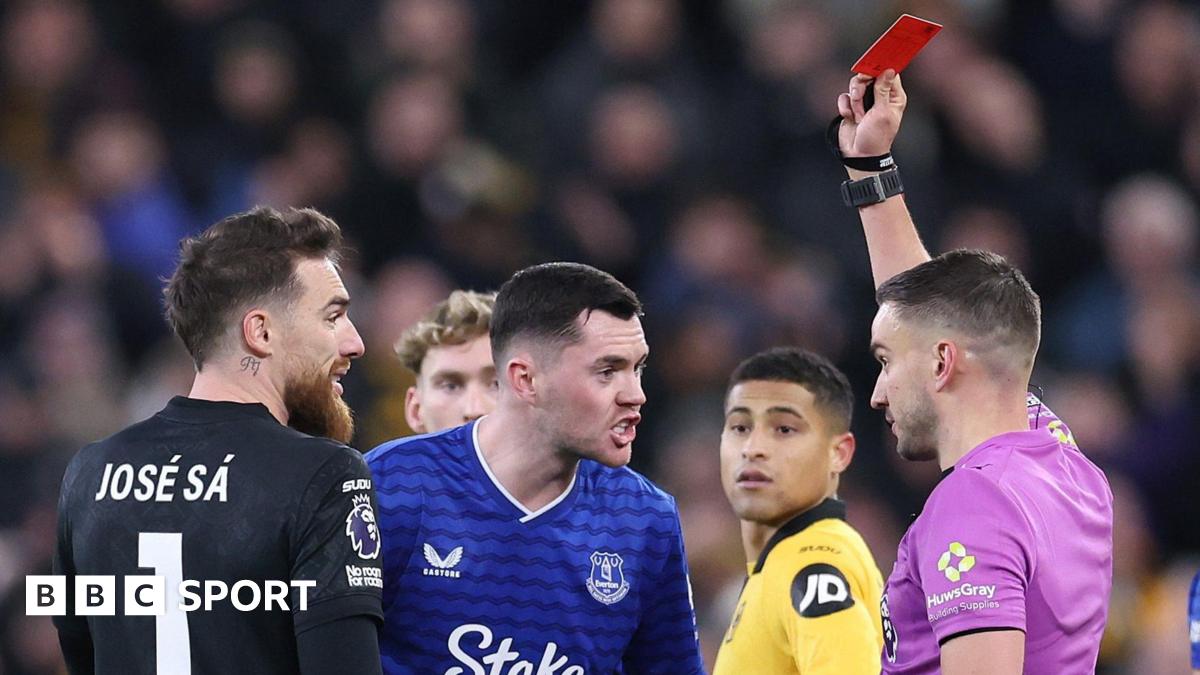
Everton’s Keane has violent conduct ban upheld as hair‑pulling sits under broader rules
Hair‑pulling is not specifically listed in football’s Laws of the Game, but it is treated as violent conduct because it is not considered a natural action when challenging for the ball. Everton’s appeal against a three‑game suspension for Michael Keane has been rejected by an independent disciplinary panel, keeping the standard sanction in place and closing off any immediate route for further challenge.
How the laws frame the incident
The global framework that governs matches classifies violent conduct broadly, covering actions deemed brutal, aggressive or unnecessary to play. While hair‑pulling is not named explicitly, it is captured by that wider definition and is therefore punishable by dismissal and subsequent suspension under domestic regulations. The principles are set out in the International Football Association Board’s Laws of the Game, which national associations such as the Football Association then incorporate into their own disciplinary codes.
In practice, officials are guided to distinguish between actions that are part of a bona fide attempt to win the ball and those that are clearly outside normal football movements. Grabbing an opponent’s hair, even in the context of an aerial challenge, is routinely interpreted as the latter, bringing it under the umbrella of violent conduct rather than careless or reckless play.
Everton’s position
Everton said: “We appealed in the firm belief the incident did not meet the threshold for violent conduct as defined in the rules, and that the action was neither forceful nor intentional.
“Our appeal was also lodged in support of Michael Keane, a player who plays the game with the highest ethical standards and who, prior to Wednesday, had never been dismissed for violent conduct in his career.
“It is our firm belief that the severity of the three-game suspension is clearly excessive, and we are surprised and disappointed that this point of appeal has also been rejected.”
The club’s statement underlines a tension familiar in disciplinary disputes: the difference between how a player and coaching staff experience a split‑second incident and how it is later assessed against written thresholds and precedent. By stressing Keane’s record and intent, Everton sought to frame the episode as an isolated, accidental contact rather than a deliberate act of aggression.
Why the decision matters competitively
A three‑match absence at this stage of the campaign affects selection, training rhythm and in‑game management. For Everton, it reduces flexibility in matchday rotations and may force adjustments in set‑piece assignments, pressing triggers and build‑up patterns that rely on settled defensive pairings. Over a three‑fixture span, coaching staff must rebalance minutes across the back line and weigh short‑term cover against longer‑term player workloads, especially if fixtures are tightly scheduled.
With the ban upheld, any tactical continuity built in recent weeks will need to be recreated with alternative personnel. That can influence both in‑possession structure and rest‑defence stability, areas that typically benefit from consistent selection. It also places greater onus on squad players to step into high‑leverage situations, and on the manager to manage risk in late‑game scenarios where discipline is already under the microscope.
Appeals and thresholds
In England, appeals examine whether conduct reaches the threshold for violent conduct and whether the resulting sanction is excessive under domestic rules. While the grounds can be narrow, they are designed to correct clear errors rather than to re‑referee subjective decisions. Clubs must demonstrate that a red card was “obviously wrong” or that the standard punishment is clearly disproportionate; disagreement with an official’s interpretation is not, on its own, sufficient.
The current outcome leaves the original dismissal and suspension intact. For procedural context, the Football Association’s disciplinary framework sets out how such cases are administered and reviewed under its regulations, including the use of independent commissions and written reasons for key decisions, on its official governance portal.
Disciplinary snapshot
- Offence category: Violent conduct (hair‑pulling not explicitly named but covered by definition)
- Player: Michael Keane
- Club: Everton
- Sanction: Three‑game suspension
- Appeal outcome: Rejected by independent panel
- Further comment: The FA has been approached for comment.
Debate over incidents of this kind tends to centre on intent and force. However, because hair‑pulling is not a football action, it typically falls outside any protective interpretation afforded to challenges for the ball. That distinction-more than the specific mechanics-often proves decisive when regulators assess whether the violent conduct threshold has been met, and it helps explain why appeals against similar red cards so rarely succeed.
Keep reading
