
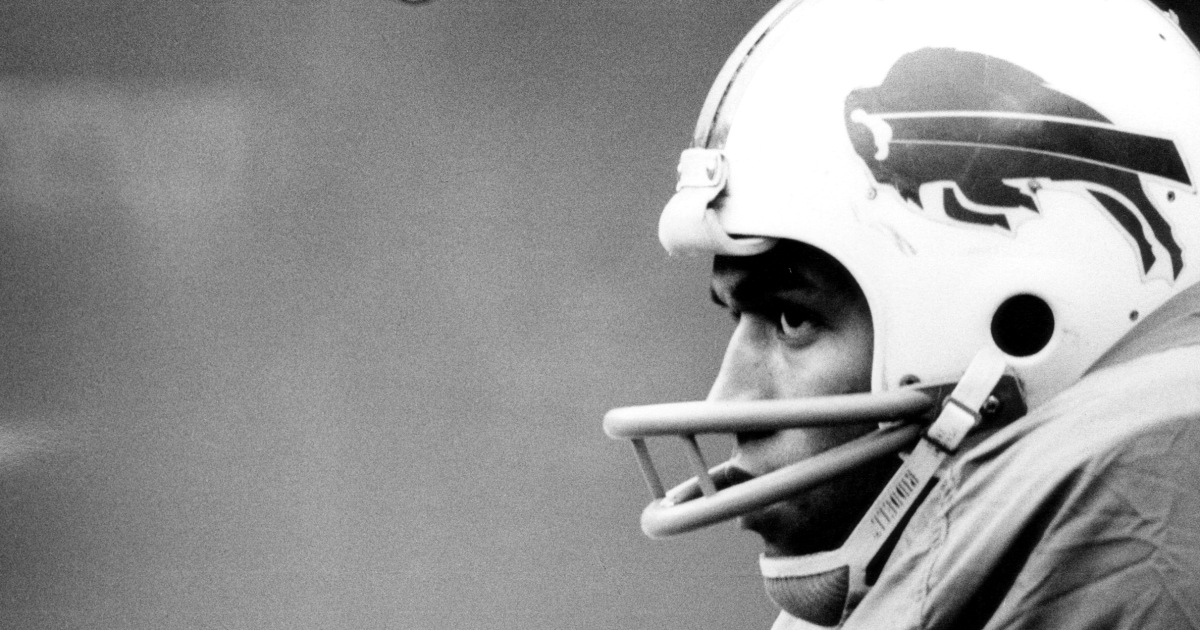
Buffalo Bills Exclude O.J. Simpson from Highmark Stadium Wall of Fame
The Buffalo Bills have officially opened their new $2.1 billion stadium, marking the culmination of a three-year construction project. While the facility is designed to celebrate the franchise’s rich history through a dedicated Wall of Fame, one of the most statistically dominant players in the team’s history will be absent from the display.
O.J. Simpson, the team’s first overall draft pick in 1969, will not be featured among the legends honored in the new venue. The decision highlights the ongoing challenge professional sports organizations face when balancing historic athletic achievement against a legacy marred by criminal conduct, and underscores how teams are increasingly treating their physical spaces as expressions of institutional values rather than simple record books.
“We have made an organizational decision that he is not a fit to display inside our new stadium and family circle,” stated Pete Guelli, the Bills’ president of business operations.
An Unprecedented Athletic Legacy
From a purely competitive standpoint, Simpson’s impact on the NFL was transformative. During his 11-season career, nine of which were spent in Buffalo, he redefined the expectations for the running back position and became one of the league’s most marketable stars.
His career was highlighted by several landmark achievements:
- Became the first player in league history to rush for 2,000 or more yards in a single season.
- Widely regarded as the premier running back of his era.
- Successfully transitioned from an elite athlete to a prominent career in broadcasting and endorsements, helping bridge the gap between the playing field and mainstream entertainment.
Those accomplishments originally helped secure his place in the Pro Football Hall of Fame and on the Bills’ own historical rolls. The new stadium, however, gives the franchise an opportunity to reset which figures it chooses to foreground for a new generation of fans.
The Collapse of a Public Image
The Bills’ decision to omit Simpson from the stadium’s “family circle” stems from the events of the 1990s, which shifted his public identity from a sports icon to a figure of national controversy and legal scrutiny.
In the summer of 1994, Simpson’s ex-wife, Nicole Brown Simpson, and her friend, Ronald Goldman, were found stabbed to death. The subsequent investigation led to a high-profile pursuit when Simpson fled from authorities, resulting in a televised car chase through Southern California in a white Ford Bronco that stopped normal programming and drew tens of millions of viewers.

The 1995 criminal trial, often referred to as the “Trial of the Century,” ended in an acquittal. However, the legal repercussions continued; Simpson was later found liable for the deaths in a wrongful death civil suit brought by the father of Ronald Goldman, under the lower “preponderance of the evidence” standard used in U.S. civil proceedings governed by the federal judicial framework.
Final Legal Issues and Passing
Simpson’s distance from the sport’s community increased further in 2008. He was convicted of armed robbery in Las Vegas after targeting a sports memorabilia dealer. While Simpson argued he was attempting to recover items that had been stolen from him, he was sentenced to a term of nine to 33 years in prison and was released on parole after serving the minimum sentence under Nevada’s correctional guidelines.
The Buffalo Bills’ current stance reflects a broader trend in professional sports to decouple a player’s on-field statistics from their off-field conduct, particularly when such conduct involves violent crime and long-running legal disputes. Similar debates have surfaced around team “rings of honor,” stadium statues and jersey retirements across the major U.S. leagues, as franchises weigh contractual obligations, league personal conduct policies and the expectations of season-ticket holders and sponsors.
By using the opening of a new stadium to redraw the lines of its own Wall of Fame, the organization is effectively signaling how it wants to curate institutional memory – privileging figures whose personal histories align with the club’s stated “family” ethos over those whose legacies would dominate the building for the wrong reasons.
Simpson died of cancer at the age of 76, closing a life that forced both the American justice system and its sports institutions to repeatedly confront where the boundary lies between athletic greatness and public accountability.
